
Guru Rinpoche / Padmasambhava – The Precious Master
Article written August 17, 2024 By hmmart
About Gur RInpoche
Guru Rinpoche, also known as Padmasambhava, is a highly revered figure in Tibetan Buddhism. His name means “Precious Guru,” and he is credited with bringing Buddhism to Tibet in the 8th century. Often referred to as the “Second Buddha,” Guru Rinpoche is believed to have been instrumental in establishing Buddhism as the dominant religion in Tibet, blending the existing indigenous beliefs with Buddhist teachings.
Early Life and Miraculous Birth
According to legend, Guru Rinpoche was not born in the usual way but miraculously appeared as an eight-year-old child in a lotus flower on Lake Dhanakosha in present-day Afghanistan. This miraculous birth, free from the impurities of the womb, symbolizes his pure and divine nature. He was discovered by King Indrabhuti, who adopted him and raised him as his own son. Unlike the historical Buddha, who attained enlightenment through a gradual process, Guru Rinpoche is said to have been born fully enlightened at the age of eight, declaring his purpose to benefit all sentient beings. His birth was foretold by Buddha Shakyamuni, who predicted that a remarkable being named Padmasambhava would emerge to reveal profound teachings.
Journey to Tibet
Guru Rinpoche’s journey to Tibet was marked by a series of miraculous events and teachings. He was invited to Tibet by King Trisong Detsen to help overcome obstacles in building the Samye Monastery, the first Buddhist monastery in Tibet. The king’s previous attempts had been thwarted by local spirits and deities, so he sought the help of Guru Rinpoche.
Upon his arrival, Guru Rinpoche subdued the local spirits and deities, converting them into protectors of the Dharma. This act of subjugating the local forces symbolized the integration of Tibet’s pre-Buddhist Bon religion with the new Buddhist teachings. Guru Rinpoche’s mastery of tantric practices enabled him to establish Buddhism firmly in Tibet.
Teachings and Legacy
Guru Rinpoche / Padmasambhava is especially associated with the Vajrayana or Tantric teachings of Buddhism. He is believed to have transmitted many esoteric teachings and practices, which later became central to Tibetan Buddhism. Among his most important contributions is the introduction of the “terma” tradition—hidden teachings that are meant to be discovered by future generations when the time is ripe. These teachings were concealed in various locations, including caves, rocks, and even in the minds of his disciples, to be revealed by “tertons” (treasure revealers) in later centuries.
One of his primary teachings is the “Eight Manifestations,” which represent different aspects of his enlightened activities. These manifestations symbolize his ability to adapt to the needs of various beings, taking on different forms to guide them on the path to enlightenment.
Iconography
In Tibetan art, Guru Rinpoche is often depicted in royal attire, Guru Rinpoche can be seen in his most well-known representation. His eyes are open in a piercing gaze; his face is wrathful and smiling, blazing magnificently with mysterious power. He cradles a Khatvanga in his left arm, representing his consort Mandarava, who arouses the realization of emptiness. His Khatvanga is crowned with three severed heads and a trident, symbolizing Guru Padmasambhava’s liberation from the three kayas of desire, form, and formlessness.
He wears a lotus hat ornamented with a sun and moon, representing skillful means and wisdom. His hat also has a Vajra top, symbolizing his unshakable samadhi, and is crowned with a vulture feather, representing his realization of the highest view. In his right hand, he holds a Vajra, an implement used in Tantric rituals to symbolize the union of conventional and ultimate truth. His left hand rests in his lap in the gesture of meditation (Dhyana Mudra) and holds a skull cup containing the nectar vase of immortality. The vase is filled with the nectar of deathless wisdom and is adorned with the leaves of a sacred flowering tree. The vase further serves as a reminder of Guru Padmasambhava’s connection to Buddha Amitabha, as it is the special emblem of Amitayus (an aspect of Amitabha). He is usually shown seated on a lotus throne, with a trident staff resting against his shoulder, symbolizing his tantric power and the three kayas (bodies) of Buddhahood.
Besides his popular form, he is also depicted in various forms, including the fierce manifestation known as Guru Dragpo, symbolizing his ability to protect and guide practitioners. His legacy continues through the rituals and prayers performed by his followers, who recite his mantras and celebrate his teachings.
Significance and Contributions to Tibetan Buddhism
Guru Rinpoche / Padmasambhava is credited with introducing and establishing the Nyingma School of Tibetan Buddhism in the 8th century. He was invited to Tibet by King Trisong Detsen to help overcome various obstacles, including demonic forces that impeded the spread of Buddhism. With his extraordinary powers, he is said to have subdued these forces and laid the groundwork for the construction of Samye Monastery, the first Buddhist Monastery in Tibet.
Guru Rinpoche’s influence on Tibetan Buddhism cannot be overstated. He is revered not only as a historical figure but also as a timeless presence who continues to guide practitioners through his blessings and teachings. His life and deeds are celebrated annually in the festival known as “Guru Rinpoche Day,” observed on the 10th day of the lunar month. This day is considered highly auspicious for receiving his blessings.
Guru Rinpoche’s teachings emphasize the importance of direct experience in spiritual practice, the power of devotion, and the integration of wisdom and compassion. His legacy lives on through the numerous texts, rituals, and practices that he introduced, which remain central to Tibetan Buddhism today.
Throughout his life, Guru Rinpoche taught numerous disciples, including the king himself and many other prominent figures, imparting teachings that emphasized the importance of tantric practices and the realization of one’s innate Buddha nature. His teachings were often preserved in the form of terma, or hidden treasures, which would be revealed by future masters known as tertons. Guru Rinpoche is not only a foundational figure in Tibetan Buddhism but also a symbol of wisdom and compassion, whose teachings continue to inspire countless practitioners across the globe. He is a figure of profound spiritual significance, embodying the fusion of Indian tantric Buddhism and Tibetan spiritual traditions. His teachings continue to inspire and guide practitioners on the path to enlightenment, making him a central figure in the spiritual heritage of Tibet and beyond. His life story, filled with miraculous events and profound teachings, remains a source of spiritual guidance and inspiration for many.

Exquisite Maitreya Buddha Statue: A Masterpiece of Nepalese Art
Article written August 15, 2024 By hmmart
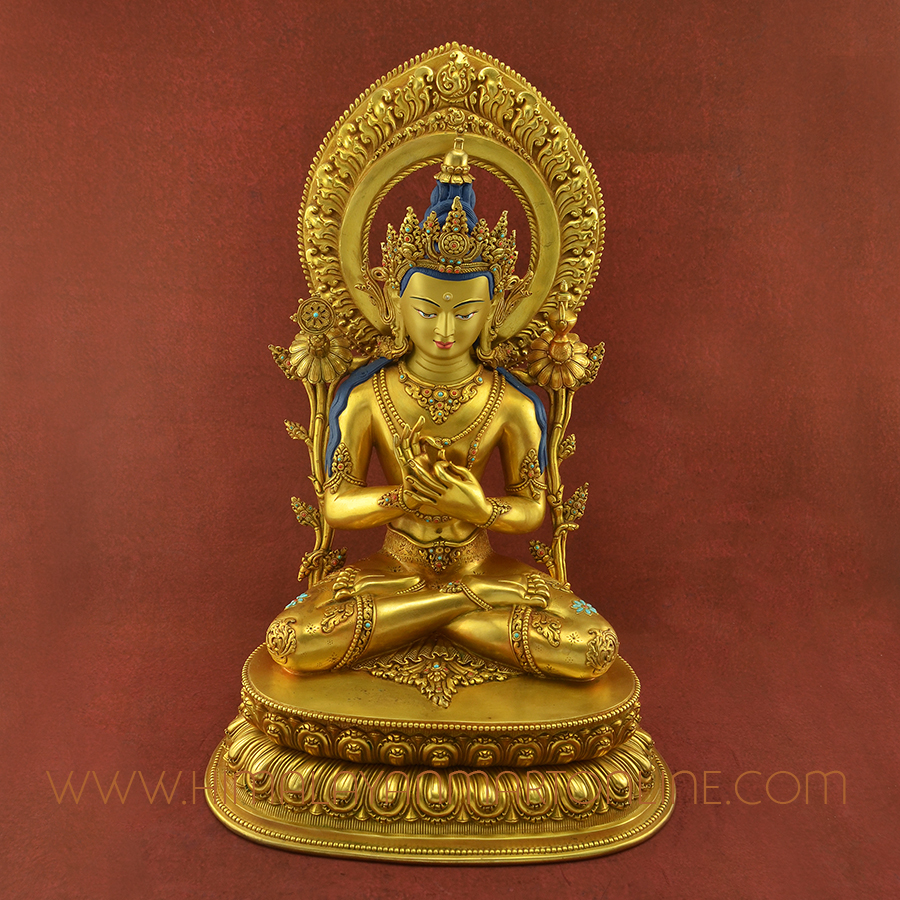
This Exquisite Maitreya Buddha Statue is a true masterpiece of Nepalese art, crafted with exceptional skill and artistry. Finely sculpted from copper alloy using the ancient lost wax method, the statue has been meticulously hand-carved with intricate details and submitted to a 24-karat gold gilding process, resulting in a rich and sensuous finish.
Captivating Design Elements
The statue depicts Maitreya, the Future Buddha, seated upon a beautifully carved lotus base. Two blooming flowers emerge from the back near ear level, with a Dharma Chakra resting on the right side and a Kalasha on the left. A stunning frame encircles the Buddha’s head, adorned with leaf-like patterns. The stupa atop the Buddha’s hair rests on a lotus flower, while a five-pointed crown adorns his head. The Buddha’s robes and ornaments are intricately hand-carved, showcasing the master artisans’ exceptional skill.
Exquisite Craftsmanship and Tradition
This Exquisite Maitreya Buddha Statue was individually handcrafted in Patan, Nepal by master artisans of the Shakya clan, who are considered among the best in the world. These craftsmen are the modern heirs to a centuries-old tradition of creating sacred art for use in temples and monasteries. The fine metalworking techniques have been passed down from generation to generation since ancient times.
Exquisite Maitreya Buddha Statue’s Life-like Appearance
The 24-karat gold gilding and stone decoration give the statue a life-like appearance. The hand-painted face of the Buddha expresses kindness and wisdom, captivating the viewer with its mesmerizing smile. The statue’s overall design and execution are a testament to the artisans’ dedication and mastery of their craft.
Click here to explore our Maitreya Buddha Statues …
Tara Wangdu Rigje Lhamo (Kurukulle) – One of the Twenty One (21) Taras
Article written July 21, 2024 By hmmart
Tara Wangdu Rigje Lhamo (Kurukulle) {Red}
OM TARE TUTTARE TURE KURU KULLE NRI DZA SVAHA ཨོཾ་ཏཱ་རེ་ཏུཏྟཱ་རེ་ཏུ་རེ་ཀུ་རུ་ཀུལྨེ་ནྲེ་ཛཿསྭཱ་ཧཱ།
Tara Wangdu Rigje Lhamo (Kurukulle), semi-wrathful and adorned in a vibrant red hue, embodies the dynamic power of enlightened activity. Her mantra, TUTTARE, blazes with rainbow light, its sound resonating with the magnetizing force that arises from the union of emptiness and compassion. This potent combination conquers obstacles and transforms negative energies.
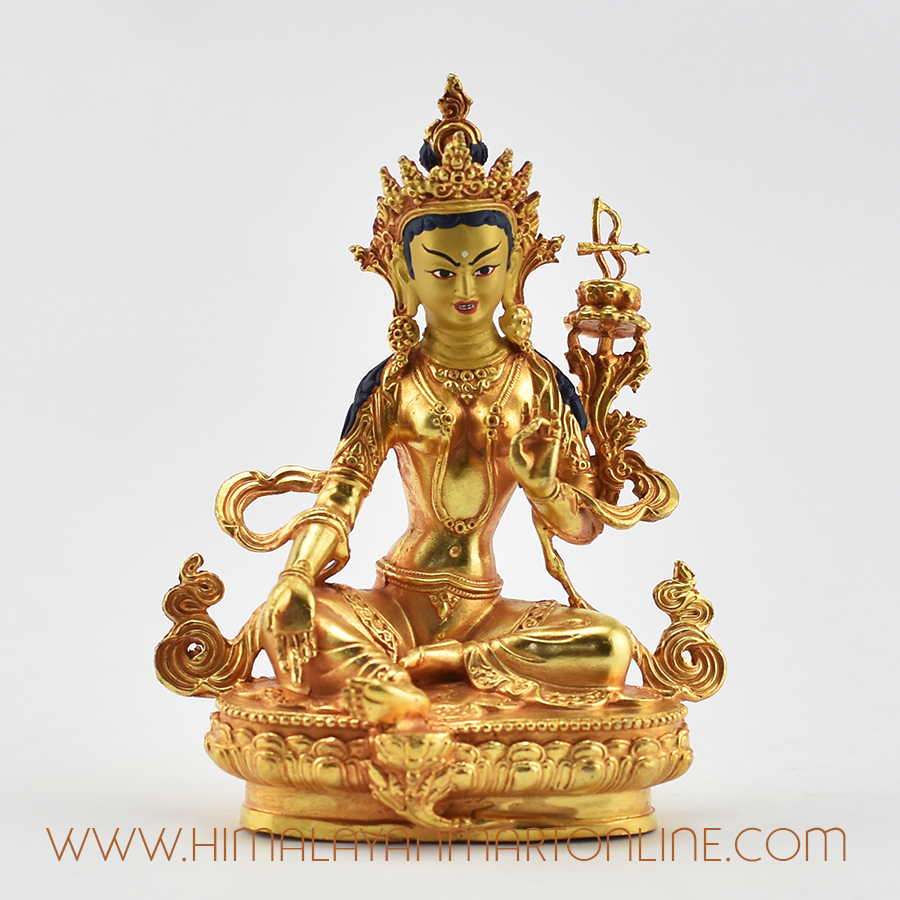
In her iconography, Rigjé Lhamo holds a Utpala flower, upon which rests a bow and arrow poised to shoot sharp rays of light. These rays are aimed at destroying arrogant pride, symbolizing her ability to cut through the ego and illuminate the path of humility and wisdom. Rigjé Lhamo effortlessly accomplishes the four enlightened actions: pacifying, enriching, magnetizing, and subduing. Her semi-wrathful presence serves as a powerful reminder of the transformative potential inherent in the enlightened heart. Through her fierce compassion, she guides practitioners to overcome their inner and outer obstacles, paving the way for spiritual growth and enlightenment.
Discover the beauty of 21 Tara Statues – Click here to buy now!
Tara Tsugtor Namgyalma (Ushnishaviyaha) – One of the Twenty One (21) Taras
Article written July 21, 2024 By hmmart
Tara Tsugtor Namgyalma (Ushnishaviyaha) {Golden Yellow}
OM TARE TUTTARE TURE AYUR DATE BHRUM SVAHA ཨོཾ་ཏཱ་རེ་ཏུཏྟཱ་རེ་ཏུ་རེ་ཨྰཿཡྰ་རྡ་ཏེ་པྷྰུྂ་སྭཱ་ཧཱ།
Tara Tsugtor Namgyalma, serene and radiant in golden yellow, emanates from the crown chakra of the Buddha as Prajnaparamita, the embodiment of transcendent wisdom. She stands victorious over all non-virtue and afflictive emotions, guiding beings toward purity and enlightenment.
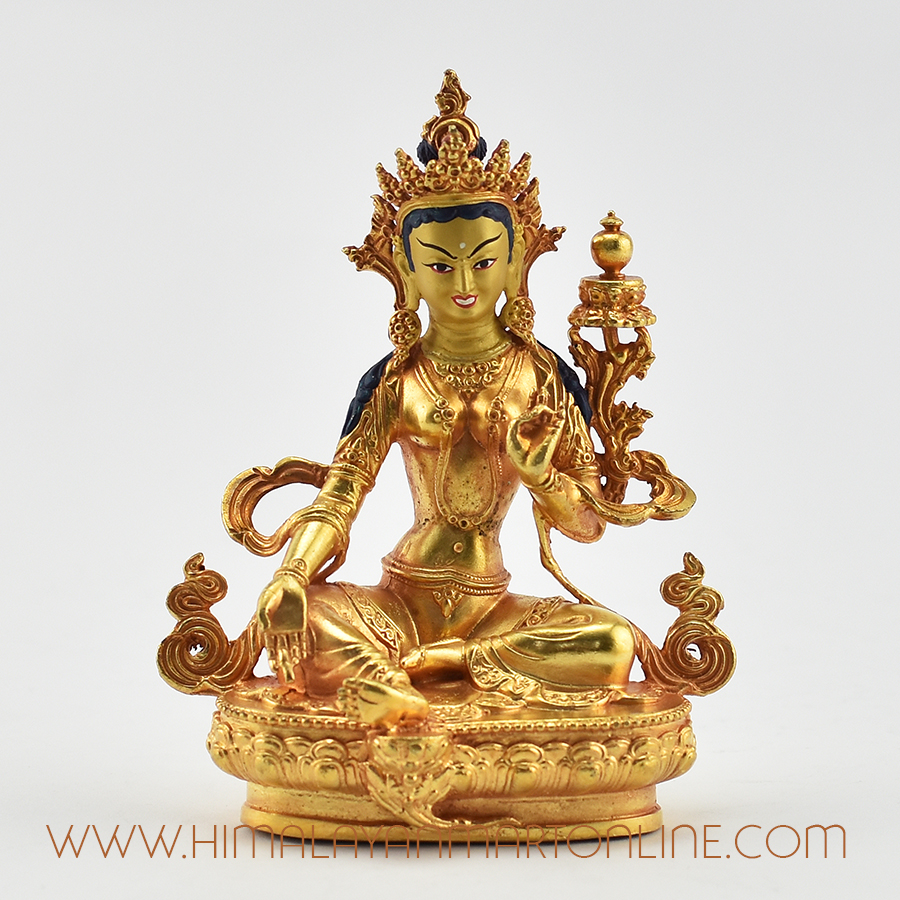
In her iconography, Tsugtor Namgyalma holds a Utpala flower, upon which rests a vase of immortality. This vase radiates light in all ten directions, symbolizing her boundless compassion and wisdom. The light transforms the radiant essence of both samsara and nirvana into nectar, which fills her vase, signifying the ultimate union and transcendence of dualities. Her peaceful yet powerful presence is a beacon of hope and transformation, reminding practitioners of the potential to overcome negative emotions and cultivate virtues. Through her guidance, they can transcend the cycles of samsara and realize the bliss of nirvana. Tsugtor Namgyalma’s golden glow and the vase of immortality she holds are potent symbols of eternal wisdom and the transformative power of the enlightened heart.
Tsugtor Namgyalma’s iconography is a powerful reminder of the transformative power of the enlightened heart. Her presence serves as a beacon of hope, guiding practitioners toward the realization of the ultimate truth and the transcendence of dualities.
Tsugtor Namgyalma’s iconography is a powerful reminder of the transformative power of the enlightened heart. Her presence serves as a beacon of hope, guiding practitioners toward the realization of the ultimate truth and the transcendence of dualities.
Discover the beauty of 21 Tara Statues – Click here to buy now!
Tara Sermo Sonam Tobche – One of the Twenty One (21) Taras
Article written July 21, 2024 By hmmart
Tara Sermo Sonam Tobche {Golden Yellow}
OM TARE TUTTARE TURE MAHA PUNYE SVAHA ཨོཾ་ཏཱ་རེ་ཏུཏྟཱ་རེ་ཏུ་རེ་མ་ཧྰ་པུནྱེ་སྭྼ་ཧཱ།་
Tara Sermo Sonam Tobche, serene and resplendent in a golden yellow hue, embodies the radiant energy of the rising sun. Her luminous form empowers practitioners, enabling them to undertake vast oceans of bodhisattva activities with unwavering dedication. Through her benevolence, she bestows wealth and longevity, guiding beings towards liberation through the practice of the six paramitas: generosity, discipline, patience, diligence, meditative stability, and transcendent wisdom.
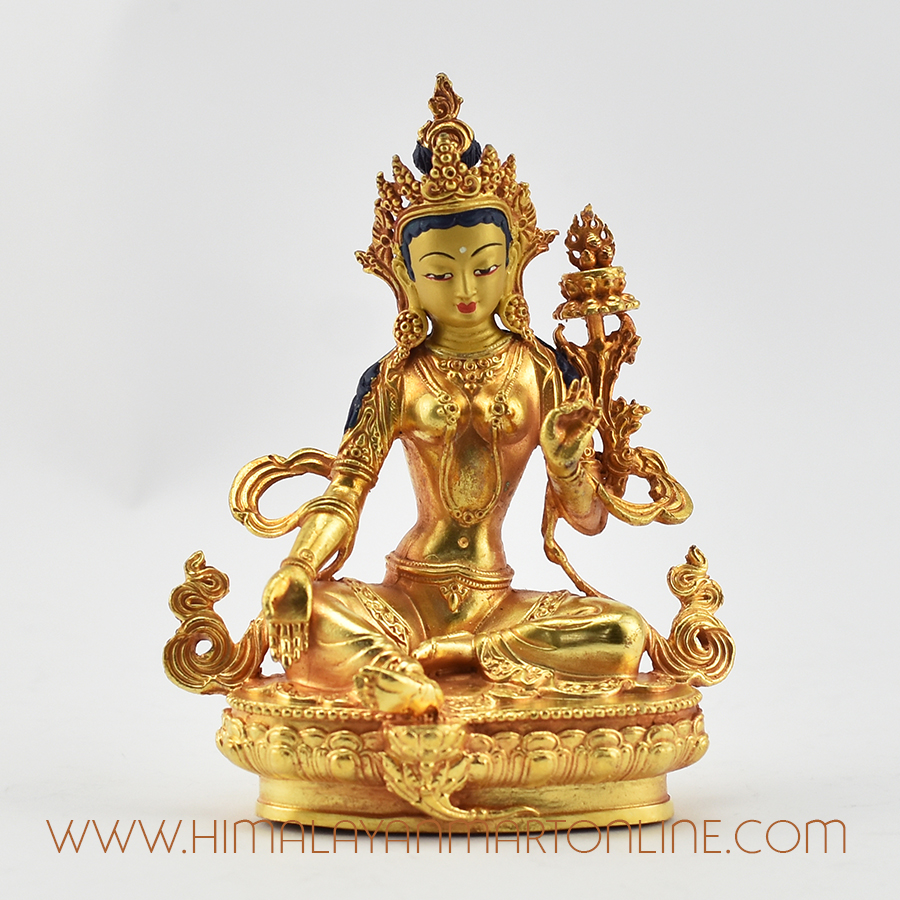
In her iconography, Tara Sermo Sonam Tobche holds a Utpala flower, upon which rests a wish-fulfilling jewel. This jewel showers down whatever one desires, symbolizing the abundant blessings and fulfillment she bestows upon those who seek her guidance. Her body, radiating with the golden light of dawn, serves as a beacon of hope and inspiration, illuminating the path to spiritual growth and enlightenment. Her peaceful and radiant presence reminds practitioners of the transformative potential within themselves. By embodying the virtues she represents, they can cultivate the qualities necessary for liberation and the benefit of all beings. Sermo Sonam Tobche’s golden radiance and the wish-fulfilling jewel she carries are powerful symbols of the boundless generosity and wisdom that flow from the enlightened heart.
Sermo Sönam Tobkyé’s iconography is a powerful symbol of the boundless generosity and wisdom that arise from the enlightened heart. Her golden radiance and the wish-fulfilling jewel she carries serve as a potent reminder of the transformative power of the six paramitas, guiding practitioners towards a path of spiritual growth, liberation, and selfless service to others.
Discover the beauty of 21 Tara Statues – Click here to buy now!
Tara Loter Yangchenma – One of the Twenty One (21) Taras
Article written July 21, 2024 By hmmart
Tara Loter Yangchenma {White}
OM TARE TUTTARE TURE PRAJNA HRIM HRIM SVAHA ༀ་ཊཱ་རི་ཏུ་ཏྟྼ་རི་ཏུ་རི་བྲ་ཛྙཱ་ཧྼིཾ་ཧྼིཾ་སྭཱ་ཧཱ།་
Tara Loter Yangchenma, serene and adorned in a radiant white hue, embodies the peaceful essence of enlightened wisdom. She graciously unlocks the treasures of music, art, and profound knowledge, guiding beings toward the realization of the four types of wisdom: the understanding of meaning, the nature of phenomena, the comprehension of definitive words, and the mastery of courageous eloquence.
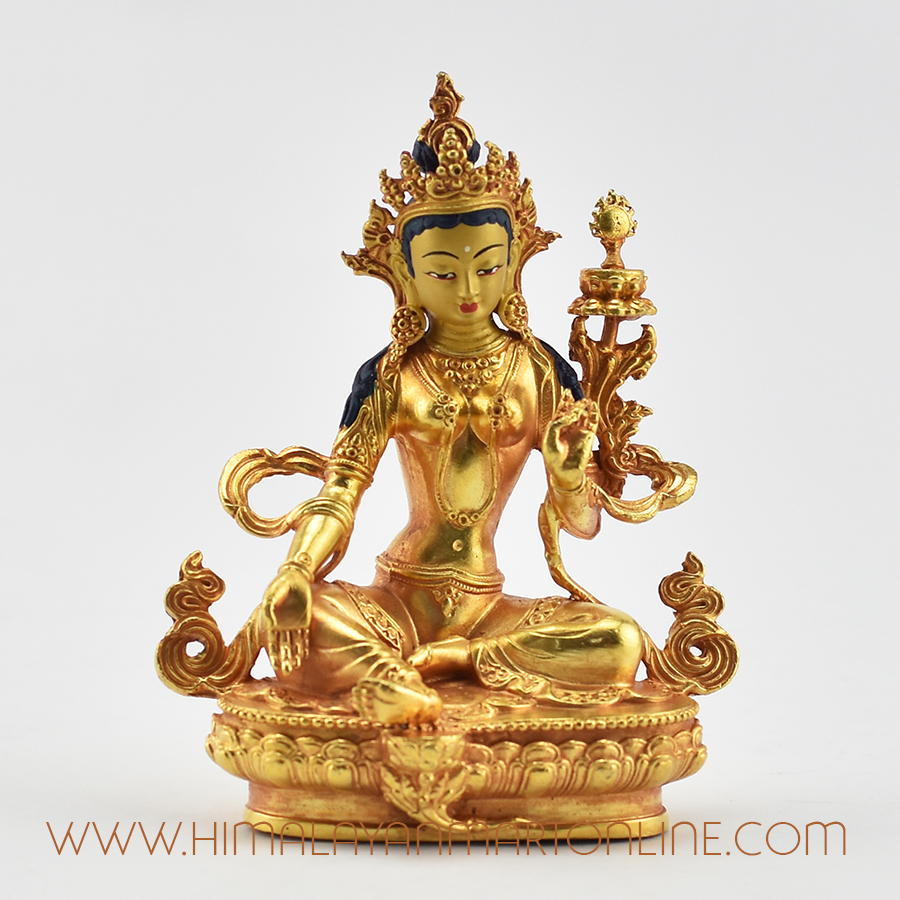
In her iconography, Loter Yang Chenma holds a Utpala flower, upon which rests a clear mirror inscribed with the sacred syllable HRIM. This mirror radiates light, symbolizing the clarity and purity of her wisdom. Her face shines with the luminous glow of one hundred autumn full moons, a testament to her serene and compassionate nature.
Through her presence, Loter Yang Chenma illuminates the path to enlightenment, offering the gifts of artistic inspiration and intellectual brilliance. She encourages practitioners to delve into the depths of wisdom and to express their insights with eloquence and courage. Her peaceful demeanor and the radiant symbols she carries serve as a reminder of the transformative power of wisdom and the boundless potential of the enlightened heart.
Loter Yang Chenma’s iconography is a powerful symbol of enlightened wisdom, guiding beings toward spiritual growth and self-awareness. Her peaceful demeanor and the symbols she carries serve as a reminder of the transformative power of wisdom and the boundless potential of the enlightened heart.
Discover the beauty of 21 Tara Statues – Click here to buy now!
Tara Nyurma Pamo – One of The Twenty One (21) Taras
Article written July 21, 2024 By hmmart
Tara Nyurma Pamo {Red}
OM TARE TUTTARE TURE BODHICITTA SVAHA ཨོཾ་ཏཱ་རེ་ཏུཏྟཱ་རེ་ཏུ་རེ་པོདྷེ་ཙིཏྟ་སྭཱ་ཧཱ།་
Tara Nyurma Pamo, semi-wrathful and adorned in a vibrant red hue, stands as a powerful force of liberation and protection. Her fierce yet compassionate presence frees beings from the suffering of samsara and shields them from fear. With her immense compassionate power, she removes obstacles and nurtures the growth of bodhicitta, the awakened heart.
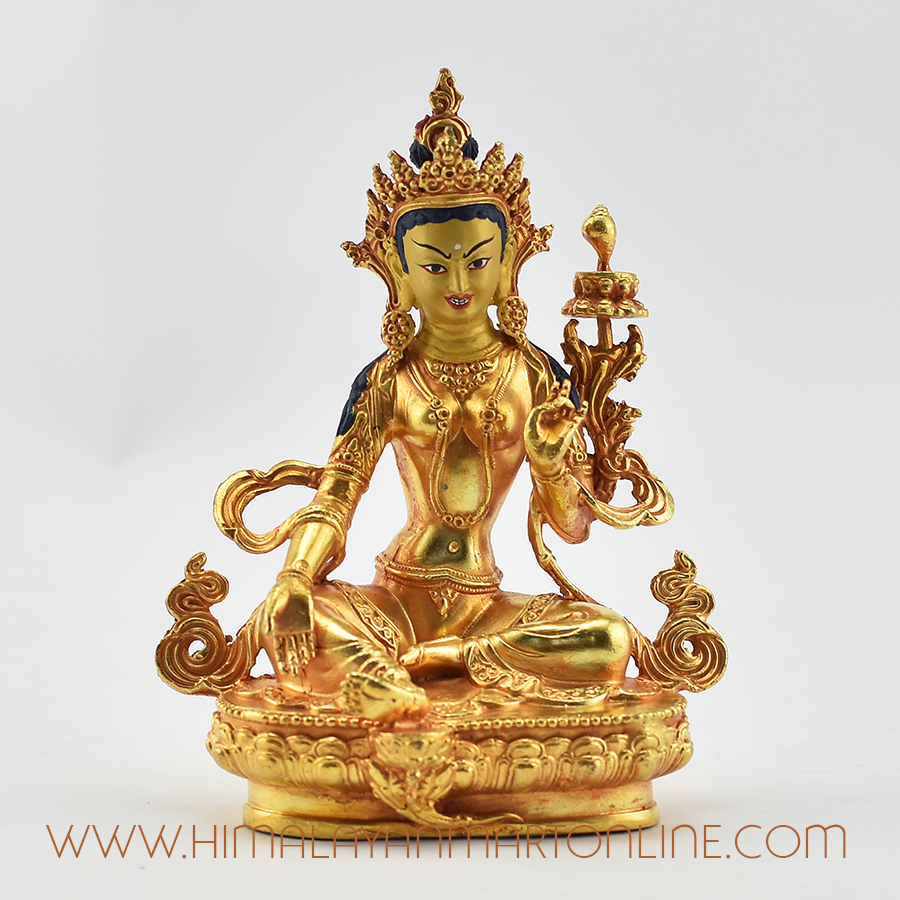
In her iconography, Tara Nyurma Pamo holds a Utpala flower, upon which rests a white conch shell that curls clockwise. This conch shell symbolizes the resounding and pervasive glory of both relative and absolute bodhicitta, echoing throughout the entire world. The clockwise spiral signifies the spread of the Dharma’s profound teachings, awakening beings to the path of enlightenment. Through her semi-wrathful demeanor, Tara Nyurma Pamo embodies the dynamic interplay of compassion and strength. She serves as a constant reminder of the urgency and determination needed to overcome the barriers to spiritual progress. Her radiant red presence and the symbolic conch shell inspire practitioners to cultivate their own Bodhichitta, spreading the transformative power of wisdom and compassion far and wide.
As practitioners engage with Nyurma Pamo’s practice, they are invited to cultivate their own Bodhichitta and to embody the qualities of compassion and wisdom that she represents. Through this process, they not only transform themselves but also contribute to the transformation of the world around them, spreading the far-reaching resonance of the Dharma like the sound of the conch shell.
Discover the beauty of 21 Tara Statues – Click here to buy now!
Abhaya Mudra: The Gesture of Fearlessness
Article written July 17, 2024 By hmmart
Introduction
Mudras, or symbolic hand gestures, play a crucial role in Hindu and Buddhist iconography, serving as spiritual symbols in art and practice. Among these, the Abhaya Mudra stands out as a gesture of protection, peace, and the dispelling of fear. Derived from the Sanskrit words “Abhaya” meaning “fearlessness” and “mudra” meaning “gesture” or “seal,” this hand gesture is rich with historical, cultural, and spiritual significance.
Historical Origins
The Abhaya Mudra has ancient origins, tracing back to the early teachings of Buddhism and Hinduism. This gesture is commonly associated with Gautama Buddha and is frequently depicted in statues and paintings of him. Legend has it that the Buddha used this gesture after attaining enlightenment, to calm a charging elephant sent by a rival, symbolizing the power of inner peace and fearlessness over external threats.
Symbolism and Meaning
The Abhaya Mudra is performed with the right hand raised to shoulder height, the arm bent, and the palm facing outward, fingers upright and joined together. The left hand often rests by the side or in the lap. This gesture embodies several layers of meaning:
- Protection: It signifies protection and reassurance, offering a sense of safety and security to those who see it.
- Fearlessness: It represents the dispelling of fear and the attainment of inner peace and courage.
- Divine Blessing: In religious contexts, it is seen as a blessing from the deity or enlightened being, providing spiritual comfort and guidance.
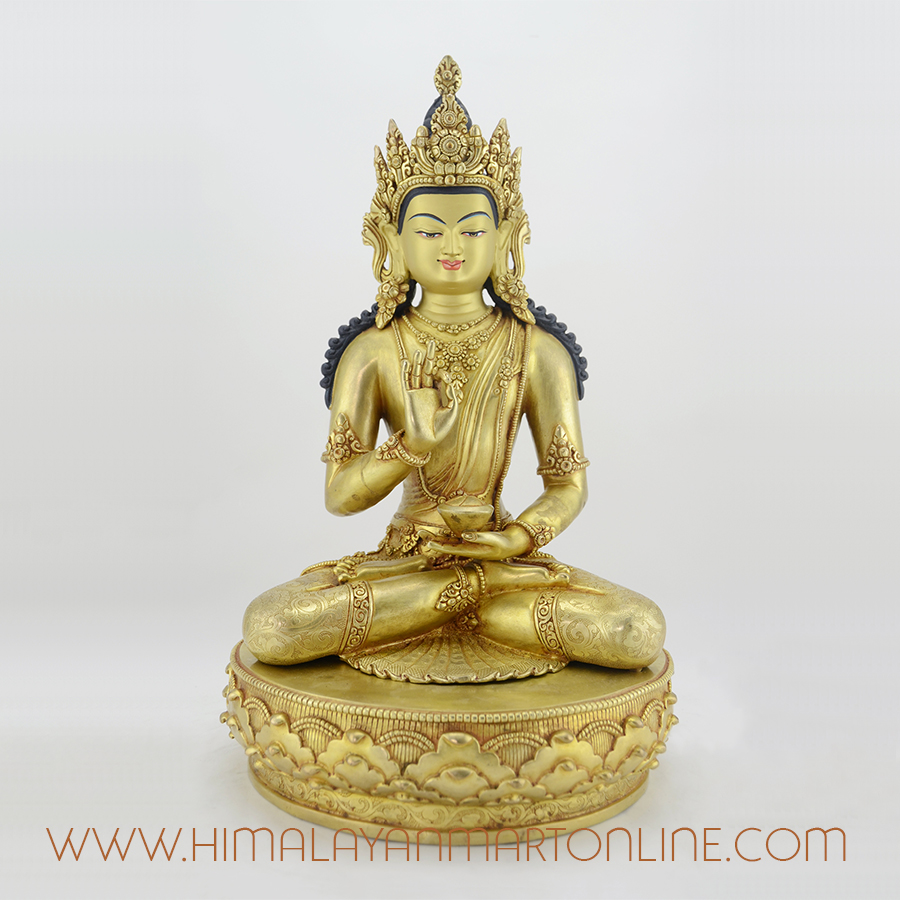
Cultural Significance
In Hindu and Buddhist traditions, the Abhaya Mudra is a prevalent motif in religious art and sculpture. It is often seen in depictions of deities and enlightened beings, serving as a universal symbol of divine protection and benevolence.
In Buddhism
In Buddhist iconography, the Abhaya Mudra is frequently associated with images of the Buddha. It is often depicted in statues and paintings where the Buddha is seen standing or sitting, offering reassurance and peace to his followers. This mudra symbolizes the Buddha’s role as a protector and a guide, emphasizing the importance of overcoming fear and achieving tranquility.
In Hinduism
In Hindu iconography, the Abhaya Mudra is commonly seen in representations of various deities, including Vishnu, Shiva, and Durga. These deities, shown with the mudra, convey their divine protection and blessings to their devotees. The gesture is a reminder of the power and benevolence of the gods, assuring followers of their safety and support.
Modern Interpretations and Uses
In contemporary times, the Abhaya Mudra continues to hold significant relevance. It is practiced in yoga and meditation as a means to cultivate a sense of peace and fearlessness. Practitioners use this mudra to connect with their inner strength, calm their minds, and dispel anxiety.
The gesture also appears in various modern art forms and spiritual practices, symbolizing universal values of courage, protection, and tranquility. It serves as a reminder of the enduring power of ancient wisdom to inspire and guide individuals in their daily lives.
Conclusion The Abhaya Mudra, with its profound historical roots and rich symbolic meanings, continues to be a powerful gesture of fearlessness and protection. Whether depicted in ancient statues or practiced in modern meditation, this gesture transcends time and culture, offering a universal message of peace and reassurance. In a world often fraught with uncertainty and fear, the Abhaya Mudra stands as a timeless reminder of the enduring power of inner strength and tranquility.
Gestures and Attributes of Black Dzambhala
Article written April 15, 2024 By hmmart
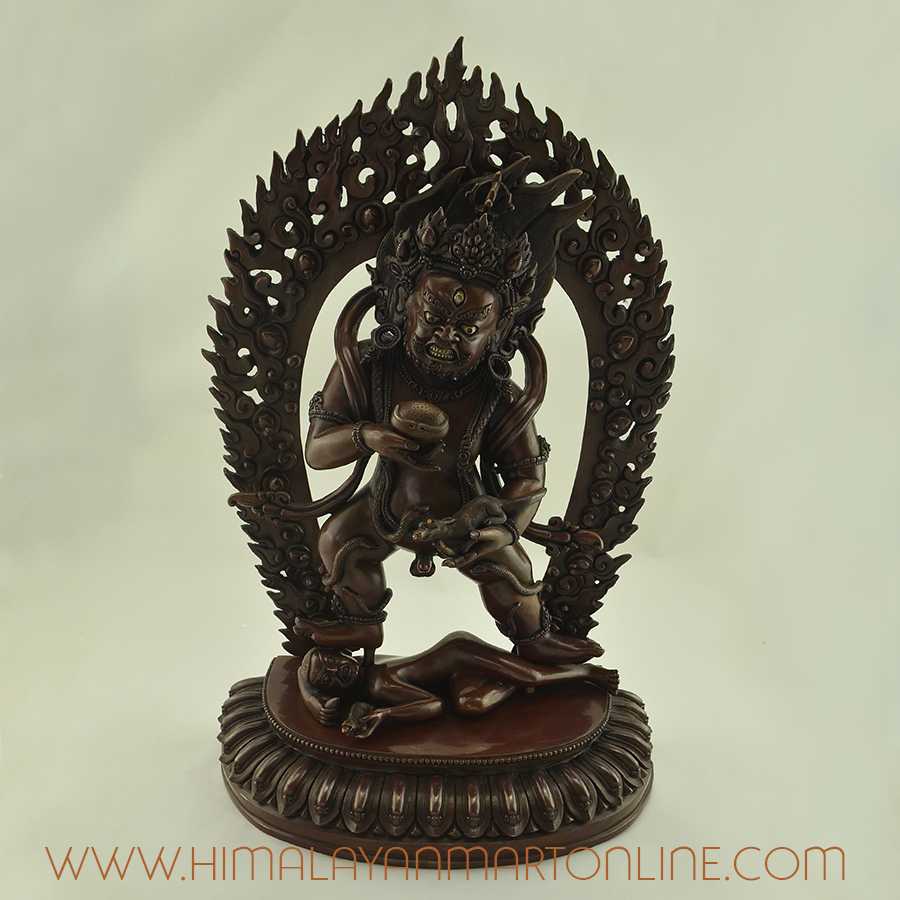
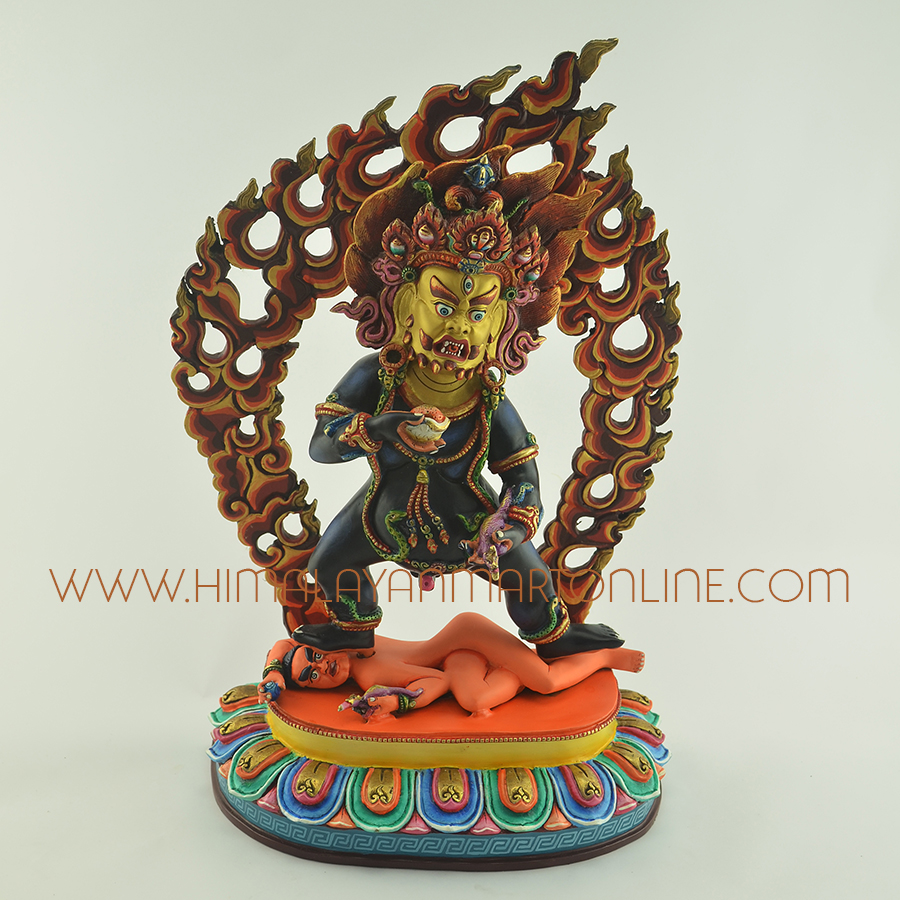
Black Dzambhala, a prominent deity in Tibetan Buddhism associated with wealth and prosperity, is often depicted with specific gestures and attributes that carry symbolic meanings. These visual representations contribute to the rich iconography surrounding the deity, conveying messages about his qualities and functions. Here are some key gestures and attributes associated with Black Dzambhala:
Fierce Countenance:
Black Dzambhala is commonly portrayed with a wrathful or fierce expression. This fierce countenance symbolizes his determination and power to overcome obstacles, particularly those related to poverty and financial difficulties. The intensity of his appearance signifies the strength needed to eliminate challenges and bring about positive transformations.
Mongoose and Jewel:
One of the most distinctive attributes of Black Dzambhala is the mongoose spouting jewels. In his right hand, he holds a mongoose, and in some depictions, the mongoose emits a continuous stream of jewels from its mouth. This symbolizes Black Dzambhala’s ability to transform adversity and scarcity into abundance and prosperity. The mongoose is considered a powerful creature in this context, capable of converting negative circumstances into positive outcomes.
Jewel-Spouting Lemon or Citron:
In his left hand, Black Dzambhala often holds a citron or jewel-spouting lemon. This fruit represents the wealth and treasures that he bestows upon his devotees. The imagery emphasizes the abundance of spiritual and material wealth that Black Dzambhala offers to those who seek his blessings.
Dzambhala’s Mudra (Hand Gesture):
The hand gesture, or mudra, of Black Dzambhala is significant. His right hand, holding the mongoose, is often raised in a gesture known as the Varada Mudra. This mudra symbolizes the granting of boons and blessings. It signifies Black Dzambhala’s willingness to fulfill the wishes and aspirations of his followers, particularly in the realm of wealth and prosperity.
Seated Posture:
Black Dzambhala is typically depicted in a seated posture on a lotus throne. This posture symbolizes stability and the grounded nature of his blessings. The lotus, a sacred symbol in Buddhism, represents purity, enlightenment, and the ability to rise above worldly challenges.
Ornate Crown and Jeweled Attire:
Black Dzambhala is often adorned with an elaborate crown and wears jeweled ornaments. These symbols of regality emphasize his divine nature and reinforce the idea of abundance and opulence. The crown represents his sovereignty over the wealth and treasures of the world.
Richly Decorated Treasure Vase:
In some depictions, Black Dzambhala may be shown holding or standing beside a treasure vase. This vase, known as the Wealth Vase, is filled with various precious items, symbolizing the abundance of wealth, both material and spiritual, that Black Dzambhala bestows upon his devotees. Understanding the gestures and attributes of Black Dzambhala allows followers to connect with the symbolic meanings embedded in the iconography, fostering a deeper appreciation for the deity’s role in the pursuit of prosperity and well-being.
Gestures and Attributes of Vajrapani
Article written April 15, 2024 By hmmart
Vajrapani, as a prominent figure in Buddhism, is often depicted with specific gestures and attributes that symbolize his qualities and role as a Bodhisattva. Here are some of the common gestures and attributes associated with Vajrapani:
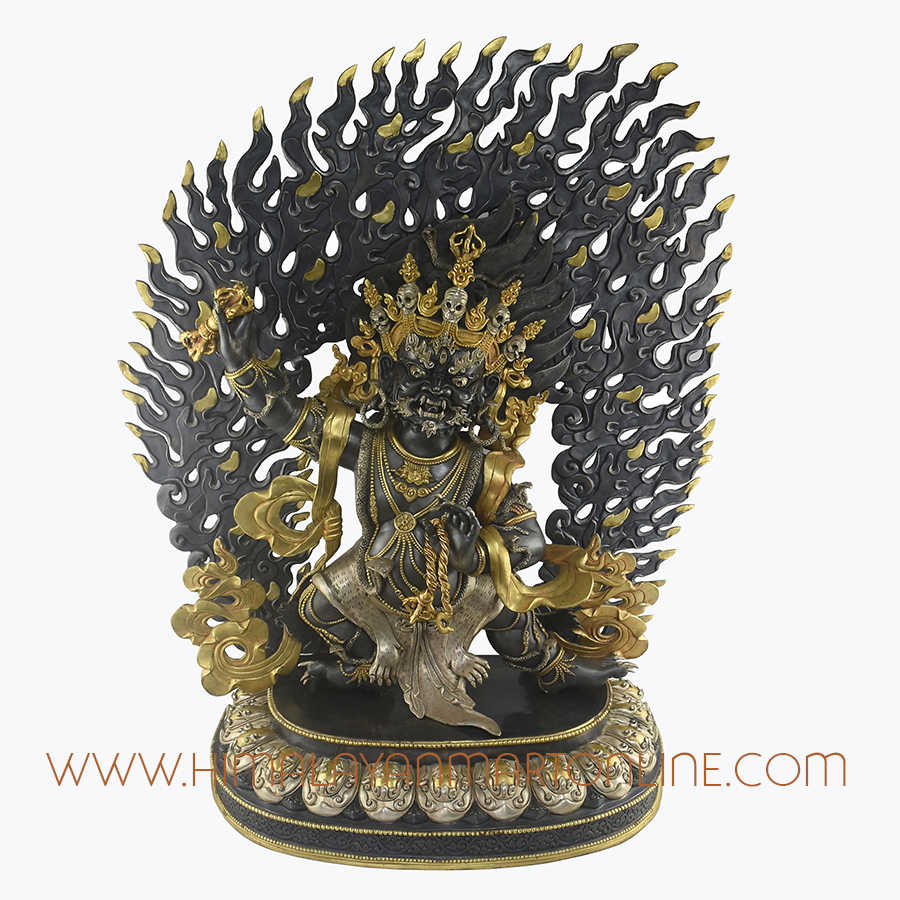
- Vajra Mudra (Gesture): The Vajra Mudra, also known as the Vajrahumkara Mudra, is a hand gesture commonly associated with Vajrapani. In this mudra, the right hand is raised with the index finger pointing upward, while the thumb and the other fingers are clenched into a fist. This gesture symbolizes the union of method (skillful means) and wisdom, emphasizing the dual nature of the Vajra.
- Vajra (Thunderbolt): The most prominent attribute of Vajrapani is the Vajra, a diamond or thunderbolt scepter that he holds in one of his hands. The Vajra represents indestructibility, diamond-like clarity, and the unshakable nature of enlightened wisdom. It is a symbol of the skillful means necessary to overcome obstacles on the path to enlightenment.
- Ghanta (Bell): In some depictions, Vajrapani may be shown holding a Ghanta, or ritual bell, in addition to the Vajra. The bell represents the wisdom aspect, and its sound is believed to dispel ignorance and awaken beings from the sleep of delusion.
- Lasso or Noose: Vajrapani is sometimes depicted holding a lasso or noose in one hand. This attribute symbolizes the skillful means to capture and guide beings towards the path of liberation. The noose is used to bind and redirect wayward minds, helping them overcome obstacles.
- Fierce Appearance: Vajrapani is often depicted with a wrathful and fierce expression. This fierceness signifies the intensity and determination required to subdue the forces of ignorance and to protect practitioners on their spiritual journey.
- Flaming Halo or Aura: Vajrapani may be surrounded by flames or have a flaming halo, symbolizing the transformative power of his presence. The flames represent the purifying energy that burns away impurities and delusions, facilitating the process of spiritual transformation.
- Dynamic Posture: Vajrapani is typically depicted in a dynamic and powerful posture, reflecting his active engagement with the challenges of the spiritual path. This posture signifies readiness to assist and guide beings toward enlightenment.
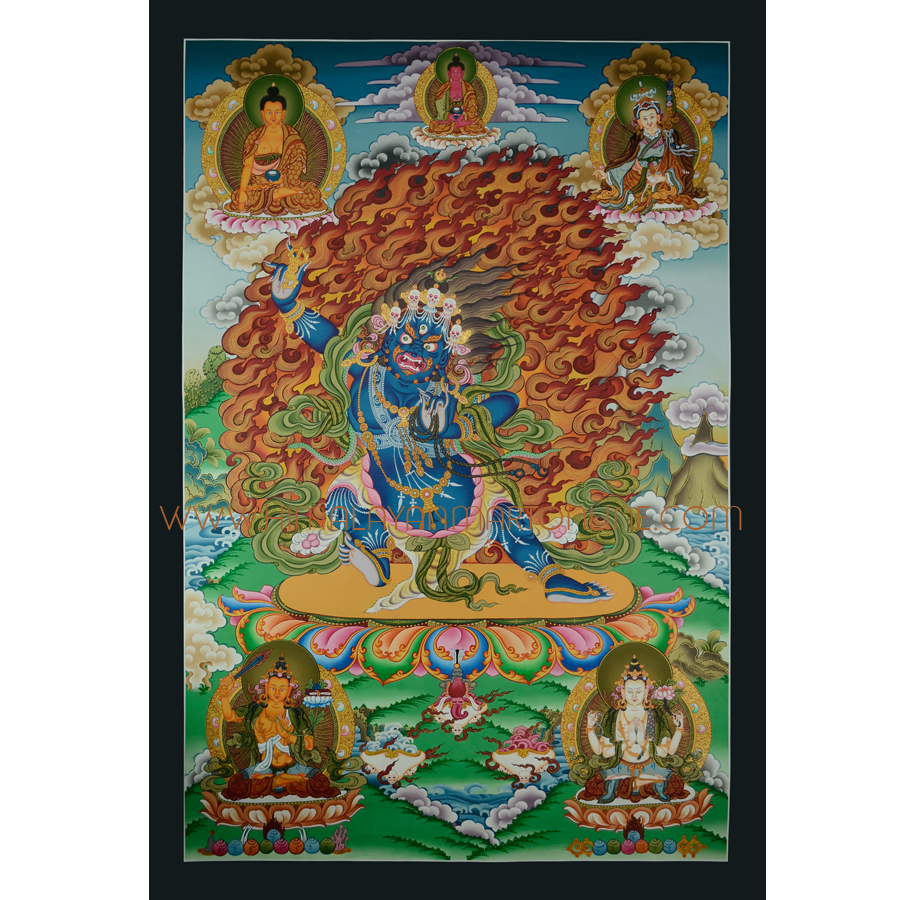
These gestures and attributes collectively convey the dynamic and forceful nature of Vajrapani’s compassion and wisdom, as well as his commitment to guiding sentient beings on the path to liberation. The symbolism associated with Vajrapani serves as a powerful inspiration for practitioners seeking strength, protection, and transformative guidance on their spiritual journey.