Guru Rinpoche / Padmasambhava – The Precious Master

About Gur RInpoche

Guru Rinpoche, also known as Padmasambhava, is a highly revered figure in Tibetan Buddhism. His name means “Precious Guru,” and he is credited with bringing Buddhism to Tibet in the 8th century. Often referred to as the “Second Buddha,” Guru Rinpoche is believed to have been instrumental in establishing Buddhism as the dominant religion in Tibet, blending the existing indigenous beliefs with Buddhist teachings.

Early Life and Miraculous Birth

According to legend, Guru Rinpoche was not born in the usual way but miraculously appeared as an eight-year-old child in a lotus flower on Lake Dhanakosha in present-day Afghanistan. This miraculous birth, free from the impurities of the womb, symbolizes his pure and divine nature. He was discovered by King Indrabhuti, who adopted him and raised him as his own son. Unlike the historical Buddha, who attained enlightenment through a gradual process, Guru Rinpoche is said to have been born fully enlightened at the age of eight, declaring his purpose to benefit all sentient beings. His birth was foretold by Buddha Shakyamuni, who predicted that a remarkable being named Padmasambhava would emerge to reveal profound teachings.

Journey to Tibet

Guru Rinpoche’s journey to Tibet was marked by a series of miraculous events and teachings. He was invited to Tibet by King Trisong Detsen to help overcome obstacles in building the Samye Monastery, the first Buddhist monastery in Tibet. The king’s previous attempts had been thwarted by local spirits and deities, so he sought the help of Guru Rinpoche.

Upon his arrival, Guru Rinpoche subdued the local spirits and deities, converting them into protectors of the Dharma. This act of subjugating the local forces symbolized the integration of Tibet’s pre-Buddhist Bon religion with the new Buddhist teachings. Guru Rinpoche’s mastery of tantric practices enabled him to establish Buddhism firmly in Tibet.

Teachings and Legacy

Guru Rinpoche / Padmasambhava is especially associated with the Vajrayana or Tantric teachings of Buddhism. He is believed to have transmitted many esoteric teachings and practices, which later became central to Tibetan Buddhism. Among his most important contributions is the introduction of the “terma” tradition—hidden teachings that are meant to be discovered by future generations when the time is ripe. These teachings were concealed in various locations, including caves, rocks, and even in the minds of his disciples, to be revealed by “tertons” (treasure revealers) in later centuries.

One of his primary teachings is the “Eight Manifestations,” which represent different aspects of his enlightened activities. These manifestations symbolize his ability to adapt to the needs of various beings, taking on different forms to guide them on the path to enlightenment.

Iconography

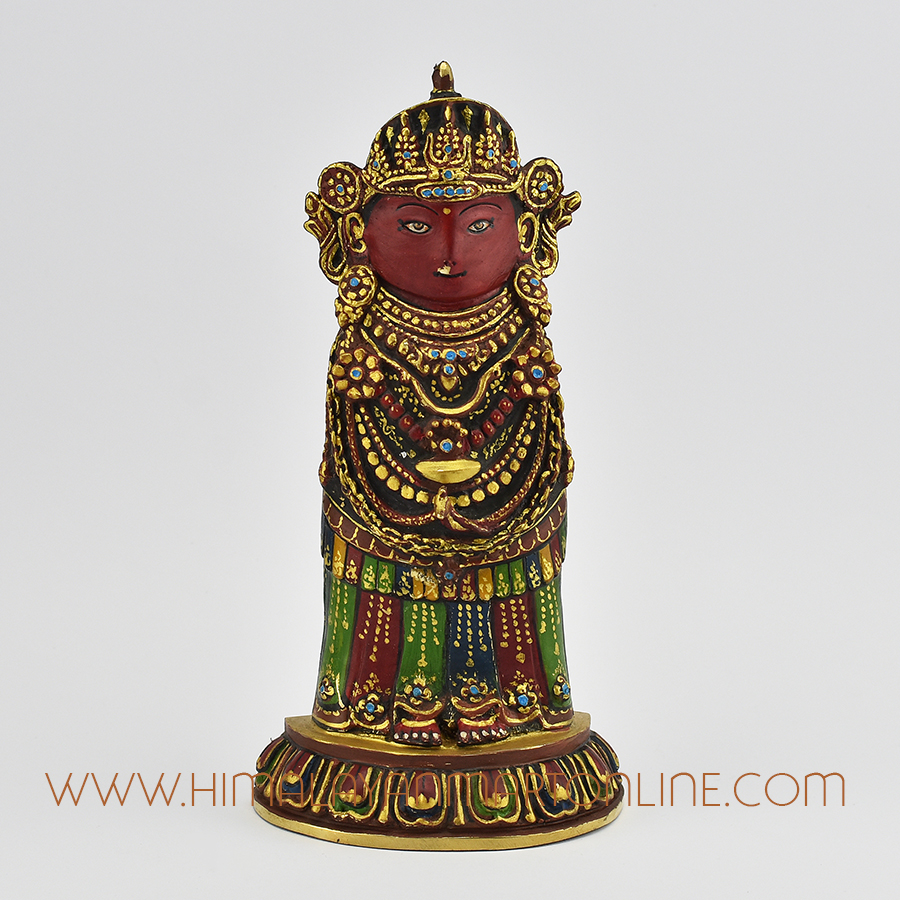
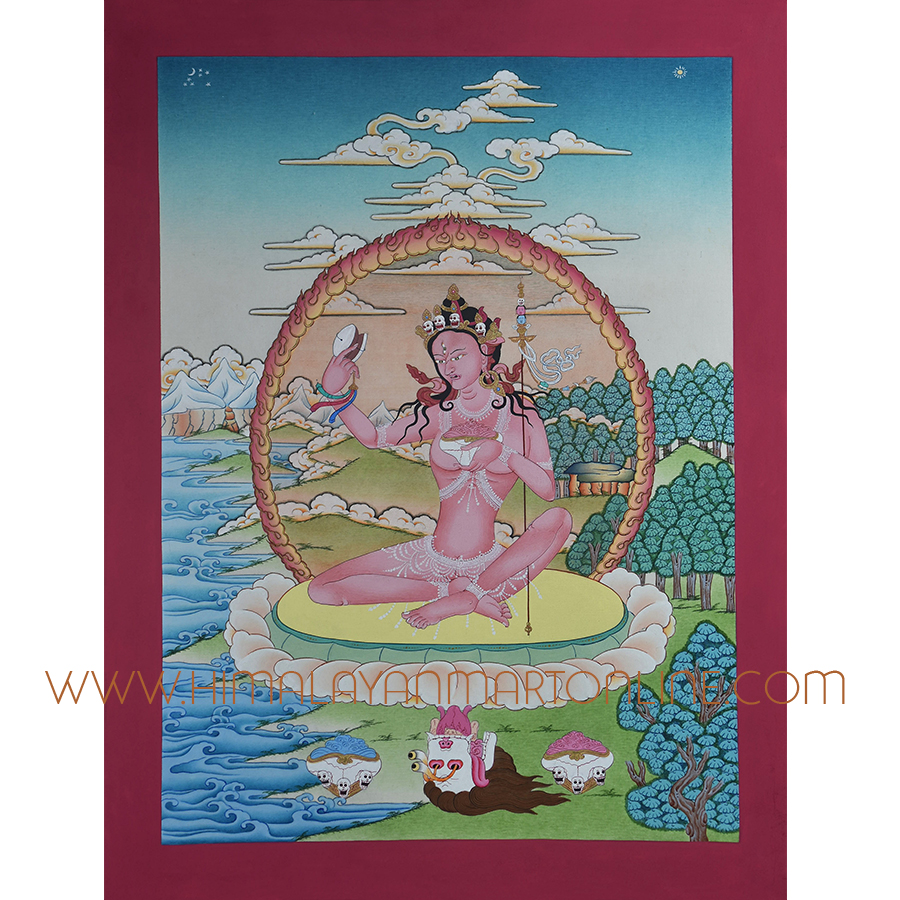
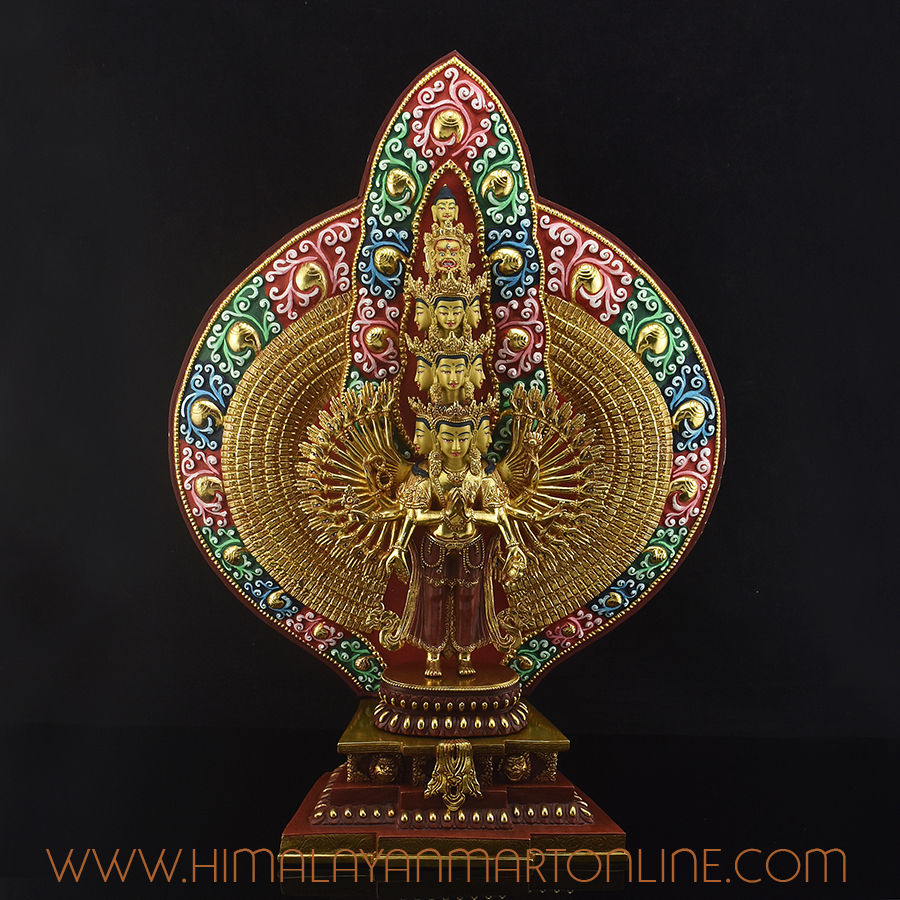
In Tibetan art, Guru Rinpoche is often depicted in royal attire, Guru Rinpoche can be seen in his most well-known representation. His eyes are open in a piercing gaze; his face is wrathful and smiling, blazing magnificently with mysterious power. He cradles a Khatvanga in his left arm, representing his consort Mandarava, who arouses the realization of emptiness. His Khatvanga is crowned with three severed heads and a trident, symbolizing Guru Padmasambhava’s liberation from the three kayas of desire, form, and formlessness.

He wears a lotus hat ornamented with a sun and moon, representing skillful means and wisdom. His hat also has a Vajra top, symbolizing his unshakable samadhi, and is crowned with a vulture feather, representing his realization of the highest view. In his right hand, he holds a Vajra, an implement used in Tantric rituals to symbolize the union of conventional and ultimate truth. His left hand rests in his lap in the gesture of meditation (Dhyana Mudra) and holds a skull cup containing the nectar vase of immortality. The vase is filled with the nectar of deathless wisdom and is adorned with the leaves of a sacred flowering tree. The vase further serves as a reminder of Guru Padmasambhava’s connection to Buddha Amitabha, as it is the special emblem of Amitayus (an aspect of Amitabha). He is usually shown seated on a lotus throne, with a trident staff resting against his shoulder, symbolizing his tantric power and the three kayas (bodies) of Buddhahood.

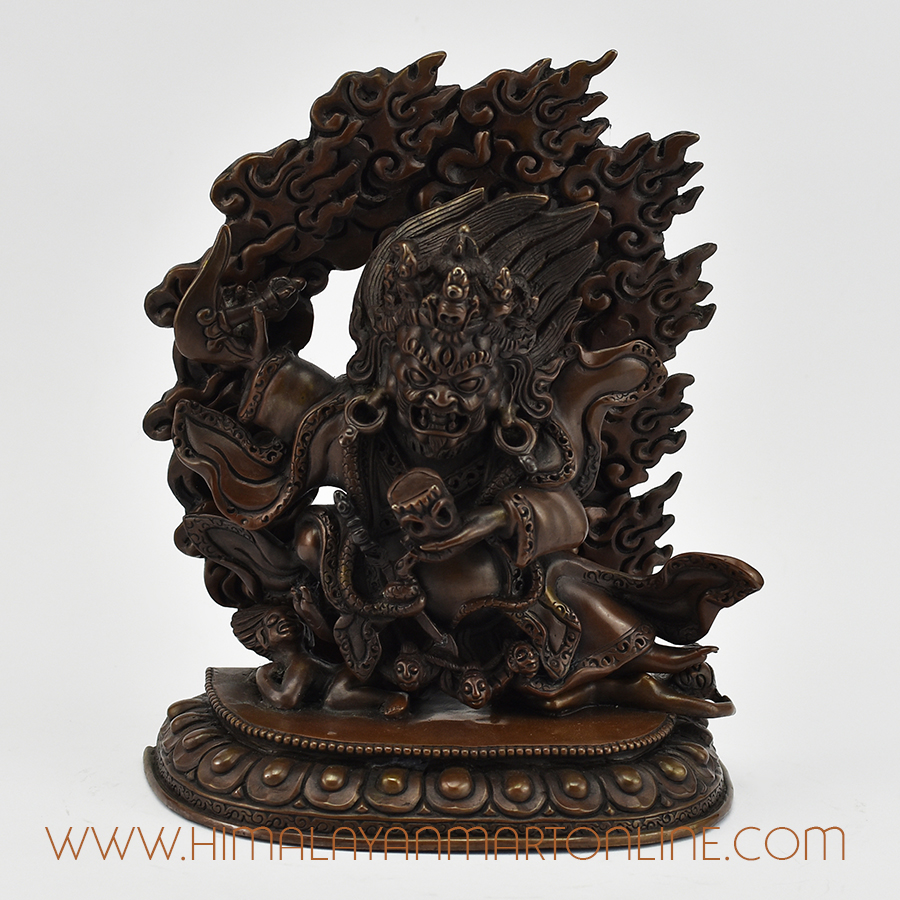
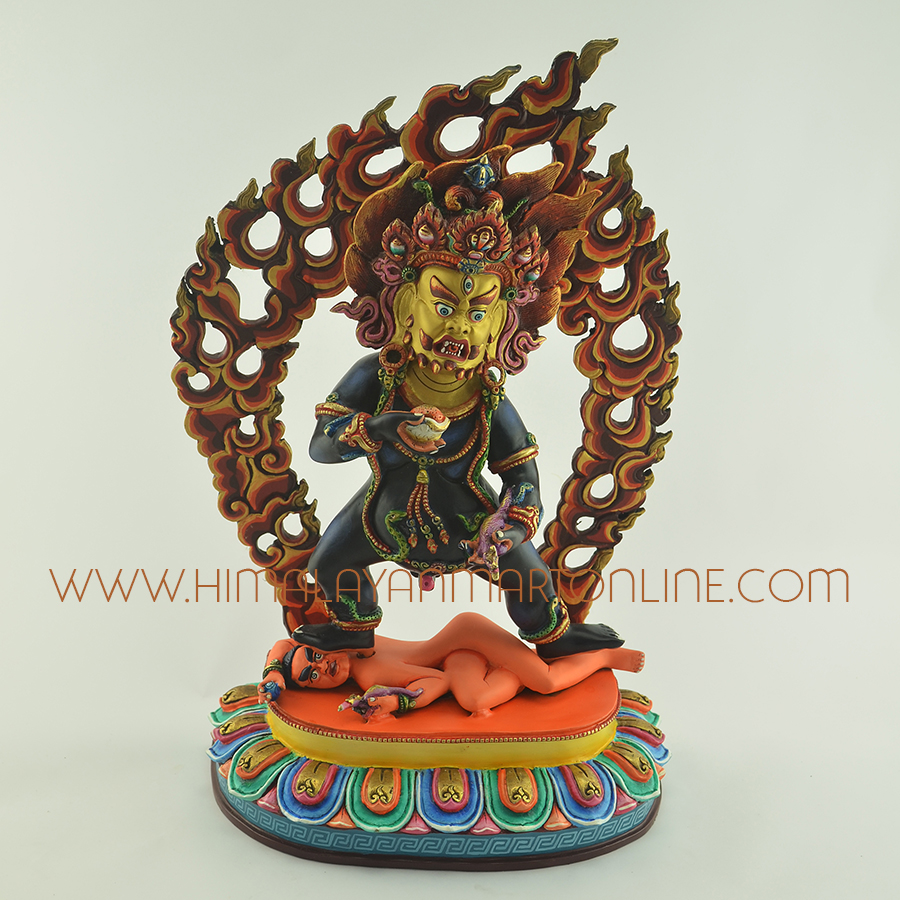
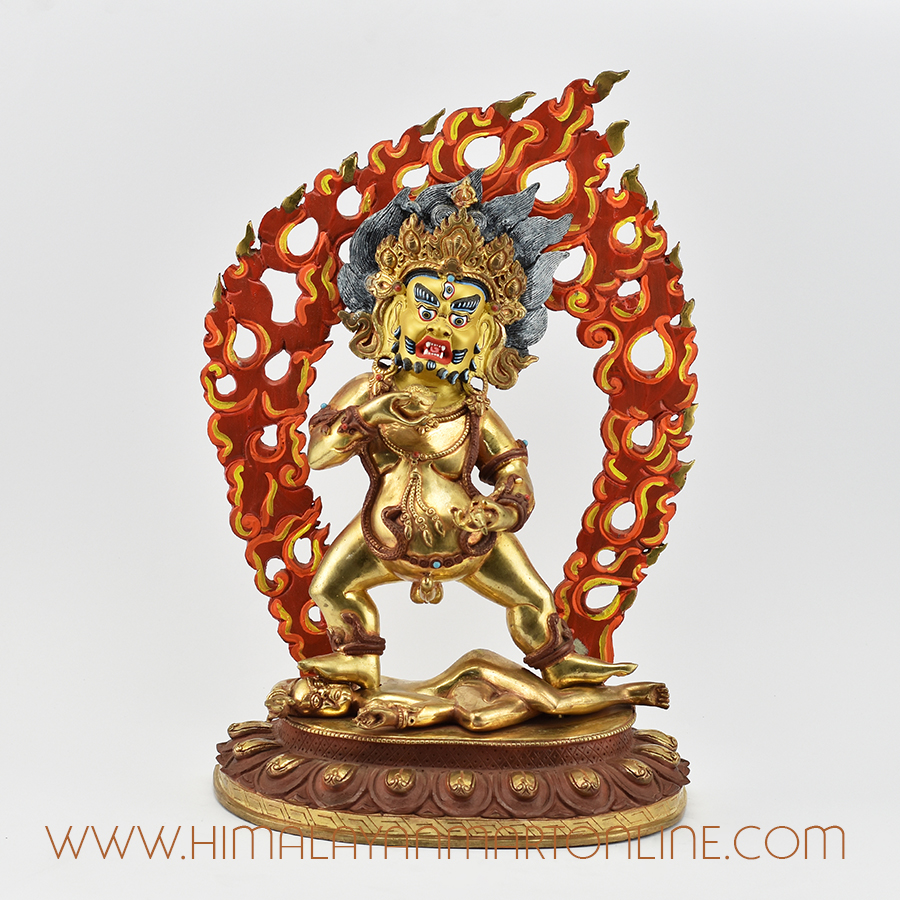
Besides his popular form, he is also depicted in various forms, including the fierce manifestation known as Guru Dragpo, symbolizing his ability to protect and guide practitioners. His legacy continues through the rituals and prayers performed by his followers, who recite his mantras and celebrate his teachings.

Significance and Contributions to Tibetan Buddhism

Guru Rinpoche / Padmasambhava is credited with introducing and establishing the Nyingma School of Tibetan Buddhism in the 8th century. He was invited to Tibet by King Trisong Detsen to help overcome various obstacles, including demonic forces that impeded the spread of Buddhism. With his extraordinary powers, he is said to have subdued these forces and laid the groundwork for the construction of Samye Monastery, the first Buddhist Monastery in Tibet.

Guru Rinpoche’s influence on Tibetan Buddhism cannot be overstated. He is revered not only as a historical figure but also as a timeless presence who continues to guide practitioners through his blessings and teachings. His life and deeds are celebrated annually in the festival known as “Guru Rinpoche Day,” observed on the 10th day of the lunar month. This day is considered highly auspicious for receiving his blessings.

Guru Rinpoche’s teachings emphasize the importance of direct experience in spiritual practice, the power of devotion, and the integration of wisdom and compassion. His legacy lives on through the numerous texts, rituals, and practices that he introduced, which remain central to Tibetan Buddhism today.

Throughout his life, Guru Rinpoche taught numerous disciples, including the king himself and many other prominent figures, imparting teachings that emphasized the importance of tantric practices and the realization of one’s innate Buddha nature. His teachings were often preserved in the form of terma, or hidden treasures, which would be revealed by future masters known as tertons. Guru Rinpoche is not only a foundational figure in Tibetan Buddhism but also a symbol of wisdom and compassion, whose teachings continue to inspire countless practitioners across the globe. He is a figure of profound spiritual significance, embodying the fusion of Indian tantric Buddhism and Tibetan spiritual traditions. His teachings continue to inspire and guide practitioners on the path to enlightenment, making him a central figure in the spiritual heritage of Tibet and beyond. His life story, filled with miraculous events and profound teachings, remains a source of spiritual guidance and inspiration for many.
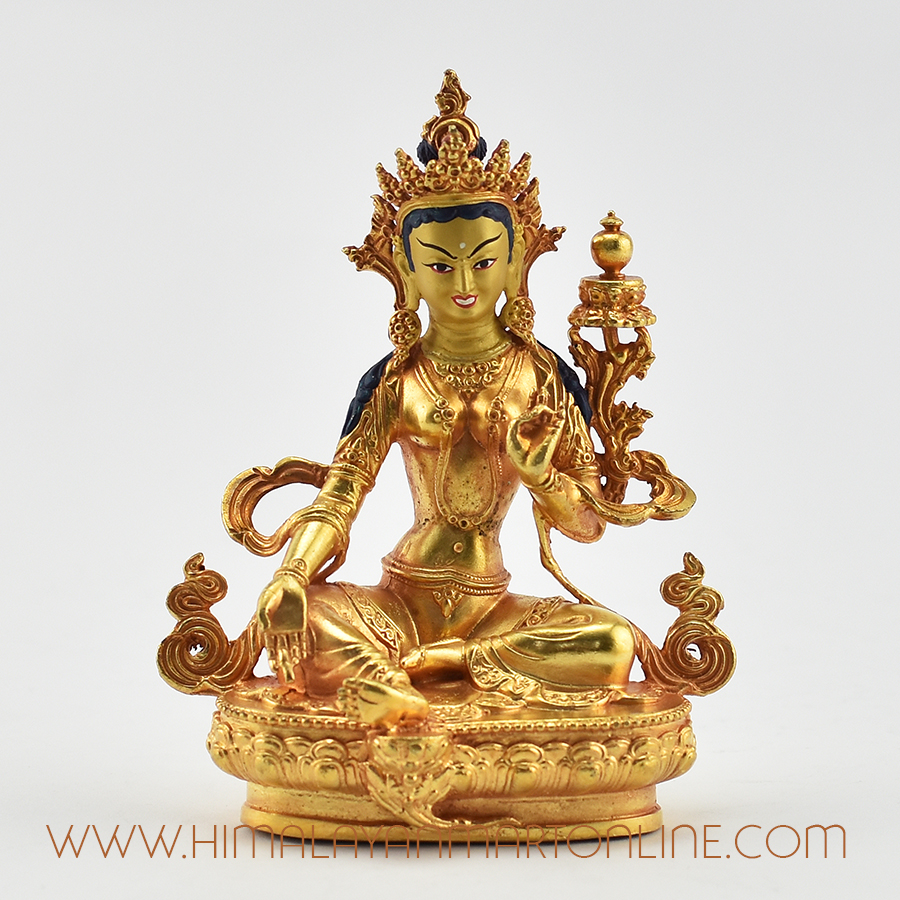
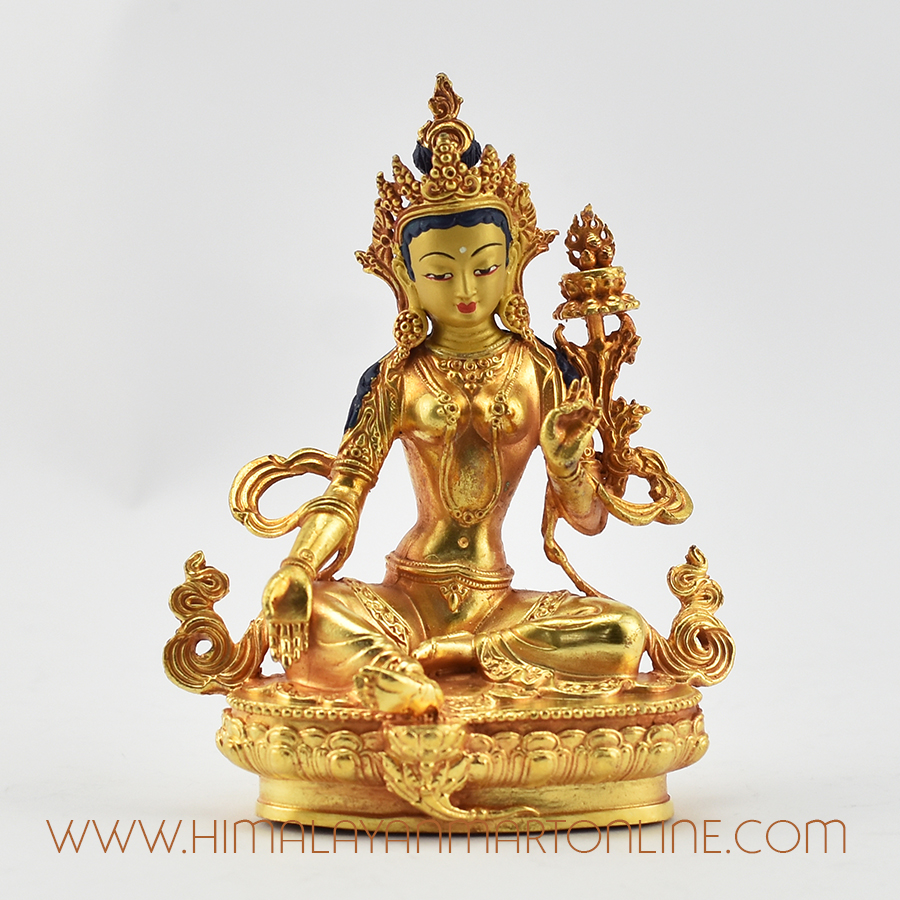
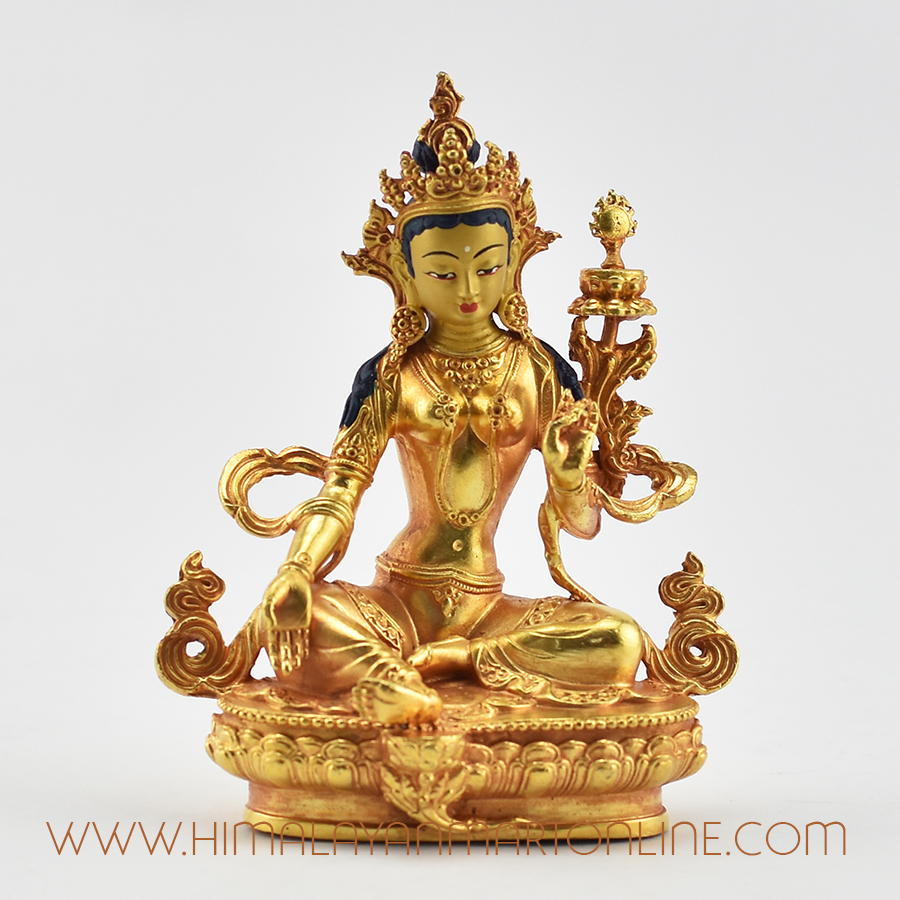
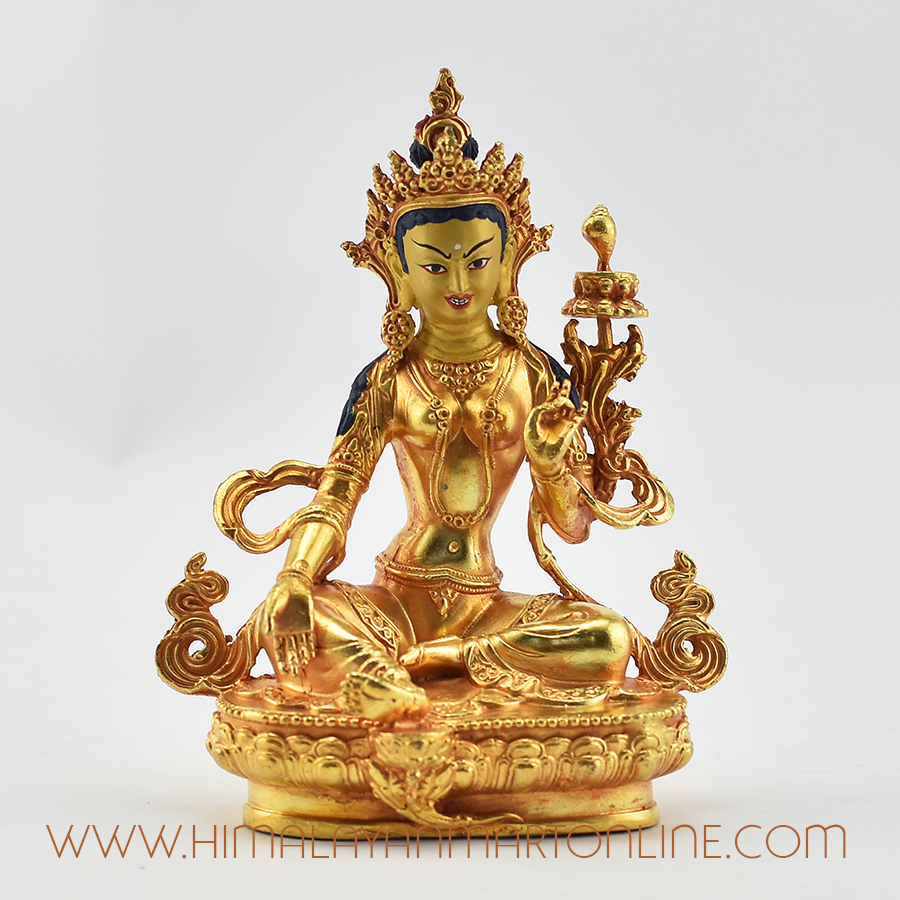
Tara Wangdu Rigje Lhamo (Kurukulle) – One of the Twenty One (21) Taras

Tara Wangdu Rigje Lhamo (Kurukulle) {Red}

OM TARE TUTTARE TURE KURU KULLE NRI DZA SVAHA ཨོཾ་ཏཱ་རེ་ཏུཏྟཱ་རེ་ཏུ་རེ་ཀུ་རུ་ཀུལྨེ་ནྲེ་ཛཿསྭཱ་ཧཱ།

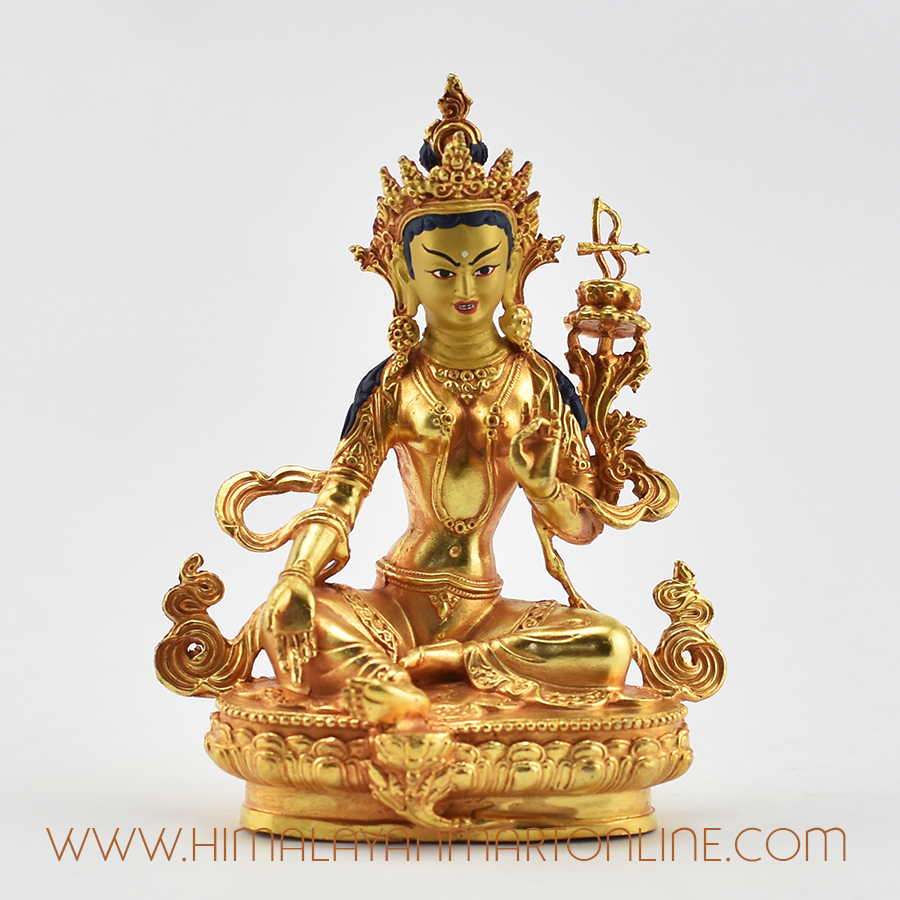
Tara Wangdu Rigje Lhamo (Kurukulle), semi-wrathful and adorned in a vibrant red hue, embodies the dynamic power of enlightened activity. Her mantra, TUTTARE, blazes with rainbow light, its sound resonating with the magnetizing force that arises from the union of emptiness and compassion. This potent combination conquers obstacles and transforms negative energies.

Tara Wangdu Rigje Lhamo (Kurukulle)

In her iconography, Rigjé Lhamo holds a Utpala flower, upon which rests a bow and arrow poised to shoot sharp rays of light. These rays are aimed at destroying arrogant pride, symbolizing her ability to cut through the ego and illuminate the path of humility and wisdom. Rigjé Lhamo effortlessly accomplishes the four enlightened actions: pacifying, enriching, magnetizing, and subduing. Her semi-wrathful presence serves as a powerful reminder of the transformative potential inherent in the enlightened heart. Through her fierce compassion, she guides practitioners to overcome their inner and outer obstacles, paving the way for spiritual growth and enlightenment.

Discover the beauty of 21 Tara Statues – Click here to buy now!

Tara Tsugtor Namgyalma (Ushnishaviyaha) – One of the Twenty One (21) Taras

Tara Tsugtor Namgyalma (Ushnishaviyaha) {Golden Yellow}

OM TARE TUTTARE TURE AYUR DATE BHRUM SVAHA            ཨོཾ་ཏཱ་རེ་ཏུཏྟཱ་རེ་ཏུ་རེ་ཨྰཿཡྰ་རྡ་ཏེ་པྷྰུྂ་སྭཱ་ཧཱ།

Tara Tsugtor Namgyalma, serene and radiant in golden yellow, emanates from the crown chakra of the Buddha as Prajnaparamita, the embodiment of transcendent wisdom. She stands victorious over all non-virtue and afflictive emotions, guiding beings toward purity and enlightenment.

Tara Tsugtor Namgyalma

In her iconography, Tsugtor Namgyalma holds a Utpala flower, upon which rests a vase of immortality. This vase radiates light in all ten directions, symbolizing her boundless compassion and wisdom. The light transforms the radiant essence of both samsara and nirvana into nectar, which fills her vase, signifying the ultimate union and transcendence of dualities. Her peaceful yet powerful presence is a beacon of hope and transformation, reminding practitioners of the potential to overcome negative emotions and cultivate virtues. Through her guidance, they can transcend the cycles of samsara and realize the bliss of nirvana. Tsugtor Namgyalma’s golden glow and the vase of immortality she holds are potent symbols of eternal wisdom and the transformative power of the enlightened heart.

Tsugtor Namgyalma’s iconography is a powerful reminder of the transformative power of the enlightened heart. Her presence serves as a beacon of hope, guiding practitioners toward the realization of the ultimate truth and the transcendence of dualities.

Tsugtor Namgyalma’s iconography is a powerful reminder of the transformative power of the enlightened heart. Her presence serves as a beacon of hope, guiding practitioners toward the realization of the ultimate truth and the transcendence of dualities.

Discover the beauty of 21 Tara Statues – Click here to buy now!

Tara Sermo Sonam Tobche – One of the Twenty One (21) Taras

Tara Sermo Sonam Tobche {Golden Yellow}

OM TARE TUTTARE TURE MAHA PUNYE SVAHA            ཨོཾ་ཏཱ་རེ་ཏུཏྟཱ་རེ་ཏུ་རེ་མ་ཧྰ་པུནྱེ་སྭྼ་ཧཱ།་

Tara Sermo Sonam Tobche, serene and resplendent in a golden yellow hue, embodies the radiant energy of the rising sun. Her luminous form empowers practitioners, enabling them to undertake vast oceans of bodhisattva activities with unwavering dedication. Through her benevolence, she bestows wealth and longevity, guiding beings towards liberation through the practice of the six paramitas: generosity, discipline, patience, diligence, meditative stability, and transcendent wisdom.

Tara Sermo Sonam Tobche

In her iconography, Tara Sermo Sonam Tobche holds a Utpala flower, upon which rests a wish-fulfilling jewel. This jewel showers down whatever one desires, symbolizing the abundant blessings and fulfillment she bestows upon those who seek her guidance. Her body, radiating with the golden light of dawn, serves as a beacon of hope and inspiration, illuminating the path to spiritual growth and enlightenment. Her peaceful and radiant presence reminds practitioners of the transformative potential within themselves. By embodying the virtues she represents, they can cultivate the qualities necessary for liberation and the benefit of all beings. Sermo Sonam Tobche’s golden radiance and the wish-fulfilling jewel she carries are powerful symbols of the boundless generosity and wisdom that flow from the enlightened heart.

Sermo Sönam Tobkyé’s iconography is a powerful symbol of the boundless generosity and wisdom that arise from the enlightened heart. Her golden radiance and the wish-fulfilling jewel she carries serve as a potent reminder of the transformative power of the six paramitas, guiding practitioners towards a path of spiritual growth, liberation, and selfless service to others.

Discover the beauty of 21 Tara Statues – Click here to buy now!

Tara Loter Yangchenma – One of the Twenty One (21) Taras

Tara Loter Yangchenma {White}

OM TARE TUTTARE TURE PRAJNA HRIM HRIM SVAHA            ༀ་ཊཱ་རི་ཏུ་ཏྟྼ་རི་ཏུ་རི་བྲ་ཛྙཱ་ཧྼིཾ་ཧྼིཾ་སྭཱ་ཧཱ།་

Tara Loter Yangchenma, serene and adorned in a radiant white hue, embodies the peaceful essence of enlightened wisdom. She graciously unlocks the treasures of music, art, and profound knowledge, guiding beings toward the realization of the four types of wisdom: the understanding of meaning, the nature of phenomena, the comprehension of definitive words, and the mastery of courageous eloquence.

In her iconography, Loter Yang Chenma holds a Utpala flower, upon which rests a clear mirror inscribed with the sacred syllable HRIM. This mirror radiates light, symbolizing the clarity and purity of her wisdom. Her face shines with the luminous glow of one hundred autumn full moons, a testament to her serene and compassionate nature.

Through her presence, Loter Yang Chenma illuminates the path to enlightenment, offering the gifts of artistic inspiration and intellectual brilliance. She encourages practitioners to delve into the depths of wisdom and to express their insights with eloquence and courage. Her peaceful demeanor and the radiant symbols she carries serve as a reminder of the transformative power of wisdom and the boundless potential of the enlightened heart.

Loter Yang Chenma’s iconography is a powerful symbol of enlightened wisdom, guiding beings toward spiritual growth and self-awareness. Her peaceful demeanor and the symbols she carries serve as a reminder of the transformative power of wisdom and the boundless potential of the enlightened heart.

Discover the beauty of 21 Tara Statues – Click here to buy now!

Tara Nyurma Pamo – One of The Twenty One (21) Taras

Tara Nyurma Pamo {Red}

OM TARE TUTTARE TURE BODHICITTA SVAHA            ཨོཾ་ཏཱ་རེ་ཏུཏྟཱ་རེ་ཏུ་རེ་པོདྷེ་ཙིཏྟ་སྭཱ་ཧཱ།་

Tara Nyurma Pamo, semi-wrathful and adorned in a vibrant red hue, stands as a powerful force of liberation and protection. Her fierce yet compassionate presence frees beings from the suffering of samsara and shields them from fear. With her immense compassionate power, she removes obstacles and nurtures the growth of bodhicitta, the awakened heart.

Tara Nyurma Pamo (Red)

In her iconography, Tara Nyurma Pamo holds a Utpala flower, upon which rests a white conch shell that curls clockwise. This conch shell symbolizes the resounding and pervasive glory of both relative and absolute bodhicitta, echoing throughout the entire world. The clockwise spiral signifies the spread of the Dharma’s profound teachings, awakening beings to the path of enlightenment. Through her semi-wrathful demeanor, Tara Nyurma Pamo embodies the dynamic interplay of compassion and strength. She serves as a constant reminder of the urgency and determination needed to overcome the barriers to spiritual progress. Her radiant red presence and the symbolic conch shell inspire practitioners to cultivate their own Bodhichitta, spreading the transformative power of wisdom and compassion far and wide.

As practitioners engage with Nyurma Pamo’s practice, they are invited to cultivate their own Bodhichitta and to embody the qualities of compassion and wisdom that she represents. Through this process, they not only transform themselves but also contribute to the transformation of the world around them, spreading the far-reaching resonance of the Dharma like the sound of the conch shell.

Discover the beauty of 21 Tara Statues – Click here to buy now!

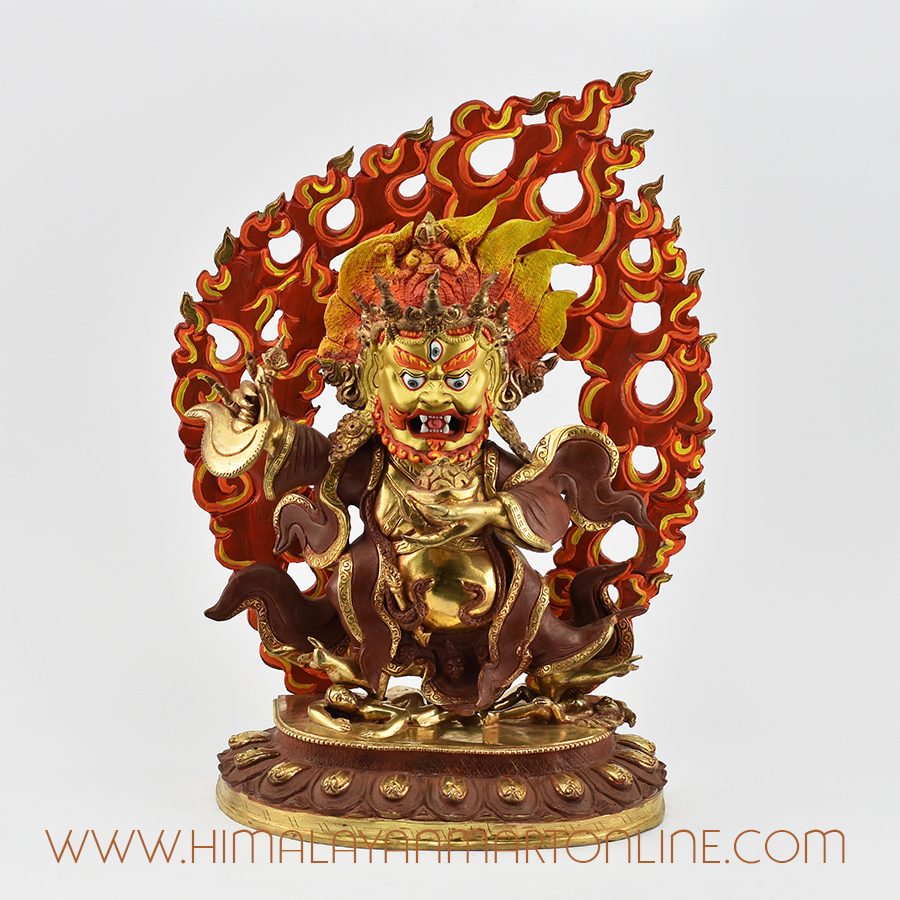
Bernagchen Mahakala – The Protector of the Karma Kagyu School

Bernagchen Mahakala, also known as Dorje Bernagchen, is a two-armed Mahakala who serves as a protector of the Karma Kagyu school in Tibetan Buddhism. He is often depicted as a wrathful deity, signifying his power to eliminate obstacles and opposing forces. Bernagchen Mahakala is deeply connected with the Karma Kagyu lineage, particularly with the Karmapas. This protective deity is described as figures possessing stout bodies, and short but thick and strong limbs. His flaming hair, decorated with a crown of skulls, rises from his forehead, while a circle of flames dance around him. His face possesses a typical wrathful expression. The mouth is contorted to an angry smile from its corners protrude long fangs. The protruding, bloodshot eyes have an angry and staring expression and usually a third eye is visible in the middle of the forehead. Various rituals and practices are associated with Bernagchen Mahakala to invoke his blessings and protect the practitioner from negative influences.

Bernagchen Mahakala Copper Statue

Bernagchen Mahakala is a central figure in Tibetan Buddhism, representing a fierce aspect of compassion and protection. His importance transcends religious rituals profoundly impacting art, culture, and spiritual lives of practitioners.

Gestures and Attributes

Appearance: Bernagchen Mahakala is typically depicted as a black-cloaked figure with three round protruding eyes, an open red mouth with white fangs, a beard, large eyebrows, and hair that flows upward. He holds a curved flying knife with a Vajra (spiritual implement) handle in his right hand, which symbolizes the cutting through of negative patterns such as aggression, hatred, and ignorance. In his left hand, he holds a blood-filled skull cup, a ritual element typically filled with blood or human brain matter. He wears a crown of five white skulls, earrings, bracelets, and a garland of freshly severed heads around his waist. He is seen standing on the corpse of two human bodies, thus symbolizing the death of negativities and the complete uprooting of negative patterns to such a point that, like a dead body, they will not come to life.

Bernagchen Mahakala Statue

Symbolism: Bernagchen embodies a formidable manifestation of compassion and safeguarding. His appearance and attire symbolize his power to overcome self-deception, revenge, greed, anger, and ignorance.

Rituals and practices: Various rituals and practices are associated with Bernagchen Mahakala to invoke his blessings and protect the practitioner from negative influences. These include elaborate offerings, recitations, daily worship, invocation of blessings, Mahakala Puja, dispelling negativities, empowerment, and spiritual commitment.

The Mystical Essence of Black Dzambhala: A Wealth Deity in Tibetan Buddhism

Black Dzambhala – Introduction:

Black Dzambhala, also known as Kubera or Jambhala, is a deity deeply revered in Tibetan Buddhism for his association with wealth, prosperity, and abundance. This divine figure is often depicted as a wrathful emanation of Avalokiteshvara, the bodhisattva of compassion. Black Dzambhala is renowned for his ability to eliminate poverty and bestow financial blessings upon his devotees, making him a prominent figure in the pantheon of Tibetan Buddhist wealth deities.

Black Dzambhala Statue

Origins and Iconography:

The origins of Black Dzambhala can be traced back to ancient Buddhist scriptures, where he is described as a powerful deity who guards the northern direction and presides over the treasures of the earth. Iconographically, he is portrayed with a fierce countenance, holding a mongoose spouting jewels in one hand and a citron or jewel-spouting lemon in the other. The mongoose symbolizes the deity’s power to transform negative circumstances into positive ones, while the jewel represents the wealth and prosperity he bestows upon his followers.

Meaning and Symbolism:

Black Jambhala’s wrathful appearance and symbols carry deep symbolic meanings. His fierce countenance is a reminder of his determination to eradicate poverty and obstacles hindering the path to prosperity. The mongoose and jewel illustrate the transformative power of wealth – turning difficulties into opportunities and providing the means to lead a fulfilling life. Devotees believe that by invoking Black Dzambhala, they can overcome financial hardships and attain abundance.

Black Dzambhala

Mantras and Rituals:

Devotees often recite specific mantras associated with Black Dzambhala to invoke his blessings and attract prosperity. One of the most popular mantras is the Black Dzambhala Mantra, which is believed to enhance one’s financial well-being. Rituals and ceremonies dedicated to Black Dzambhala involve offerings of various substances, such as grains, flowers, and fruits, symbolizing devotion and gratitude.

Practitioners may also engage in visualizations and meditation practices to connect with the deity on a deeper level. The goal is not just material wealth but also spiritual abundance and the removal of obstacles hindering one’s spiritual progress.

The Wealth Vase:

In Tibetan Buddhist traditions, the Wealth Vase, also known as the Treasure Vase, is closely associated with Black Dzambhala. This sacred vessel is filled with precious items, grains, and medicinal substances, symbolizing wealth and abundance. The Wealth Vase is consecrated through rituals and then placed in homes or businesses to attract prosperity and good fortune.

Conclusion:

Black Dzambhala holds a unique place in Tibetan Buddhism as a deity associated with wealth and abundance. While the external manifestations of wealth are certainly significant, the teachings surrounding Black Dzambhala also emphasize the importance of inner wealth – virtues such as generosity, compassion, and ethical conduct. Through devotion, meditation, and rituals, followers seek not only financial prosperity but also spiritual well-being on their journey towards enlightenment.

Buddha on a Lotus Base

The Buddha seated on a lotus base represents a classic and revered iconography in Buddhist art and symbolism. The lotus, often associated with purity and enlightenment, serves as a powerful metaphor for the journey of spiritual awakening.

In this depiction, the Buddha is elegantly seated atop a single lotus flower. The choice of a lotus as the base holds deep significance, as the lotus grows from the mud yet remains unstained—a symbol of purity emerging from the impurities of the material world. The single lotus, in particular, signifies a focused and centered state of being.

Buddha on Lotus Base: Shakyamuni Buddha / Sangye Ompame

The Buddha’s posture, known as the meditation or Dhyana mudra, reflects a state of deep contemplation and tranquility. The hands are typically placed in the lap, right hand over the left, with both palms facing upward. This mudra signifies the Buddha’s meditation under the Bodhi tree, where he attained enlightenment.

The lotus base not only complements the symbolism of the Buddha’s enlightenment but also adds an aesthetic elegance to the overall sculpture. The unfolding petals of the lotus represent the gradual opening of the heart and mind towards enlightenment, mirroring the stages of spiritual development. This portrayal captures the essence of the Buddha’s teachings—the journey from ignorance to enlightenment, from the murky depths of worldly attachments to the pristine clarity of spiritual insight. The combination of the Buddha and the lotus base creates a harmonious and visually striking representation, inviting contemplation and reflection on the path to awakening.

The timeless image of the Buddha seated on a lotus base is not merely an artistic representation but a visual narrative of spiritual evolution. The lotus serves as a poignant reminder of purity emerging from the impurities of life, creating a captivating and spiritually resonant tableau that continues to inspire seekers on their journey towards enlightenment.

Rato Machhindranath – Living Goddess of Rain

In the Kathmandu Valley of Nepal, amidst the bustling streets and ancient temples, a remarkable tradition unfolds every year signifying the harmonious blend of spirituality and culture that defines the region. At the heart of this tradition stands Rato Machhindranath, a deity revered as the Living Goddess of Rain. In this article, we delve into the rich history, cultural significance, and enduring relevance of Rato Machhindranath.

Rato Machhindranath Statue

The Origins of Rato Machhindranath

Rato Machhindranath is a deity associated with the Newar community of the Kathmandu Valley, known for its distinct culture and religious practices. The name “Machhindranath” is derived from the Sanskrit words “Matsya” (fish) and “Indra” (king), referring to a legendary fish that King Gunakamadeva caught while performing a religious penance. This divine event is believed to have brought rain to the parched land, and Machhindranath was subsequently venerated as the deity responsible for ensuring rainfall and agricultural prosperity.

The Chariot Festival: A Spectacle of Devotion

The most iconic and grand celebration of Rato Machhindranath’s presence is the Rato Machhindranath Jatra, a month-long chariot festival that takes place annually. This festival typically occurs in the spring, usually April or May, coinciding with the onset of the monsoon season. The main attraction of the festival is the enormous wooden chariot of Rato Machhindranath, which is pulled through the narrow streets of Kathmandu by hundreds of devotees.

The chariot, adorned with intricate woodwork and vibrant decorations, symbolizes the deity’s journey to bring rain to the valley. The festival provides an opportunity for people from all walks of life to come together, fostering a sense of belonging and unity. It also serves as a platform for showcasing traditional music, dance, and art forms, preserving the cultural heritage of the Kathmandu Valley. Rato Machhindranath, the Living Goddess of Rain, stands as a testament to the profound relationship between spirituality, culture, and community in Nepal’s Kathmandu Valley. The annual chariot festival, with grandeur and devotion, encapsulates the essence of this revered deity and the enduring traditions of the Newar people. As Rato Machhindranath’s chariot traverses the streets, it symbolizes not only the hope for rain but also the unity and cultural richness of the region – a living testament to Nepal’s vibrant spiritual and cultural heritage.

Niguma Thangka Scroll Painting

Niguma – The Lady of Illusion

Niguma was a great yogini and female Tantric master who lived during the 11th century. She was a Dakini who defied social conventions by being one of the few influential female lineage holders of ancient India to have proliferated an important Tantric lineage. Niguma was closely related to Guru Naropa; it is believed that Niguma received teachings on the Six Yogas from Naropa. The corpus of her teachings have become the foundation of the Shangpa Kagyu Buddhist tradition. The Shangpa Kagyu is hailed as one of the “Eight Great Chariots of the Practice Lineages” which means that it is one of the most important Buddhist traditions brought from India to Tibet. The legacy of the great yogini Niguma as a meditator, teacher, mystic, and founder of a lineage endures to this day.

Gesture and Attributes

Niguma is depicted as a black Dakini in semi wrathful form with three eyes including the one in the center of her forehead. She wears crown made from skulls, necklaces, armlets and anklets. Her right hand holds a Damaru and her left hand holds a Kapala filled with blood. She also holds a Khatvanga similar to that of Vajrayogini.

Niguma Thangka Scroll Painting

About this Niguma Thangka Scroll Painting

This is a Tibetan Style Thangka Scroll Painting which is entirely hand painted by the experienced artisan using same ancient techniques. This Niguma Thangka Scroll Painting is hand painted on cotton canvas with 24 karat gold detailing; by the artisans of Patan in Nepal who have been in the business from generations.

Thousand Armed Avalokiteshvara / Chenrezig – Bodhisattva of Boundless Compassion

Thousand Armed Avalokiteshvara: Avalokiteshvara (Guan Yin in Chinese; Chenrezig in Tibetan; Kannon in Japanese) is the Bodhisattva of Compassion. Among the Bodhisattvas, it is Avalokeshvara who has the largest number of forms and is perhaps the most venerated and most popular Buddhist deity. His sex, originally masculine, is sometimes considered feminine in China and Japan, although this discrimination is unsupported by any canonical text and was often considered in China and Japan as the ‘mother of the human race’ and, in this respect, worshiped in the form of a woman.

Among the 108 forms of Lokiteshvara, Avalokeshvara is one who refuses to accept Nirvana since he considers such acceptance selfish in view of the ignorance of the great majority of the people who have not yet attained that stage. His sacrifice symbolizes infinite compassion (Karuna), sharing of mankind’s misery, willingness to help those in distress. Avalokeshvara holds in his hand the indestructible jewel. He is savior and protector from danger. So, his invocation (Mantra) “OM MANI PADME HUM” is found inscribed on rocks, loose stones, prayer wheels, etc.

Avalokiteshvara is known from very early in the development of the Mahayana doctrines and, until Buddhism disappeared from India, enjoyed great favor there. His cult passed from India to South-East Asia and Java, where it met with great success, and also in Nepal, Tibet (where he arrived with Buddhism and where King Srong – Tsong Gampo, 519-650, was considered to be his incarnation), and in China, from where he went on to Korea and Japan. All these countries imagined him in different forms according to their own temperaments and spirituality.

500Thousand Armed Avalokiteshvara

Gestures and Attributes of Thousand Armed Avalokiteshvara

It is said that Chenrezig once grew exhausted and discouraged from the overwhelming task of rescuing sentient beings. While struggling to comprehend the needs of so many, his head and body exploded into a thousand pieces. Buddha Amitabha came to Chenrezig’s aid and helped prepare the Bodhisattva for his monumental task. Amitabha endowed Chenrezig with eleven heads, with which to hear the cries of the suffering, and also with a thousand arms, with which to aid the suffering multitudes.

Chenrezig’s eleven faces are arranged in three tiers, topped by the wrathful face of Vajrapani, and, at the very top, the face of Buddha Amitabha. The skin of a deer is draped over Chenrezig’s left shoulder and heart, symbolizing his compassionate nature. His first two principal hands are pressed together at his heart in deference to his teacher, Amitabha; and his other principal hands hold a crystal rosary, a lotus blossom, an undrawn bow and arrow, an eight-spoked Dharma wheel, and a golden water pot. Each of Chenrezig’s one thousand hands has an eye in the center of its palm, symbolizing the union of the five method perfections (five fingers) with the sixth perfection of wisdom (eye).

Subscribe To Our Newsletter