
The Buddha seated on a lotus base represents a classic and revered iconography in Buddhist art and symbolism. The lotus, often associated with purity and enlightenment, serves as a powerful metaphor for the journey of spiritual awakening.
In this depiction, the Buddha is elegantly seated atop a single lotus flower. The choice of a lotus as the base holds deep significance, as the lotus grows from the mud yet remains unstained—a symbol of purity emerging from the impurities of the material world. The single lotus, in particular, signifies a focused and centered state of being.
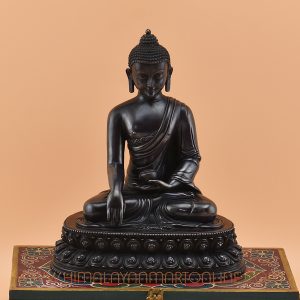
The Buddha’s posture, known as the meditation or Dhyana mudra, reflects a state of deep contemplation and tranquility. The hands are typically placed in the lap, right hand over the left, with both palms facing upward. This mudra signifies the Buddha’s meditation under the Bodhi tree, where he attained enlightenment.
The lotus base not only complements the symbolism of the Buddha’s enlightenment but also adds an aesthetic elegance to the overall sculpture. The unfolding petals of the lotus represent the gradual opening of the heart and mind towards enlightenment, mirroring the stages of spiritual development. This portrayal captures the essence of the Buddha’s teachings—the journey from ignorance to enlightenment, from the murky depths of worldly attachments to the pristine clarity of spiritual insight. The combination of the Buddha and the lotus base creates a harmonious and visually striking representation, inviting contemplation and reflection on the path to awakening.
The timeless image of the Buddha seated on a lotus base is not merely an artistic representation but a visual narrative of spiritual evolution. The lotus serves as a poignant reminder of purity emerging from the impurities of life, creating a captivating and spiritually resonant tableau that continues to inspire seekers on their journey towards enlightenment.
