
Black Dzambhala – Introduction:
Black Dzambhala, also known as Kubera or Jambhala, is a deity deeply revered in Tibetan Buddhism for his association with wealth, prosperity, and abundance. This divine figure is often depicted as a wrathful emanation of Avalokiteshvara, the bodhisattva of compassion. Black Dzambhala is renowned for his ability to eliminate poverty and bestow financial blessings upon his devotees, making him a prominent figure in the pantheon of Tibetan Buddhist wealth deities.
Origins and Iconography:
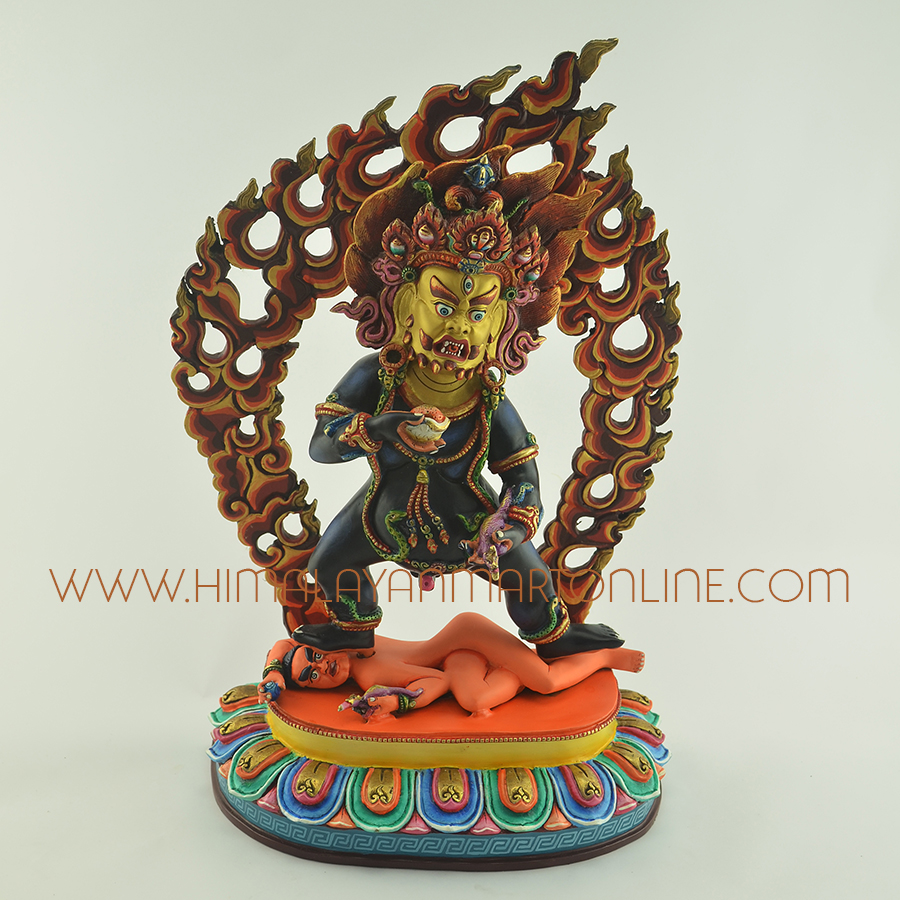
The origins of Black Dzambhala can be traced back to ancient Buddhist scriptures, where he is described as a powerful deity who guards the northern direction and presides over the treasures of the earth. Iconographically, he is portrayed with a fierce countenance, holding a mongoose spouting jewels in one hand and a citron or jewel-spouting lemon in the other. The mongoose symbolizes the deity’s power to transform negative circumstances into positive ones, while the jewel represents the wealth and prosperity he bestows upon his followers.
Meaning and Symbolism:
Black Jambhala’s wrathful appearance and symbols carry deep symbolic meanings. His fierce countenance is a reminder of his determination to eradicate poverty and obstacles hindering the path to prosperity. The mongoose and jewel illustrate the transformative power of wealth – turning difficulties into opportunities and providing the means to lead a fulfilling life. Devotees believe that by invoking Black Dzambhala, they can overcome financial hardships and attain abundance.
Mantras and Rituals:
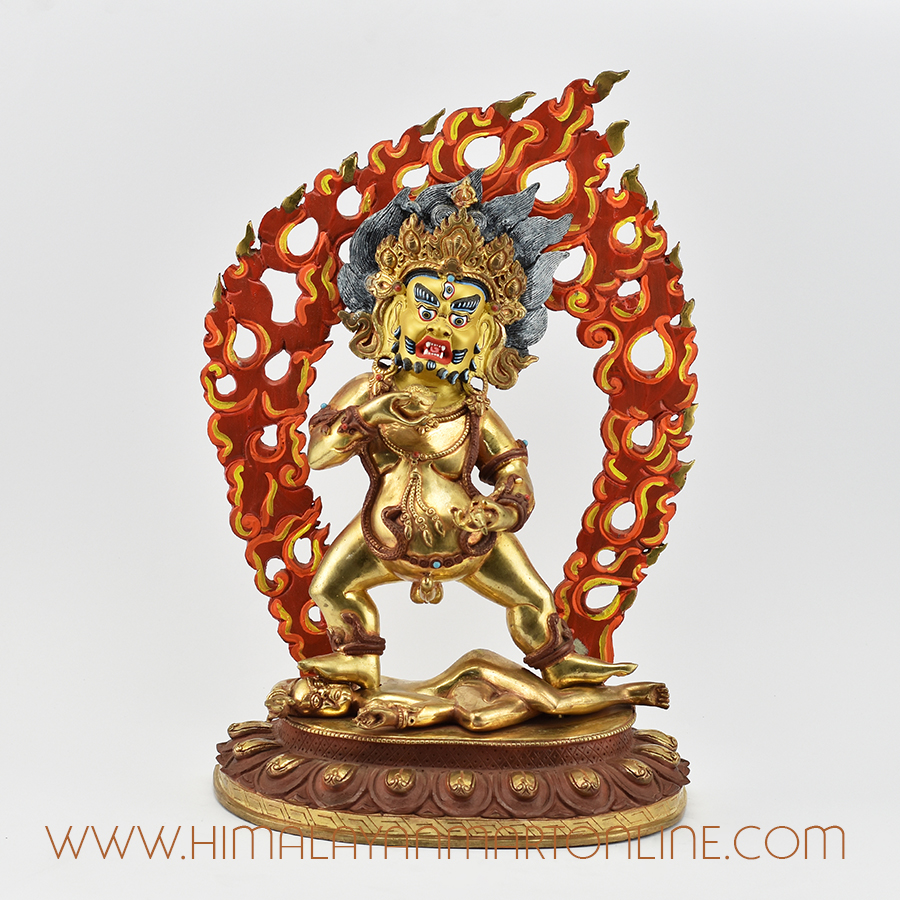
Devotees often recite specific mantras associated with Black Dzambhala to invoke his blessings and attract prosperity. One of the most popular mantras is the Black Dzambhala Mantra, which is believed to enhance one’s financial well-being. Rituals and ceremonies dedicated to Black Dzambhala involve offerings of various substances, such as grains, flowers, and fruits, symbolizing devotion and gratitude.
Practitioners may also engage in visualizations and meditation practices to connect with the deity on a deeper level. The goal is not just material wealth but also spiritual abundance and the removal of obstacles hindering one’s spiritual progress.
The Wealth Vase:
In Tibetan Buddhist traditions, the Wealth Vase, also known as the Treasure Vase, is closely associated with Black Dzambhala. This sacred vessel is filled with precious items, grains, and medicinal substances, symbolizing wealth and abundance. The Wealth Vase is consecrated through rituals and then placed in homes or businesses to attract prosperity and good fortune.
Conclusion:
Black Dzambhala holds a unique place in Tibetan Buddhism as a deity associated with wealth and abundance. While the external manifestations of wealth are certainly significant, the teachings surrounding Black Dzambhala also emphasize the importance of inner wealth – virtues such as generosity, compassion, and ethical conduct. Through devotion, meditation, and rituals, followers seek not only financial prosperity but also spiritual well-being on their journey towards enlightenment.
