
Black Dzambhala, a prominent deity in Tibetan Buddhism associated with wealth and prosperity, is often depicted with specific gestures and attributes that carry symbolic meanings. These visual representations contribute to the rich iconography surrounding the deity, conveying messages about his qualities and functions. Here are some key gestures and attributes associated with Black Dzambhala:
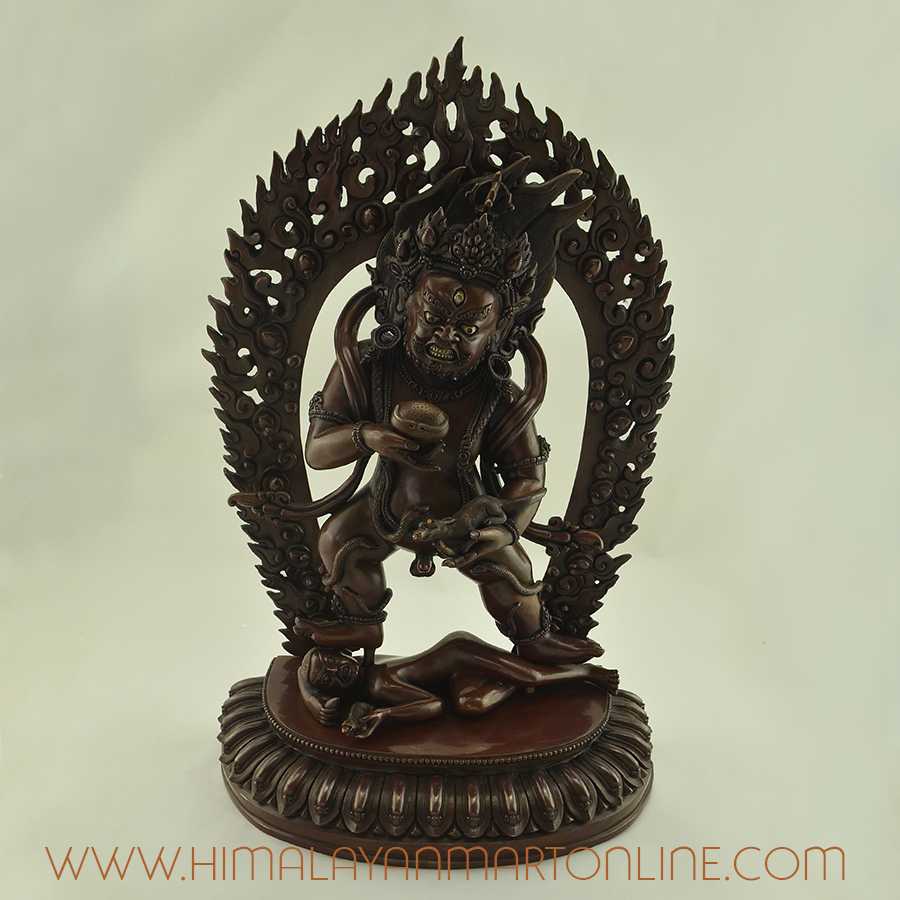
Fierce Countenance:
Black Dzambhala is commonly portrayed with a wrathful or fierce expression. This fierce countenance symbolizes his determination and power to overcome obstacles, particularly those related to poverty and financial difficulties. The intensity of his appearance signifies the strength needed to eliminate challenges and bring about positive transformations.
Mongoose and Jewel:
One of the most distinctive attributes of Black Dzambhala is the mongoose spouting jewels. In his right hand, he holds a mongoose, and in some depictions, the mongoose emits a continuous stream of jewels from its mouth. This symbolizes Black Dzambhala’s ability to transform adversity and scarcity into abundance and prosperity. The mongoose is considered a powerful creature in this context, capable of converting negative circumstances into positive outcomes.
Jewel-Spouting Lemon or Citron:
In his left hand, Black Dzambhala often holds a citron or jewel-spouting lemon. This fruit represents the wealth and treasures that he bestows upon his devotees. The imagery emphasizes the abundance of spiritual and material wealth that Black Dzambhala offers to those who seek his blessings.
Dzambhala’s Mudra (Hand Gesture):
The hand gesture, or mudra, of Black Dzambhala is significant. His right hand, holding the mongoose, is often raised in a gesture known as the Varada Mudra. This mudra symbolizes the granting of boons and blessings. It signifies Black Dzambhala’s willingness to fulfill the wishes and aspirations of his followers, particularly in the realm of wealth and prosperity.
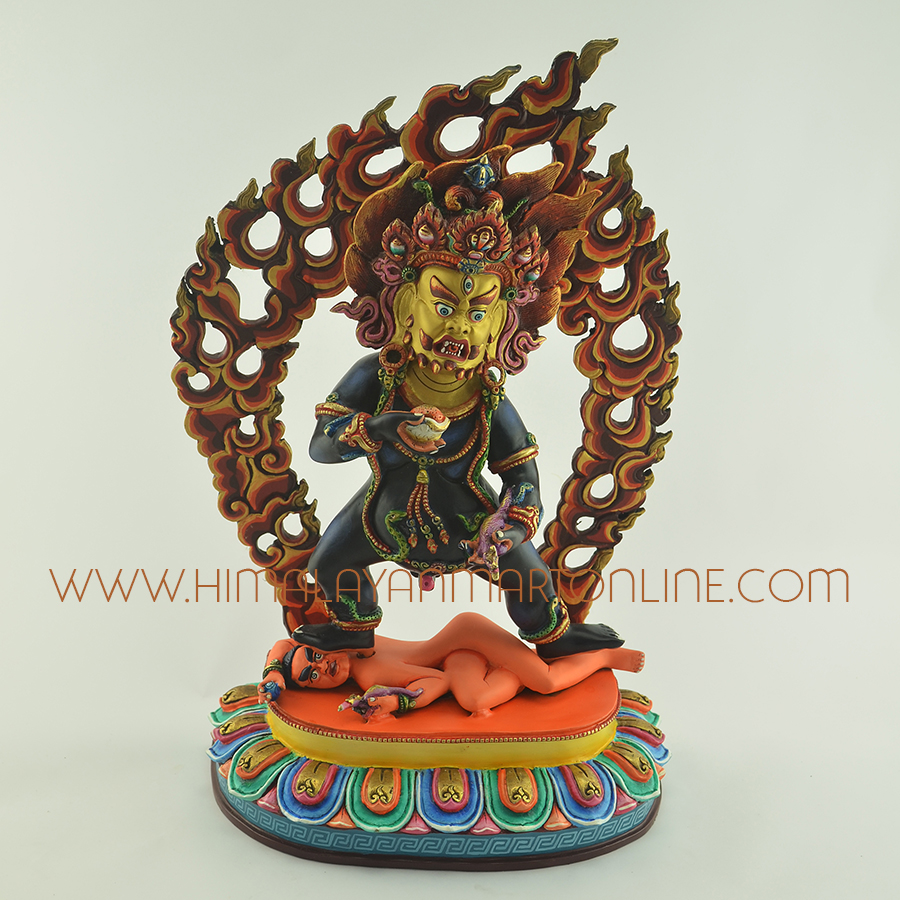
Seated Posture:
Black Dzambhala is typically depicted in a seated posture on a lotus throne. This posture symbolizes stability and the grounded nature of his blessings. The lotus, a sacred symbol in Buddhism, represents purity, enlightenment, and the ability to rise above worldly challenges.
Ornate Crown and Jeweled Attire:
Black Dzambhala is often adorned with an elaborate crown and wears jeweled ornaments. These symbols of regality emphasize his divine nature and reinforce the idea of abundance and opulence. The crown represents his sovereignty over the wealth and treasures of the world.
Richly Decorated Treasure Vase:
In some depictions, Black Dzambhala may be shown holding or standing beside a treasure vase. This vase, known as the Wealth Vase, is filled with various precious items, symbolizing the abundance of wealth, both material and spiritual, that Black Dzambhala bestows upon his devotees. Understanding the gestures and attributes of Black Dzambhala allows followers to connect with the symbolic meanings embedded in the iconography, fostering a deeper appreciation for the deity’s role in the pursuit of prosperity and well-being.
