
Vajrapani, as a prominent figure in Buddhism, is often depicted with specific gestures and attributes that symbolize his qualities and role as a Bodhisattva. Here are some of the common gestures and attributes associated with Vajrapani:
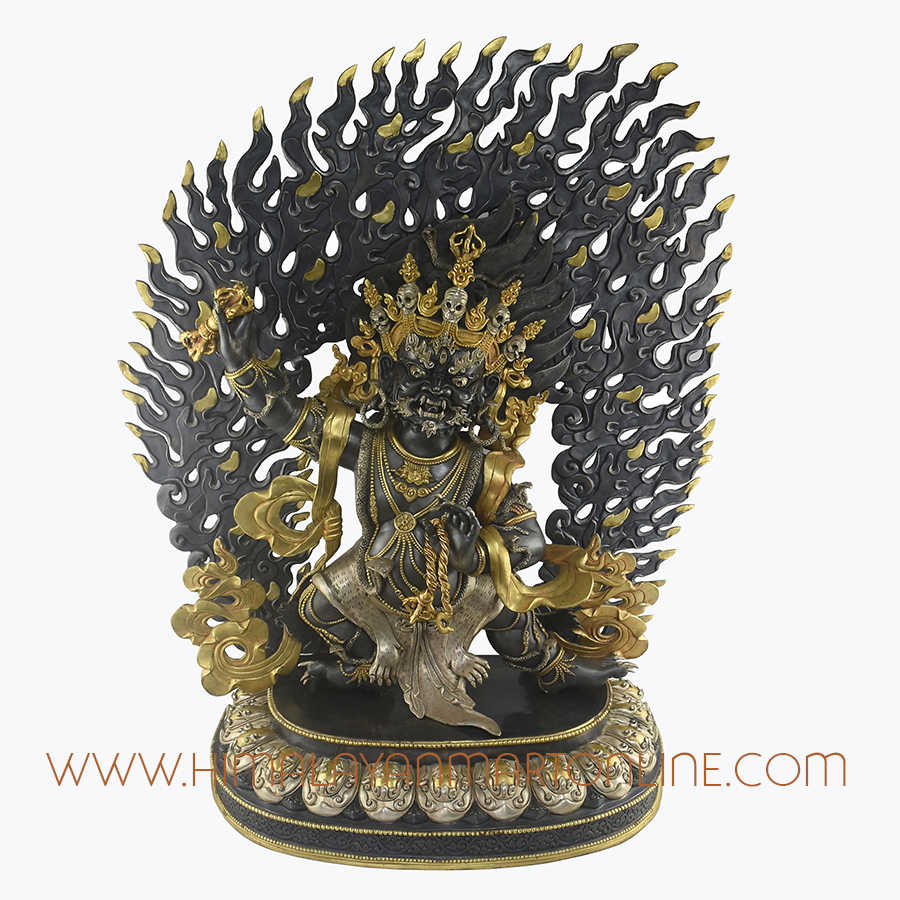
- Vajra Mudra (Gesture): The Vajra Mudra, also known as the Vajrahumkara Mudra, is a hand gesture commonly associated with Vajrapani. In this mudra, the right hand is raised with the index finger pointing upward, while the thumb and the other fingers are clenched into a fist. This gesture symbolizes the union of method (skillful means) and wisdom, emphasizing the dual nature of the Vajra.
- Vajra (Thunderbolt): The most prominent attribute of Vajrapani is the Vajra, a diamond or thunderbolt scepter that he holds in one of his hands. The Vajra represents indestructibility, diamond-like clarity, and the unshakable nature of enlightened wisdom. It is a symbol of the skillful means necessary to overcome obstacles on the path to enlightenment.
- Ghanta (Bell): In some depictions, Vajrapani may be shown holding a Ghanta, or ritual bell, in addition to the Vajra. The bell represents the wisdom aspect, and its sound is believed to dispel ignorance and awaken beings from the sleep of delusion.
- Lasso or Noose: Vajrapani is sometimes depicted holding a lasso or noose in one hand. This attribute symbolizes the skillful means to capture and guide beings towards the path of liberation. The noose is used to bind and redirect wayward minds, helping them overcome obstacles.
- Fierce Appearance: Vajrapani is often depicted with a wrathful and fierce expression. This fierceness signifies the intensity and determination required to subdue the forces of ignorance and to protect practitioners on their spiritual journey.
- Flaming Halo or Aura: Vajrapani may be surrounded by flames or have a flaming halo, symbolizing the transformative power of his presence. The flames represent the purifying energy that burns away impurities and delusions, facilitating the process of spiritual transformation.
- Dynamic Posture: Vajrapani is typically depicted in a dynamic and powerful posture, reflecting his active engagement with the challenges of the spiritual path. This posture signifies readiness to assist and guide beings toward enlightenment.
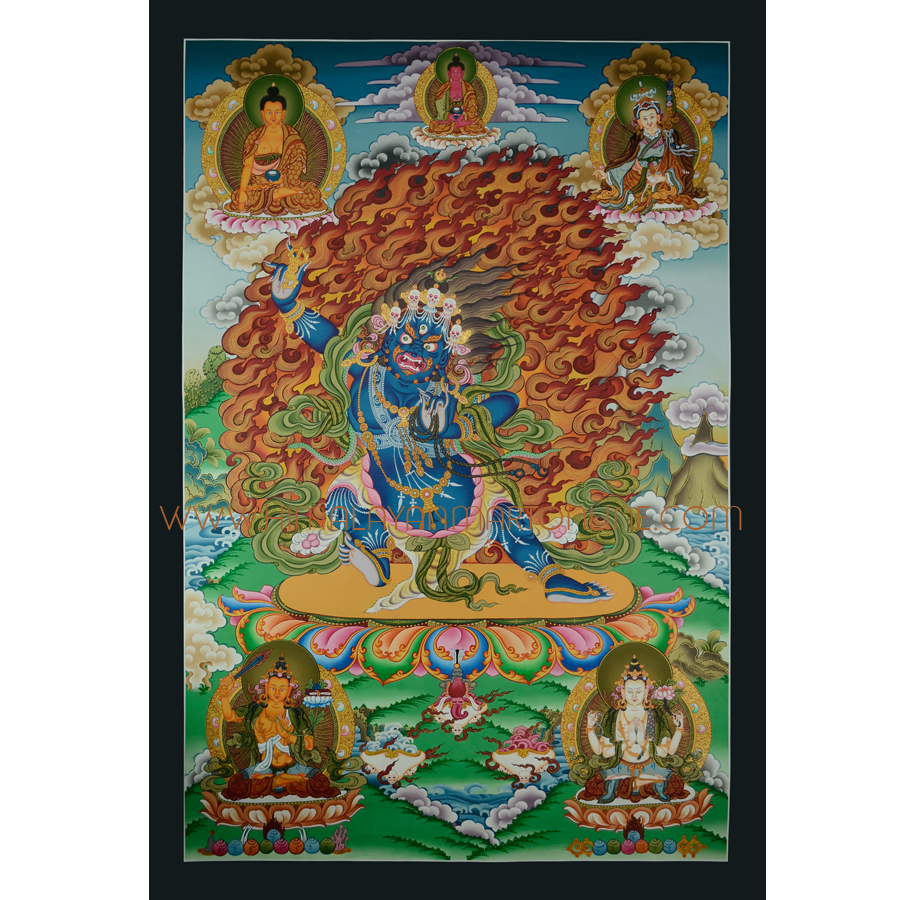
These gestures and attributes collectively convey the dynamic and forceful nature of Vajrapani’s compassion and wisdom, as well as his commitment to guiding sentient beings on the path to liberation. The symbolism associated with Vajrapani serves as a powerful inspiration for practitioners seeking strength, protection, and transformative guidance on their spiritual journey.
