Sakyamuni Buddha Tomba Copper Statue

Sakyamuni – The Lion of the Shakyas

Sakyamuni Buddha Tomba Copper Statue: Sakyamuni is the Buddha of our time. He is the glorious root teacher of all the diverse lineages that make up Buddhism as we know it. Born Siddhartha Gautama more than 2500 years ago, he was the crown prince of the Shakya kingdom located in the Himalayan foothills of what is now southern Nepal. He left luxurious palace life behind him, however, in pursuit of the truth of the origin of suffering and the cessation of fear. His astounding courage, determination, wisdom and compassion led to his perfect enlightenment despite seemingly insurmountable obstacles. His teachings have transformed individuals and nations throughout the world and still speak to us today.
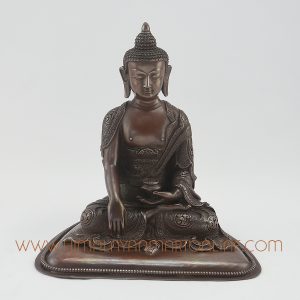
Sakyamuni Buddha Tomba Copper Statue

Gestures and Attributes

The Buddha is depicted with his right hand extended to the earth in the Bhumisparsha Mudra like shown in this Sakyamuni Buddha Tomba Copper Statue, the gesture of witness. He is “calling the earth to witness” his supreme victory over the temptations and illusions of the material world as symbolized by the demon Mara. His left hand lies in his lap with palm upward in the gesture of meditation (Dhyana Mudra). In some representations he also holds the begging bowl of an ordained Buddhist monk. The bowl contains three precious nectars indicating that he has conquered the three demons of uncontrolled death, contaminated aggregates, and delusion. Thus, this posture is known as “Buddha Sakyamuni Conquering the Demons” and shows the moment of the Buddha’s full enlightenment under the Bodhi tree.

About this Sakyamuni Buddha Tomba Copper Statue

This statue is a charming portrayal of Sakyamuni. Finely sculpted from copper alloy, the statue has been submitted to an oxidation process to yield a rich and sensuous finish. The Buddha sits gracefully in meditation upon a lotus throne, expressing the calm majesty of one who has mastered himself. With his head slightly inclined, he seems to smile with a secret inner joy, prompting feelings of encouragement and happiness in the observer. His robes are exquisitely carved throughout, showing marvelous detailing especially on the back of the sculpture, where a beautiful lotus blossom is surrounded by intricately carved leaves and vines. And over all, the lovely copper finish lends a pleasing sense of warmth, gently inviting one to linger, leaving thoughts of the world behind.
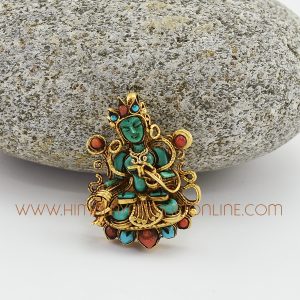
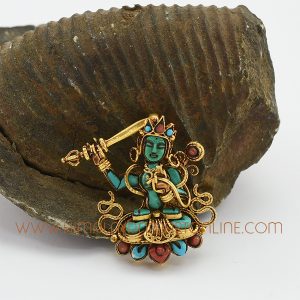
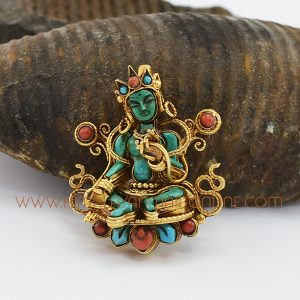
White Tara Pendant

Ghau / Pendant / Prayer Box

White Tara Pendant: Ghau is a small prayer box worn as pendant by Buddhists as portable shrines where prayers and sacred relics are kept and used during their travel to hold their sacred deity inside. Now, Ghau or Prayer Box pendants are often used as jewelry or personal adornment. They are used to carry prayers or prayer concerns or photos, poems, small items, or memories. Ghau pendants can carry your prayers near to your heart throughout the day. They are jewelry that has a history. The Ghau opens to a concealed inner space, and is traditionally used by Tibetan Buddhists to hold a picture of their favorite deity or Lama, a folded-up scroll of sacred mantras, special herbs or sacred relics. The Ghau is used as an amulet to help the wearer to ward off negative energy and attract blessings. A Ghau is also used as a portable shrine and are worn on a cord around the neck and hung close to the heart.

White Tara Pendant

These Ghaus or Pendants are mostly made of silver like this White Tara Pendant; however, the artisans also use copper, brass, gold and other metals. Ghau often have intricate designs of deity, auspicious symbols and mantras inscribed on their outer and inner surface Ghau is often decorated by precious or semi-precious gemstones which have various healing effects on the wearer. Turquoise, considered by many as a master healing stone, Lapis Lazuli and Coral are especially popular in Ghau or Prayer Box design for their beauty and healing properties. Other gemstones used by the craftsman include: amber, carnelian, amethyst, malachite, onyx and topaz.

About this White Tara Pendant – Ritual item

This beautiful Silver Pendant is entirely a hand carved piece; made from Silver which has fine hand carvings and is submitted to a gold plating effect to yield a rich and sensuous finish and besides the decoration of Turquoise and Coral stones make this White Tara Pendant a beautiful piece of art which is entirely a hand craft. This beautiful White Tara Pendant is hand made by the master artisans of Patan, which lies in the Himalayan Kingdom of Nepal; who have been in the business from generations.

Manjushri Pendant

Ghau / Pendant / Prayer Box

Manjushri Pendant: Ghau is a small prayer box worn as pendant by Buddhists as portable shrines where prayers and sacred relics are kept and used during their travel to hold their sacred deity inside. Now, Ghau or Prayer Box pendants are often used as jewelry or personal adornment. They are used to carry prayers or prayer concerns or photos, poems, small items, or memories. Ghau pendants can carry your prayers near to your heart throughout the day. They are jewelry that has a history. The Ghau opens to a concealed inner space, and is traditionally used by Tibetan Buddhists to hold a picture of their favorite deity or Lama, a folded-up scroll of sacred mantras, special herbs or sacred relics. The Ghau is used as an amulet to help the wearer to ward off negative energy and attract blessings. A Ghau is also used as a portable shrine and are worn on a cord around the neck and hung close to the heart.

Manjushri Pendant

These Ghaus or Pendants are mostly made of silver like this Manjushri Pendant; however, the artisans also use copper, brass, gold and other metals. Ghau often have intricate designs of deity, auspicious symbols and mantras inscribed on their outer and inner surface Ghau is often decorated by precious or semi-precious gemstones which have various healing effects on the wearer. Turquoise, considered by many as a master healing stone, Lapis Lazuli and Coral are especially popular in Ghau or Prayer Box design for their beauty and healing properties. Other gemstones used by the craftsman include: amber, carnelian, amethyst, malachite, onyx and topaz.

About this Manjushri Pendant – Ritual item

This beautiful Silver Pendant is entirely a hand carved piece; made from Silver which has fine hand carvings and is submitted to a gold plating effect to yield a rich and sensuous finish and besides the decoration of Turquoise and Coral stones make this Manjushri Pendant a beautiful piece of art which is entirely a hand craft. This beautiful Manjushri Pendant is hand made by the master artisans of Patan, which lies in the Himalayan Kingdom of Nepal; who have been in the business from generations.

Green Tara Pendant

Ghau / Pendant / Prayer Box

Green Tara Pendant: Ghau is a small prayer box worn as pendant by Buddhists as portable shrines where prayers and sacred relics are kept and used during their travel to hold their sacred deity inside. Now, Ghau or Prayer Box pendants are often used as jewelry or personal adornment. They are used to carry prayers or prayer concerns or photos, poems, small items, or memories. Ghau pendants can carry your prayers near to your heart throughout the day. They are jewelry that has a history. The Ghau opens to a concealed inner space, and is traditionally used by Tibetan Buddhists to hold a picture of their favorite deity or Lama, a folded-up scroll of sacred mantras, special herbs or sacred relics. The Ghau is used as an amulet to help the wearer to ward off negative energy and attract blessings. A Ghau is also used as a portable shrine and are worn on a cord around the neck and hung close to the heart.

Green Tara Pendant

These Ghaus or Pendants are mostly made of silver like this Green Tara Pendant; however, the artisans also use copper, brass, gold and other metals. Ghau often have intricate designs of deity, auspicious symbols and mantras inscribed on their outer and inner surface Ghau is often decorated by precious or semi-precious gemstones which have various healing effects on the wearer. Turquoise, considered by many as a master healing stone, Lapis Lazuli and Coral are especially popular in Ghau or Prayer Box design for their beauty and healing properties. Other gemstones used by the craftsman include: amber, carnelian, amethyst, malachite, onyx and topaz.

About this Green Tara Pendant – Ritual item

This beautiful Pendant is entirely a hand carved piece; made from Silver which has fine hand carvings and is submitted to a gold plating effect to yield a rich and sensuous finish and besides the decoration of Turquoise and Coral stones make this Green Tara Pendant a beautiful piece of art which is entirely a hand craft. This beautiful Green Tara Pendant is hand made by the master artisans of Patan, which lies in the Himalayan Kingdom of Nepal; who have been in the business from generations.

Manjushri & White Tara Ghau Pendant

Ghau / Pendant / Prayer Box

Manjushri & White Tara Ghau Pendant: Ghau is a small prayer box worn as pendant by Buddhists as portable shrines where prayers and sacred relics are kept and used during their travel to hold their sacred deity inside. Now, Ghau or Prayer Box pendants are often used as jewelry or personal adornment. They are used to carry prayers or prayer concerns or photos, poems, small items, or memories. Ghau pendants can carry your prayers near to your heart throughout the day. They are jewelry that has a history. The Ghau opens to a concealed inner space, and is traditionally used by Tibetan Buddhists to hold a picture of their favorite deity or Lama, a folded-up scroll of sacred mantras, special herbs or sacred relics. The Ghau is used as an amulet to help the wearer to ward off negative energy and attract blessings. A Ghau is also used as a portable shrine and are worn on a cord around the neck and hung close to the heart.

Manjushri & White Tara Ghau Pendant

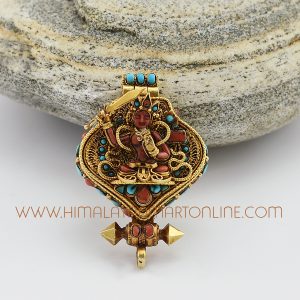
These Ghaus are mostly made of silver like this Manjushri & White Tara Ghau Pendant; however, the artisans also use copper, brass, gold and other metals. Ghau often have intricate designs of deity, auspicious symbols and mantras inscribed on their outer and inner surface Ghau is often decorated by precious or semi-precious gemstones which have various healing effects on the wearer. Turquoise, considered by many as a master healing stone, Lapis Lazuli and Coral are especially popular in Ghau or Prayer Box design for their beauty and healing properties. Other gemstones used by the craftsman include: amber, carnelian, amethyst, malachite, onyx and topaz.

About this Manjushri & White Tara Ghau Pendant – Ritual item

This excellent Manjushri & White Tara Ghau Pendant is entirely a hand carved piece; made from Silver which has fine intricate filigree hand carvings known as siko carvings in local term and is submitted to a gold plating effect to yield a rich and sensuous finish and besides the decoration of Coral, Turquoise and Lapis stones make this Silver Ghau or Prayer Box a excellent piece of art which is entirely a hand craft. This beautiful Manjushri & White Tara Ghau Pendant is hand made by the master artisans of Patan, which lies in the Himalayan Kingdom of Nepal; who have been in the business from generations.

Chenrezig Avalokiteshvara & Aparmita Ghau Pendant

Ghau / Pendant / Prayer Box

Chenrezig Avalokiteshvara & Aparmita Ghau Pendant: Ghau is a small prayer box worn as pendant by Buddhists as portable shrines where prayers and sacred relics are kept and used during their travel to hold their sacred deity inside. Now, Ghau or Prayer Box pendants are often used as jewelry or personal adornment. They are used to carry prayers or prayer concerns or photos, poems, small items, or memories. Ghau pendants can carry your prayers near to your heart throughout the day. They are jewelry that has a history. The Ghau opens to a concealed inner space, and is traditionally used by Tibetan Buddhists to hold a picture of their favorite deity or Lama, a folded-up scroll of sacred mantras, special herbs or sacred relics. The Ghau is used as an amulet to help the wearer to ward off negative energy and attract blessings. A Ghau is also used as a portable shrine and are worn on a cord around the neck and hung close to the heart.

Chenrezig Avalokiteshvara & Aparmita Silver Ghau Pendant

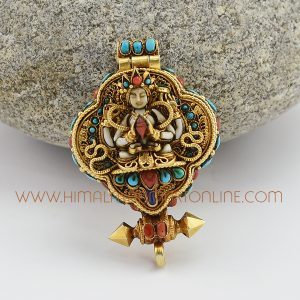
These Ghaus are mostly made of silver like this Chenrezig Avalokiteshvara & Aparmita Ghau Pendant; however, the artisans also use copper, brass, gold and other metals. Ghau often have intricate designs of deity, auspicious symbols and mantras inscribed on their outer and inner surface Ghau is often decorated by precious or semi-precious gemstones which have various healing effects on the wearer. Turquoise, considered by many as a master healing stone, Lapis Lazuli and Coral are especially popular in Ghau or Prayer Box design for their beauty and healing properties. Other gemstones used by the craftsman include: amber, carnelian, amethyst, malachite, onyx and topaz.

About this Chenrezig Avalokiteshvara & Aparmita Ghau Pendant – Ritual item

This excellent Chenrezig Avalokiteshvara & Aparmita Ghau Pendant is entirely a hand carved piece; made from Silver which has fine intricate filigree hand carvings known as siko carvings in local term and is submitted to a gold plating effect to yield a rich and sensuous finish and besides the decoration of Conch Shell, Coral, Turquoise and Lapis stones make this Silver Ghau or Prayer Box a excellent piece of art which is entirely a hand craft. This beautiful Chenrezig Avalokiteshvara & Aparmita Ghau Pendant is hand made by the master artisans of Patan, which lies in the Himalayan Kingdom of Nepal; who have been in the business from generations.

Chenresi Avalokeshvara Ghau Pendant

Ghau / Pendant / Prayer Box

Chenresi Avalokeshvara Ghau Pendant: Ghau is a small prayer box worn as pendant by Buddhists as portable shrines where prayers and sacred relics are kept and used during their travel to hold their sacred deity inside. Now, Ghau or Prayer Box pendants are often used as jewelry or personal adornment. They are used to carry prayers or prayer concerns or photos, poems, small items, or memories. Ghau pendants can carry your prayers near to your heart throughout the day. They are jewelry that has a history. The Ghau opens to a concealed inner space, and is traditionally used by Tibetan Buddhists to hold a picture of their favorite deity or Lama, a folded-up scroll of sacred mantras, special herbs or sacred relics. The Ghau is used as an amulet to help the wearer to ward off negative energy and attract blessings. A Ghau is also used as a portable shrine and are worn on a cord around the neck and hung close to the heart.

Chenresi Avalokeshvara Ghau Pendant

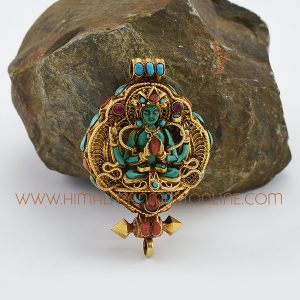
These Ghaus are mostly made of silver like this Chenresi Avalokeshvara Ghau Pendant; however, the artisans also use copper, brass, gold and other metals. Ghau often have intricate designs of deity, auspicious symbols and mantras inscribed on their outer and inner surface Ghau is often decorated by precious or semi-precious gemstones which have various healing effects on the wearer. Turquoise, considered by many as a master healing stone, Lapis Lazuli and Coral are especially popular in Ghau or Prayer Box design for their beauty and healing properties. Other gemstones used by the craftsman include: amber, carnelian, amethyst, malachite, onyx and topaz.

About this Chenresi Avalokeshvara Ghau Pendant – Ritual item

This excellent Chenresi Avalokeshvara Ghau Pendant is entirely a hand carved piece; made from Silver which has fine intricate filigree hand carvings known as siko carvings in local term and is submitted to a gold plating effect to yield a rich and sensuous finish and besides the decoration of Coral, Turquoise and Ruby stones make this Chenresi Avalokeshvara Ghau Pendant a beautiful piece of art which is entirely a hand craft. This beautiful Ghau or Prayer Box is hand made by the master artisans of Patan, which lies in the Himalayan Kingdom of Nepal; who have been in the business from generations.

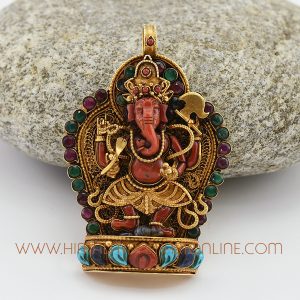
Dancing Ganesha Ghau Pendant

Ghau / Pendant / Prayer Box

Dancing Ganesha Ghau Pendant: Ghau is a small prayer box worn as pendant by Buddhists as portable shrines where prayers and sacred relics are kept and used during their travel to hold their sacred deity inside. Now, Ghau or Prayer Box pendants are often used as jewelry or personal adornment. They are used to carry prayers or prayer concerns or photos, poems, small items, or memories. Ghau pendants can carry your prayers near to your heart throughout the day. They are jewelry that has a history. The Ghau opens to a concealed inner space, and is traditionally used by Tibetan Buddhists to hold a picture of their favorite deity or Lama, a folded-up scroll of sacred mantras, special herbs or sacred relics. The Ghau is used as an amulet to help the wearer to ward off negative energy and attract blessings. A Ghau is also used as a portable shrine and are worn on a cord around the neck and hung close to the heart.

Dancing Ganesha Ghau Pendant

These Ghaus are mostly made of silver like this Dancing Ganesha Ghau Pendant; however, the artisans also use copper, brass, gold and other metals. Ghau often have intricate designs of deity, auspicious symbols and mantras inscribed on their outer and inner surface Ghau is often decorated by precious or semi-precious gemstones which have various healing effects on the wearer. Turquoise, considered by many as a master healing stone, Lapis Lazuli and Coral are especially popular in Ghau or Prayer Box design for their beauty and healing properties. Other gemstones used by the craftsman include: amber, carnelian, amethyst, malachite, onyx and topaz.

About this Dancing Ganesha Ghau Pendant – Ritual item

This excellent Dancing Ganesha Ghau Pendant is entirely a hand carved piece; made from Silver which has fine intricate filigree hand carvings known as siko carvings in local term and is submitted to a gold plating effect to yield a rich and sensuous finish and besides the decoration of Coral, Turquoise, Lapis, Emerald and Ruby stones make this Dancing Ganesha Ghau Pendant a stunning piece of art which is entirely a hand craft. This beautiful Silver Ghau Pendant is hand made by the master artisans of Patan, which lies in the Himalayan Kingdom of Nepal; who have been in the business from generations.

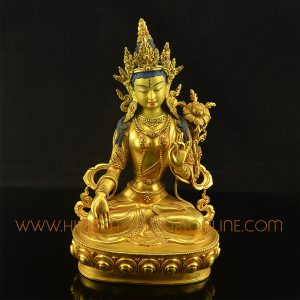
White Tara Dolkar Statue

White Tara – The Divine Mother

White Tara Dolkar Statue: White Tara’s compassion for living beings and her desire to save them from suffering is said to be even stronger than a mother’s love for her children. As the personification of enlightened maternal compassion, she has infinite sympathy for those facing the challenges of worldly existence. She is the female aspect of the universe and the source of all life; thus, she lovingly engenders, nourishes and smiles at the vitality of creation. Meditation on the goddess grants health, long life, fearlessness, patience and peace; and she is especially cherished for her swiftness in responding to the prayers of those who call upon her. Her color white symbolizes her radiant purity, but white also expresses her fundamental nature, which is ultimate Truth, complete and undifferentiated.

White Tara Dolkar Statue

Gestures and Attributes

White Tara is depicted in a posture of graceful contemplative ease with both legs raised and crossed, displaying a regal elegance and serenity like in this; White Tara Dolkar Statue. Her right hand is extended downward, palm open, with thumb and index finger touching. This hand position is known as Varada Mudra, or the gesture of granting wishes and protection. Her left hand, raised to shoulder height with fingers extended and palm turned outward, is in the gesture of granting refuge and freeing from fears (Abhaya Mudra). Each of her hands also holds the stem of a beautiful lotus flower that floats above her shoulder as a symbol of her radiant purity and power. A distinctive characteristic of White Tara, shown in this representation, is her seven eyes. She has the two usual eyes plus one in the center of her forehead and one in each of her hands and feet. These eyes indicate that she sees all the suffering and cries for help in the universe, and symbolize her divine omniscience.


About this White Tara Dolkar Statue

Expertly cast from copper alloy using Lost Wax Method and gilded with 24 karat gold with hand painted face, this statue is a beautiful portrayal of White Tara / Dolkar. This White Tara Dolkar Statue was individually handcrafted in Patan, Nepal by master artisans of the Shakya clan who are considered among the best in the world. These craftsmen are the modern heirs to a centuries-old tradition of creating sacred art for use in temples and monasteries. The fine metalworking techniques have been passed down from generation to generation since ancient times.


Guru Rinpoche Padmasambhava Statue

Guru Rinpoche / Padmasambhava – Precious Master

Guru Rinpoche Padmasambhava Statue: Buddhism was first introduced to Tibet in the eighth century when King Trisong Detsen invited the Indian master Santaraksita to teach the sacred Dharma to the Tibetan people. When Santaraksita arrived and he and the king began to build the first monastery, resentful mountain spirits interfered and created many obstacles. Realizing that the help of a realized master with control over physical reality was needed, the king invited Guru Padmasambhava to come and tame the angry spirits of Tibet.


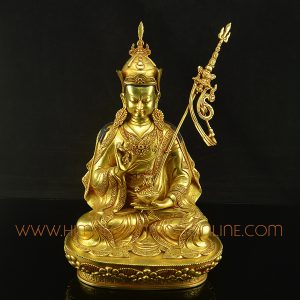
Guru Rinpoche / Padmasambhava(as shown in this Guru Rinpoche Padmasambhava Statue), regarded as an emanation of Buddha Amitabha, was born miraculously from a lotus blossom in the land of Oddiyana located in present-day Pakistan. He was known far and wide for his miracle powers, including his ability to subdue spirits. At the request of the king, Guru Padmasambhava journeyed to Tibet and engaged the local nature spirits in magical combat. Conquering these spirits, he bound them by oath to protect the Dharma for all time. Evidence of his victories in these battles can still be seen throughout the valleys and villages of Tibet, where he is affectionately known as “Guru Padmasambhava,” meaning “Precious Master.”


The King, Santaraksita and Guru Padmasambhava then worked together to establish Buddhism in the country. The King founded temples and Santaraksita ordained monks, while Guru Padmasambhava worked at a more mysterious level. Guru Padmasambhava established the secret and powerful practices of Tantric Buddhism and gave profound and extraordinary teachings to his closest disciples, including the king. In addition, foreseeing that a future king would one day try to destroy Tibetan Buddhism, Guru Padmasambhava concealed religious treasures throughout the Himalayan region. These treasures would be revealed centuries later by seers destined to receive them.

Guru Rinpoche Padmasambhava Statue

Guru Rinpoche / Padmasambhava did not die but flew away with his consort on the rays of the sun. It is believed by many, especially those within the Nyingma school (which traces its lineage directly to Guru Padmasambhava), that he is still living, and remains full of compassion for sentient beings. Dwelling at the level of spontaneous presence, the great Guru has the power to bestow blessings instantly and grant wishes immediately. He remains to this day the deeply beloved focus of practice for many Tibetan.


Gestures and Attributes

Here, Guru Rinpoche / Padmasambhava can be seen in his most well-known representation like in this; Guru Rinpoche Padmasambhava Statue. His eyes are open in a piercing gaze; his face is wrathful and smiling, blazing magnificently with mysterious power. He cradles a Khatvanga in his left arm, representing his consort Mandarava, who arouses realization of emptiness. His Khatvanga is crowned with three severed heads and a trident, symbolizing Guru Padmasambhava’s liberation from the three kayas of desire, form and formlessness.


He wears a lotus hat ornamented with a sun and moon, representing skillful means and wisdom. His hat also has a Vajra top, symbolizing his unshakable samadhi, and is crowned with a vulture feather, representing his realization of the highest view. In his right hand he holds a Vajra, an implement used in Tantric ritual to symbolize the union of conventional and ultimate truth. His left-hand rests in his lap in the gesture of meditation (Dhyana Mudra) and holds a skull cup containing the vase of immortality like shown in this Guru Rinpoche Padmasambhava Statue. The vase is filled with the nectar of deathless wisdom and is adorned with leaves of a sacred flowering tree. The vase further serves as a reminder of Guru Padmasambhava’s connection to Buddha Amitabha, as it is the special emblem of Amitayus (an aspect of Amitabha).


About this Guru Rinpoche Padmasambhava Statue

This fine quality statue is a beautiful representation of the beloved Guru Rinpoche / Padmasambhava. Expertly sculpted from copper alloy using lost wax method and fully gilded with 24 karat gold, the statue has been finely hand-carved. This Guru Rinpoche Padmasambhava Statue was individually handcrafted in Patan, Nepal by master artisans of the Shakya clan who are considered among the best in the world. These craftsmen are the modern heirs to centuries – old tradition of creating sacred art for use in temples and monasteries. The fine metalworking techniques have been passed down from generation to generation since ancient times.


Medicine Buddha Menla Statue

Medicine Buddha / Menla – The Supreme Healer

Medicine Buddha Menla Statue:

Noble One, you should think of yourself as someone who is sick,
Of the Dharma as the remedy,
Of the Buddha as a skillful doctor,
And of your diligent practice as the way to recovery.


The Medicine Buddha / Menla, or Bhaisajyaguru, is the Buddha of Healing. Meditating on the Medicine Buddha / Menla is considered to be a powerful method for increasing healing powers, allowing practitioners to alleviate their own sufferings as well as those of others. Through his boundless compassion and generosity, Bhaisajyaguru helps sincere seekers overcome physical illness and infirmity. But even more importantly, the Buddha is the skillful doctor who heals the great disease afflicting all sentient beings. By providing the Dharma as a profound antidote to the poisons of attachment, hatred and ignorance, he lifts the veil of delusion and points the way to freedom.

Medicine Buddha Menla Statue

Gestures and Attributes

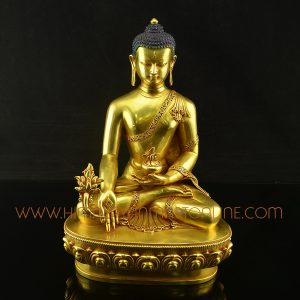
The Medicine Buddha / Menla is depicted with his right hand extended downward, palm open, with thumb and index finger touching. This posture is known as Varada Mudra, or the gesture of granting wishes like this; Medicine Buddha Menla Statue. This mudra symbolizes Bhaisajyaguru’s kindness, charity and compassion toward all beings. In the same hand he lightly grasps a sprig of the Myrobalan plant, an important healing herb in Ayurvedic medicine. It is believed that this plant has the power not only to heal the body, but also to free one from the inner sicknesses of attachment, hatred and ignorance. His left hand lies in his lap with palm upward in the gesture of meditation (Dhyana Mudra), representing the eradication of all sickness and suffering through the realization of absolute truth. In the same hand he holds the traditional begging bowl of an ordained Buddhist monk. The bowl contains a sacred medicinal nectar that cures all ills, hindrances and obstacles.


About this Medicine Buddha Menla Statue

This sculpture is a beautiful depiction of Medicine Buddha / Menla. Expertly cast from copper alloy using lost wax method and gilded with 24 karat gold, the figure sits regally upon a lotus throne, expressing a graceful and dignified presence. He sits majestically upon a double lotus throne, his head slightly bowed, smiling softly in sublime meditation. His monastic robes drape beautifully across his shoulder and arm and are exquisitely detailed throughout the statue. The Buddha’s features are also beautifully carved, imbuing the statue with warmth and character. And over all, the stunning gold gilding gives the sculpture a luminous quality, evoking the enlightened spiritual presence of the Buddha. This Medicine Buddha Menla Statue was individually handcrafted in Patan, Nepal by master artisans of the Shakya clan who are considered among the best in the world. These craftsmen are the modern heirs to a centuries-old tradition of creating sacred art for use in temples and monasteries. The fine metalworking techniques have been passed down from generation to generation since ancient times.


Amitabha Buddha Opame Statue

Amitabha Buddha / Opame – The Buddha of Infinite Light

Amitabha Buddha Opame Statue: According to the Larger Sutra of Immeasurable Life, the magnificence of Amitabha Buddha / Opame surpasses that of all other great beings, thus he is known as the Buddha of all the Buddhas. Buddha Shakyamuni once said of Amitabha, “The majestic glory of his light could not be exhaustively described if I praised it continuously, day and night, for the period of one kapala.”


Amitabha Buddha / Opame dwells in a pure celestial realm, created via the power of his infinite merit accumulated over countless lifetimes as a Bodhisattva. His light shines brilliantly from this celestial realm, pervading the entire universe. According to the Sutra, if sentient beings encounter his light, their defilements are removed; if they see his light, they are relieved and freed from affliction. At the en`d of their lives, beings who have faith in Amitabha reach emancipation, as he gives them rebirth in his Pure Land. And as Shakyamuni explains, “Sentient beings who are born in that Buddha-land all reside among those assured of nirvana.”

Amitabha Buddha Opame Statue

Gestures and Attributes

Amitabha Buddha / Opame is depicted in Dhyana Mudra, the gesture of meditation, with both palms face up and lying in his lap. His right hand, resting on top, symbolizes the state of enlightenment, while his left hand, resting below like this; Amitabha Buddha Opame Statue, represents the world of appearance. Thus, Amitabha’s posture expresses his mastery over the world of appearance through enlightenment and signifies the enlightened state of mind for which samsara and nirvana are one. In some representations, he holds the traditional begging bowl of an ordained Buddhist monk. The bowl is filled with amrita, the elixir of awakening and immortality, and symbolizes Amitabha’s infinite openness and receptivity toward all sentient beings.


About this Amitabha Buddha Opame Statue

This sculpture is a beautiful depiction of Amitabha Buddha / Opame. Expertly cast from copper alloy using lost wax method and gilded with 24 karat gold, the figure sits regally upon a lotus throne, expressing a graceful and dignified presence. Amitabha’s monastic robes, elegantly detailed around the edges, drape softly over his shoulder with delicate folding in the cloth. The Buddha’s features are also beautifully carved, imbuing the statue with warmth and character. And over all, the stunning gold gilding gives the sculpture a luminous quality, evoking the enlightened spiritual presence of the Buddha. This Amitabha Buddha Opame Statue was individually handcrafted in Patan, Nepal by master artisans of the Shakya clan who are considered among the best in the world. These craftsmen are the modern heirs to a centuries-old tradition of creating sacred art for use in temples and monasteries. The fine metalworking techniques have been passed down from generation to generation since ancient times.


Subscribe To Our Newsletter