



Aparmita / Amitayus / Tsepame – The Buddha of Infinite Life
Aparmita Amitayus Ritual Statue: Aparmita / Tsepame (also called Amitayus) is the name of Buddha Amitabha in his Bestower of Longevity aspect. He may be regarded as either a celestial Buddha or a fully realized Bodhisattva, having attained Buddhahood many eons ago as a result of his infinite merit accumulated over countless past lives as a Bodhisattva. According to the Larger Sutra of Immeasurable Life, Aparmita, through the power of his good deeds, created a pure heavenly realm where he now dwells along with his innumerable divine disciples, enjoying boundless and endless life. He promises that if any faithful man or woman calls upon him at the moment of death, he will appear, together with a multitude of blessed sages, and deliver the dying person to his Pure Land where they will live in the light of the Dharma, free from suffering and death.
Gestures and Attributes
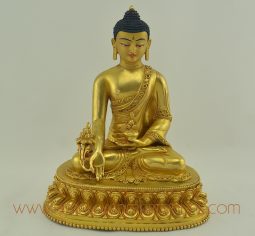
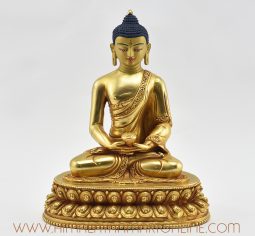
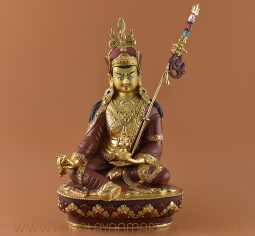
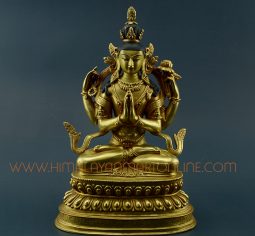
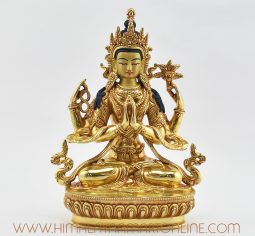
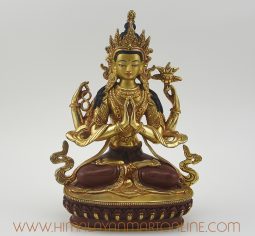
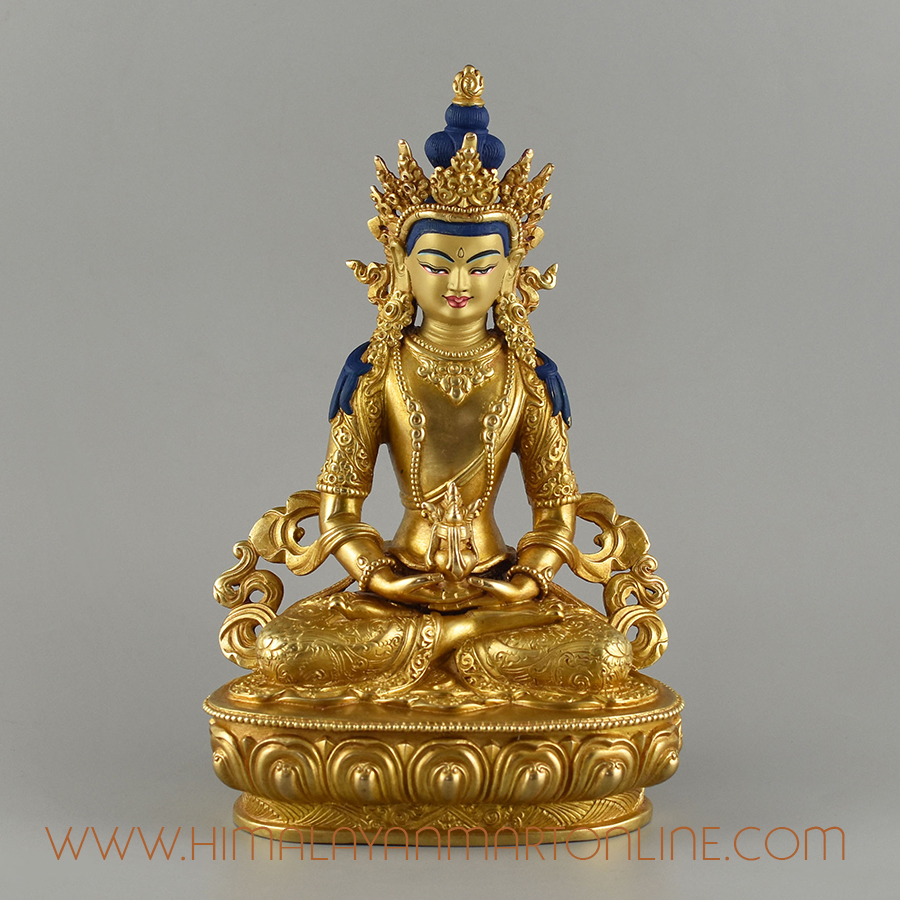
Aparmita / Amitayus / Tsepame sits in perfect equanimity with his hands in Dhyana Mudra (like shown in this Aparmita Amitayus Ritual Statue), the gesture of meditation. Both of his palms lie face up in his lap where they hold the ambrosia treasure vase that is his special emblem. His right hand, resting on top, symbolizes the state of enlightenment, while his left hand, resting below, represents the world of appearance. Thus, Aparmita’s posture expresses his mastery over the world of appearance through enlightenment and signifies the enlightened state of mind for which samsara and nirvana are one. His vase contains amrita, the elixir of awakening and immortality, and is adorned with leaves of Ashoka, a sacred flowering tree. This vase, along with its contents and adornments, symbolizes Aparmita’s compassionate gift of a long life free from sickness and suffering.
Iconography
Aparmita / Amitayus / Tsepame sits in perfect equanimity with his hands in Dhyana Mudra, the gesture of meditation. Both of his palms lie face up in his lap where they hold the ambrosia treasure vase (like shown in this Aparmita Amitayus Ritual Statue) that is his special emblem. His right hand, resting on top, symbolizes the state of enlightenment, while his left hand, resting below, represents the world of appearance. Thus, Aparmita’s posture expresses his mastery over the world of appearance through enlightenment and signifies the enlightened state of mind for which samsara and nirvana are one. His vase contains amrita, the elixir of awakening and immortality, and is adorned with leaves of Ashoka, a sacred flowering tree. This vase, along with its contents and adornments, symbolizes Aparmita’s compassionate gift of a long life free from sickness and suffering.
About this Aparmita Amitayus Ritual Statue
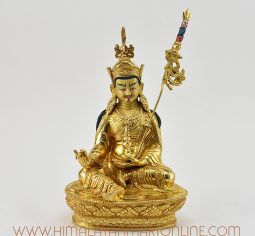
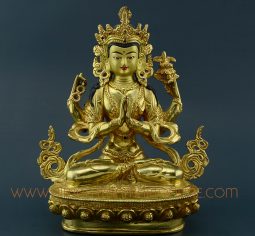
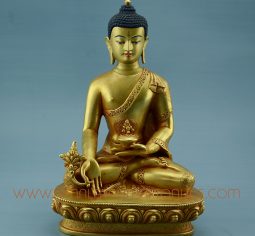
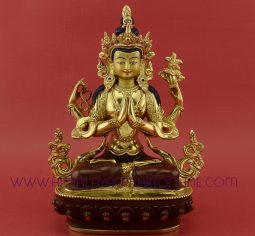
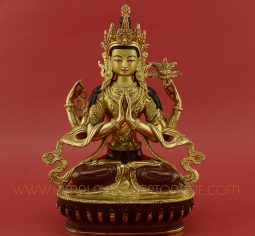
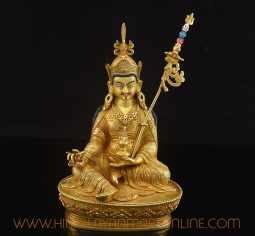
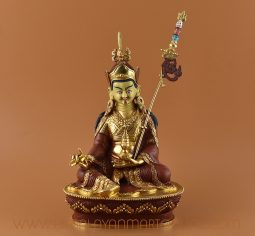
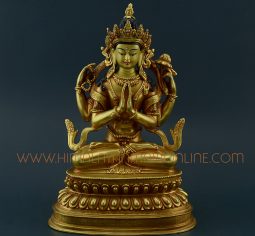
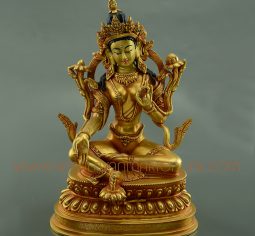
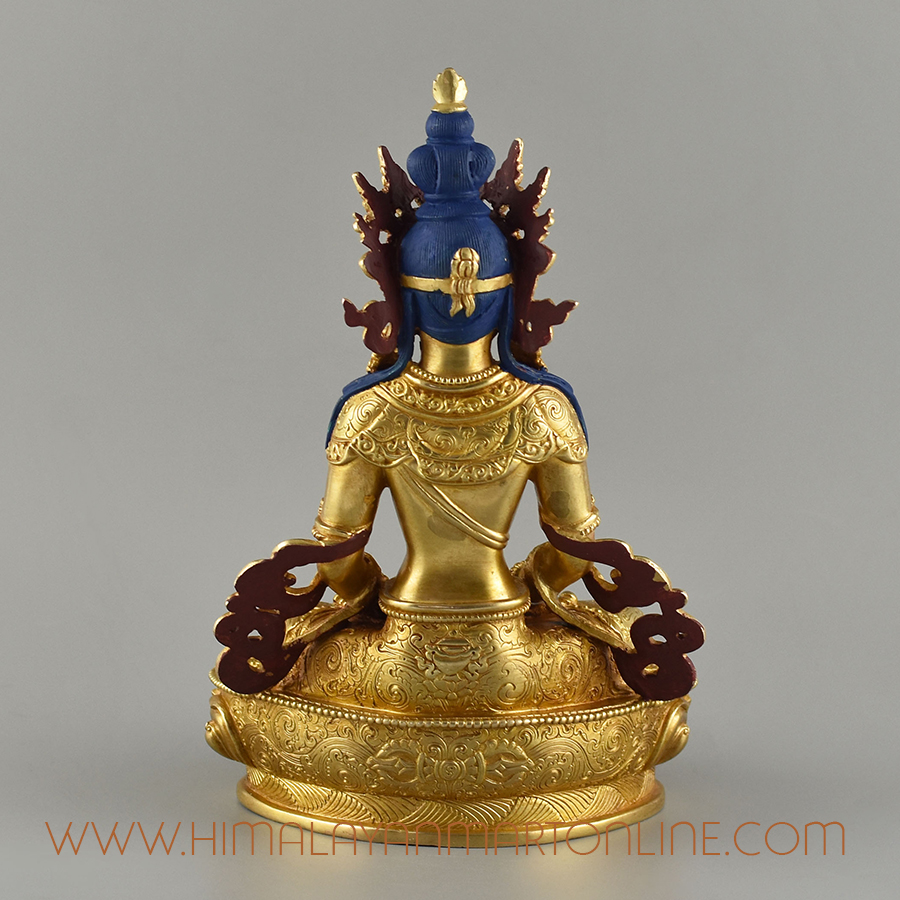
This sculpture is a captivating representation of Aparmita/Tsepame, skillfully crafted from copper alloy through the meticulous lost wax method. Gilded with 24-karat gold and adorned with a hand-painted face, the statue emanates a rich and alluring finish. The intricate hand carvings, highlighted by the golden touch, lend a captivating and lifelike quality to the sculpture. Aparmita/Tsepame is adorned with a finely carved crown and elegantly detailed ornaments, reflecting the attributes of a Bodhisattva in his Bestower of Longevity aspect.
Individually handcrafted in Patan, Nepal, by the master artisans of the Shakya clan, globally recognized as among the finest in their craft, this sculpture is a testament to their unparalleled skill. As contemporary custodians of a centuries-old tradition, these craftsmen continue the legacy of creating sacred art for temples and monasteries. The fine metalworking techniques, meticulously passed down through generations since ancient times, ensure that each piece is not only a work of art but a profound connection to cultural heritage and spiritual reverence.