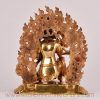
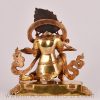

Vajrapani Statue Half-Kneeling: The Bodhisattva of Power
In Tibetan Buddhist tradition, Vajrapani is revered as the Bodhisattva of Power, the fierce protector of the Dharma. Wielding the indestructible vajra, he dispels ignorance, negativity, and all obstacles that block spiritual growth. As a companion of Manjushri and Avalokiteshvara, Vajrapani represents the perfect union of strength and compassion, guiding practitioners toward courage, clarity, and enlightenment. Devotees invoke him to overcome fear, strengthen meditation practice, and cultivate a fearless heart. The presence of Vajrapani inspires protection, resilience, and unwavering devotion, making him a profound symbol in Buddhist art and ritual.
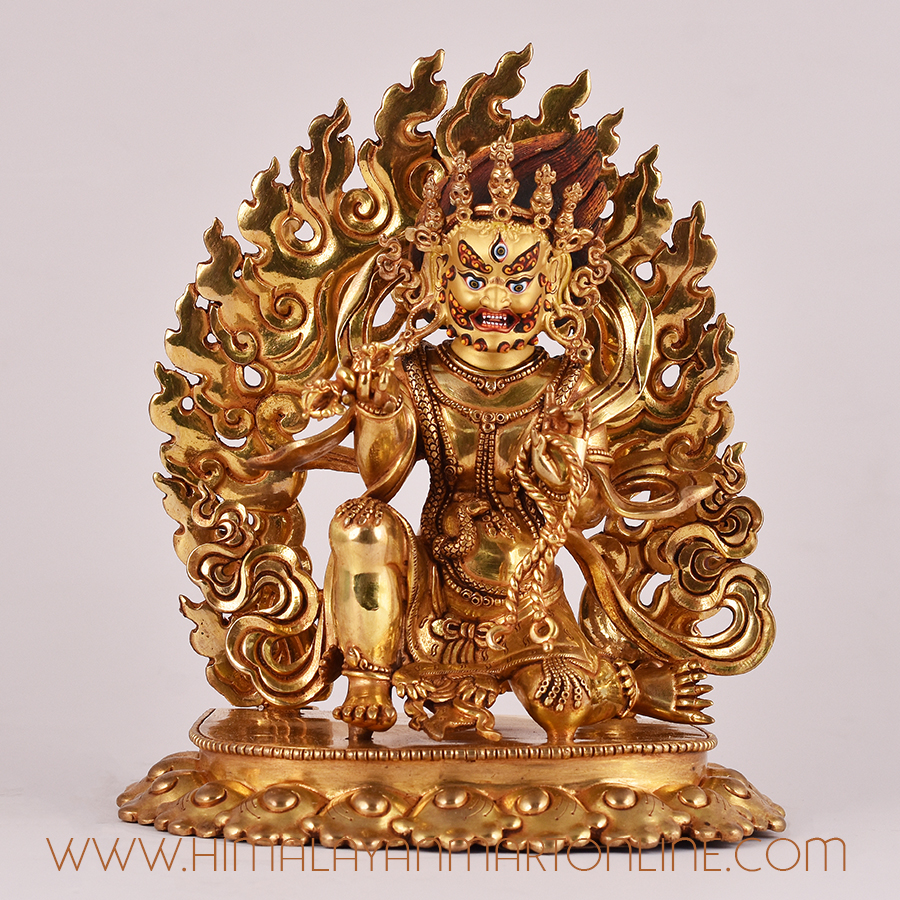
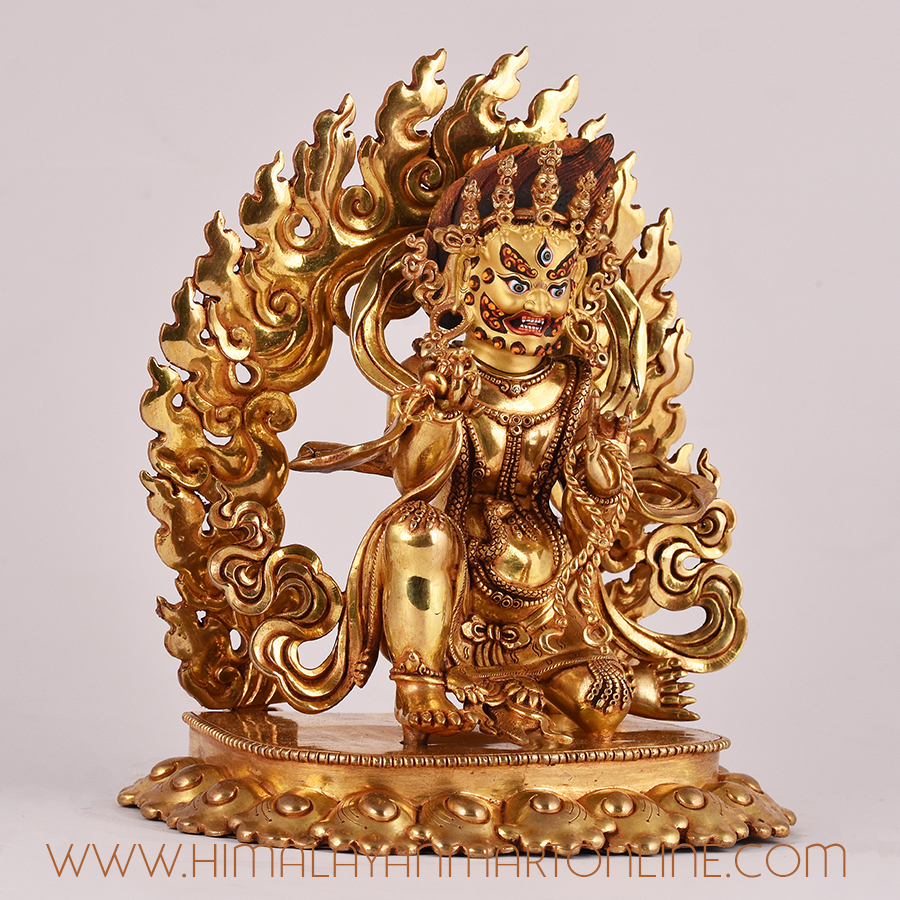
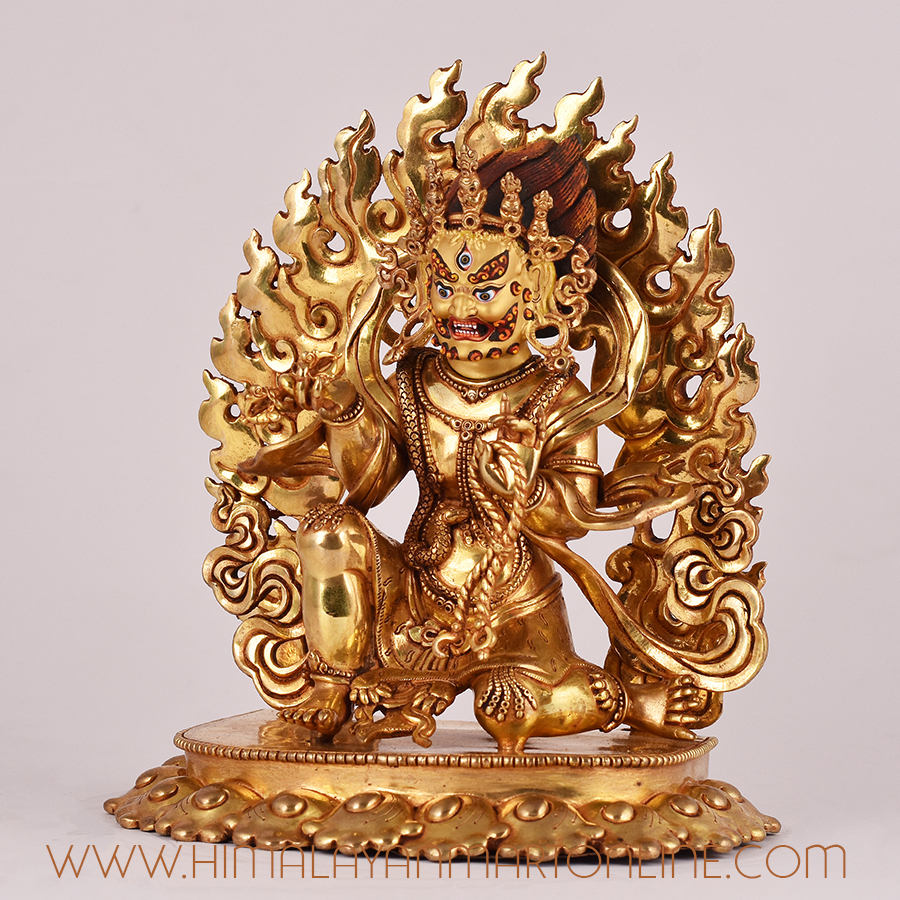
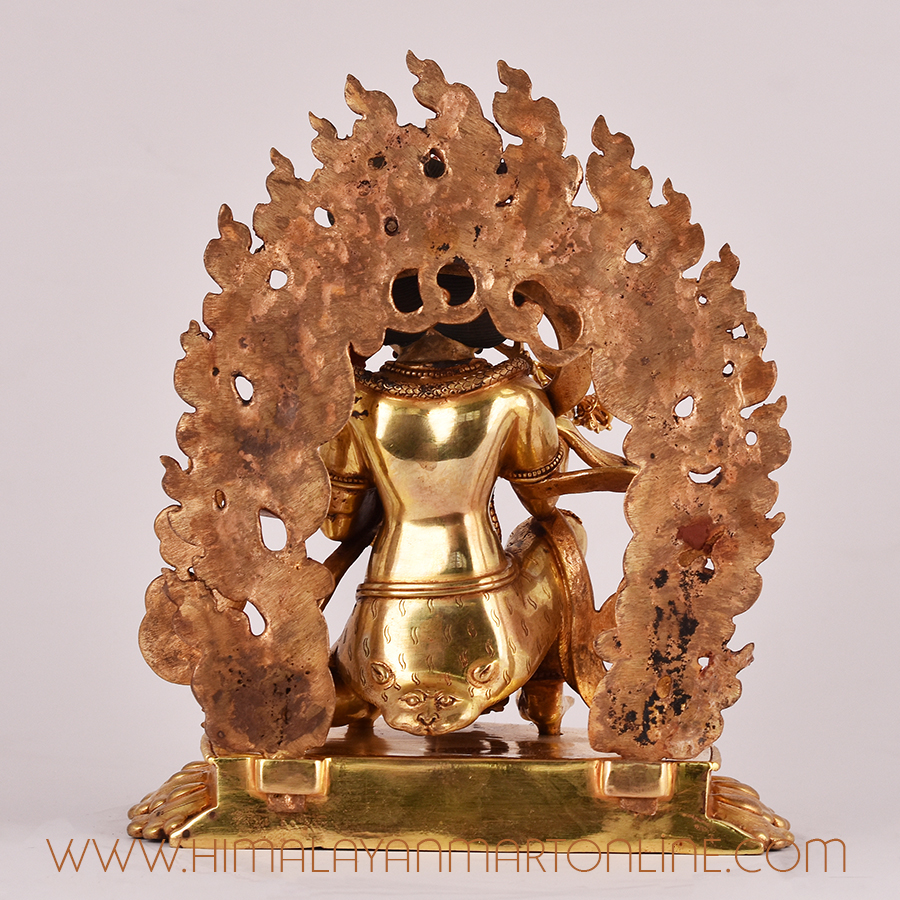
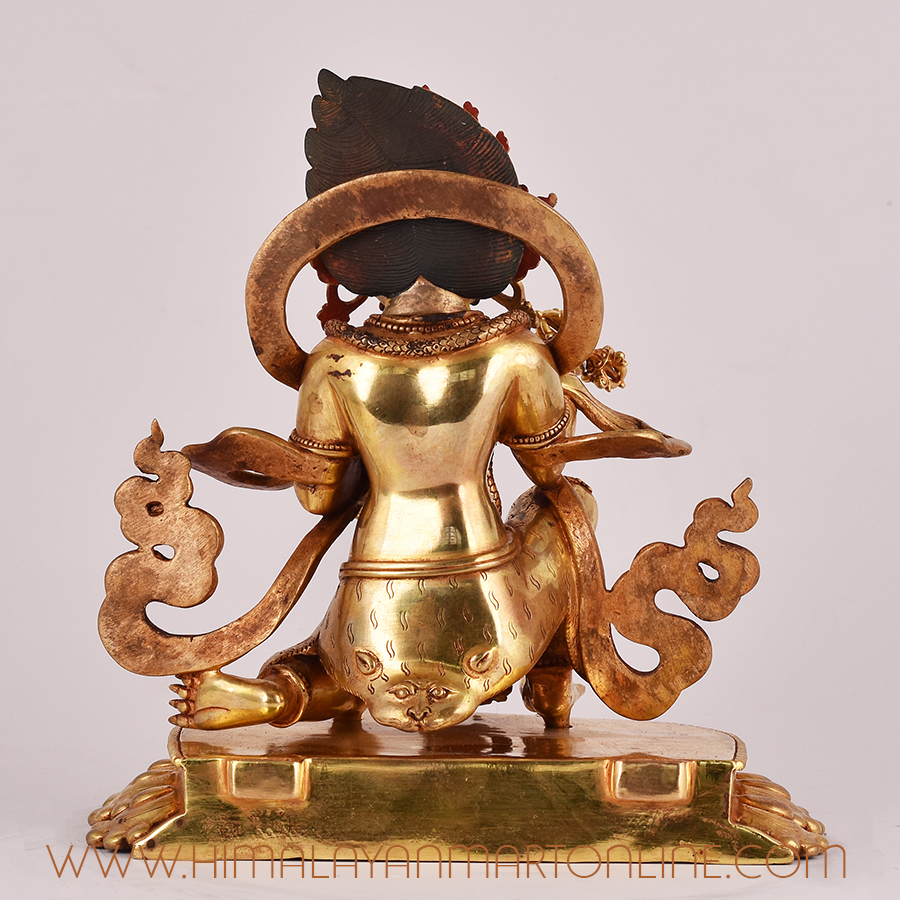
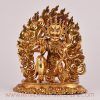
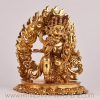
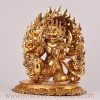
The Vajrapani Statue Half-Kneeling beautifully captures this dynamic energy. One knee bent in humble devotion and the body coiled in readiness, the statue radiates motion, spiritual power, and divine intensity, as if poised to strike ignorance with the vajra. Handcrafted from premium copper alloy using the traditional lost-wax casting method, each piece reflects the artisans’ exceptional skill. Intricate hand-carved details highlight Vajrapani’s rippling muscles, fierce expression, and the aloft vajra crackling with energy. A lavish 24-karat gold gilding adds depth and radiance, while the hand-painted face conveys both wrathful protection and meditative serenity. This masterpiece transforms any altar or space into a sanctuary of spiritual empowerment.
Crafted by master artisans from Patan, Nepal, this Vajrapani Statue Half-Kneeling carries centuries-old heritage in Himalayan metalwork. These skilled craftsmen preserve and pass down ancestral techniques in wax modeling, alloy casting, chasing, gilding, and painting, ensuring authenticity, precision, and spiritual resonance in every statue. Each work is a living testament to devotion, cultural richness, and sacred artistry.
Embrace the Vajrapani Statue Half-Kneeling to invite the Bodhisattva’s protective energy, courage, and spiritual power into your daily practice. Beyond its exquisite artistry, it serves as a symbol of strength, devotion, and enlightenment, making it a meaningful addition to meditation spaces, altars, or collections of sacred Buddhist art.