
Vairochana – The Great Illuminator
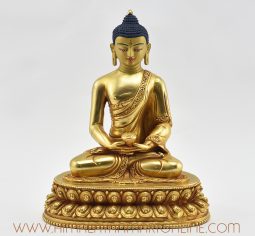
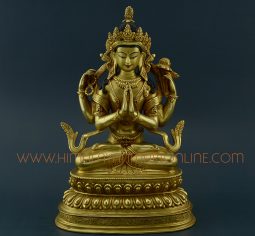
Vairochana Buddha Statue: Buddha Vairochana is regarded as the foremost and oldest of the five Dhyani, or Wisdom, Buddhas. He is also considered to be the embodiment of enlightened wisdom realizing emptiness. His place is in the holy inner sanctum of the stupa where he is the master of the whole temple and its contents. Meditating on an image of Buddha Vairochana is specifically believed to vanquish the delusion of ignorance, transforming it into the wisdom taught by the Dharma. For this reason, he is sometimes called the “Great Illuminator”. He is often depicted in the company of dragons, which represent the thundering power of the Dharma teachings. He is the head of the Tathagata Buddha Family that includes Buddha Shakyamuni and Manjushri.
Gestures and Attributes
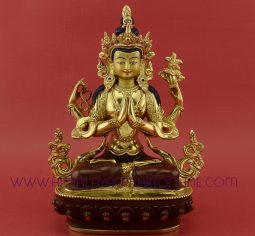
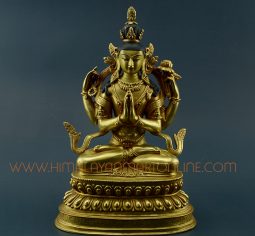
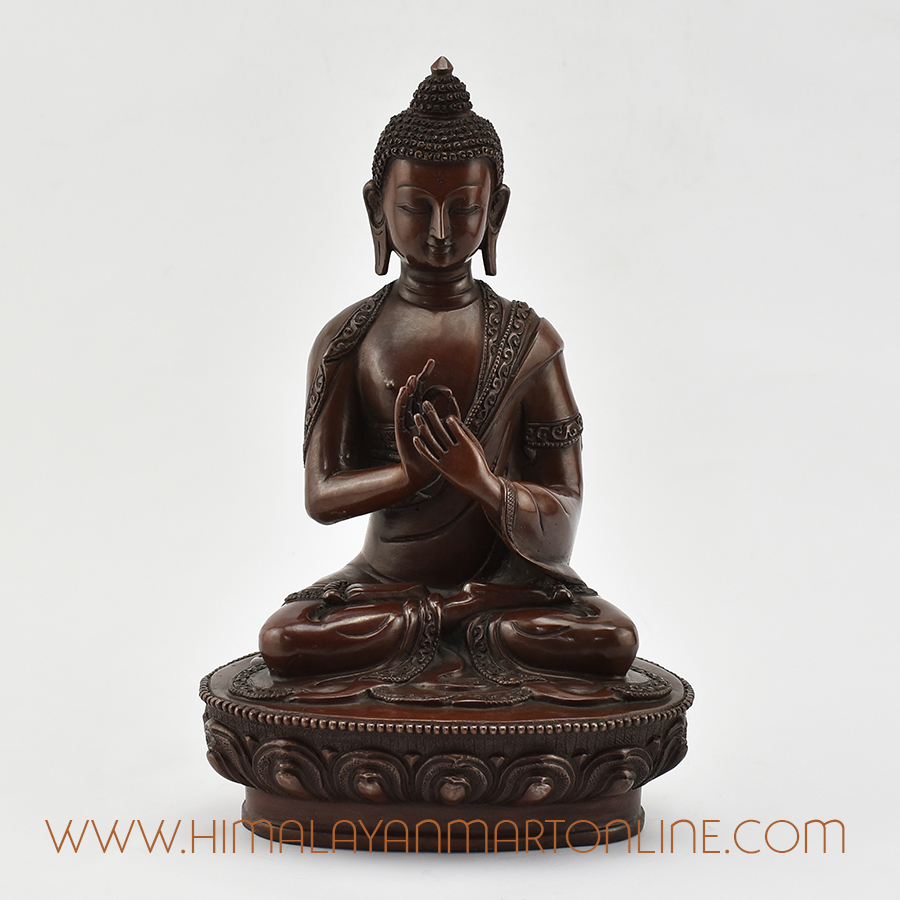
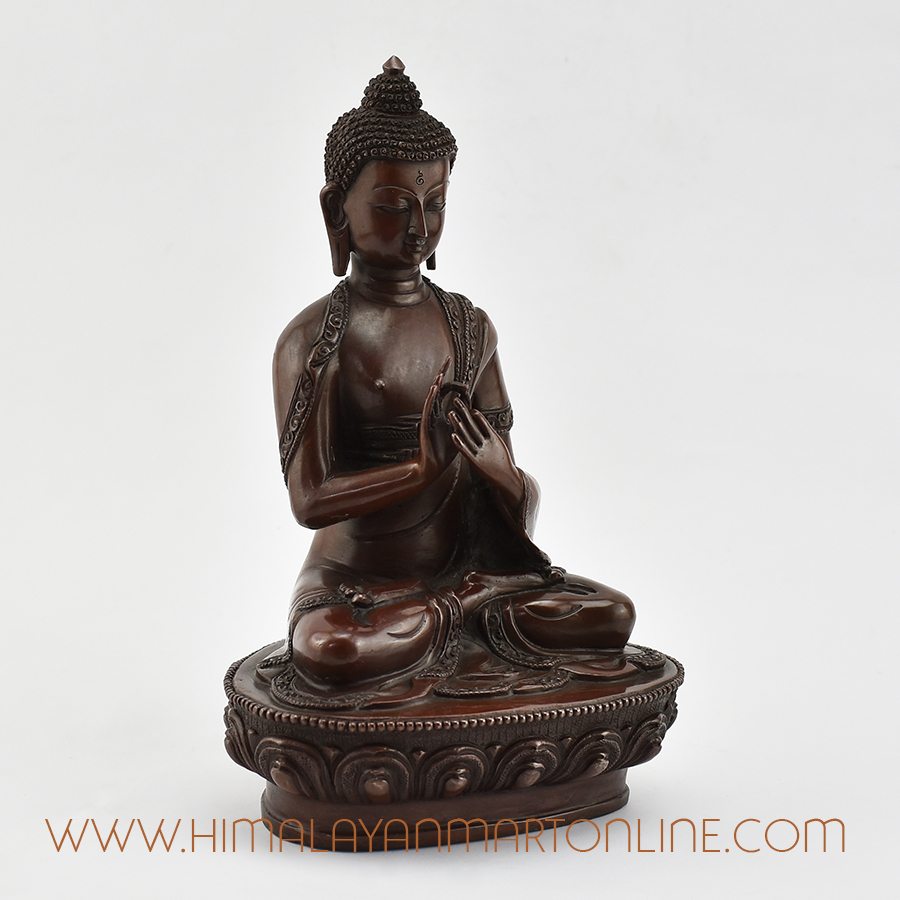
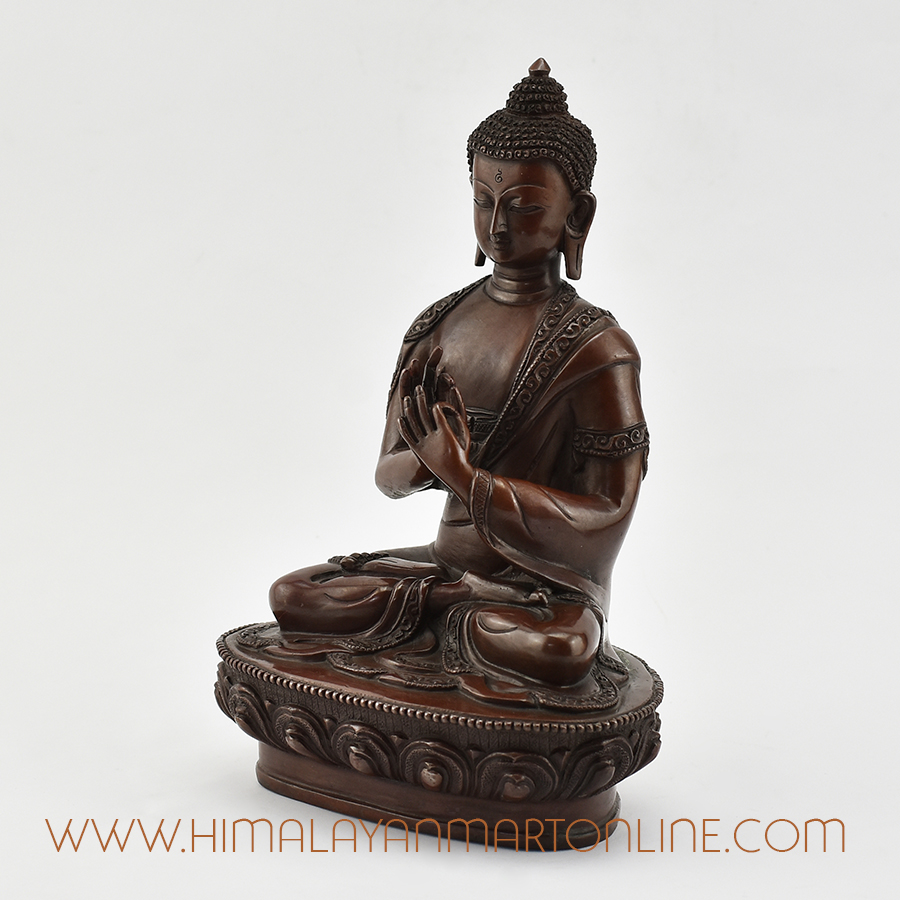
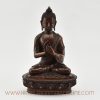
Vairochana is not often represented, but when he is, he is said to be the sum of all the Dhyani Buddhas and combines all of their qualities. He is therefore pure white in color, because white is the blending of all colors of the visible spectrum. Further, the brilliance of Vairochana’s representation is intended to serve as a reminder that all phenomena are empty – without inherent existence or permanent identity. His two hands are held against his chest with the tips of the thumbs and forefingers of each hand touching. He forms the Dharmachakra Mudra, the gesture of teaching and turning the Wheel of Dharma, indicating that he has the power to dispel ignorance.
About this Vairochana Buddha Statue
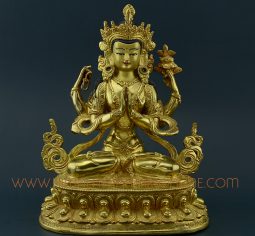
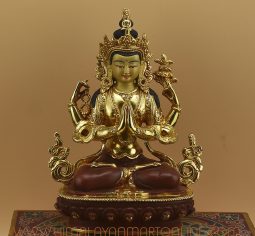
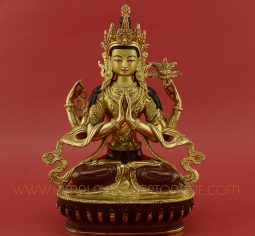
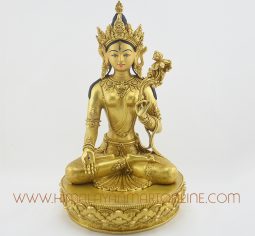
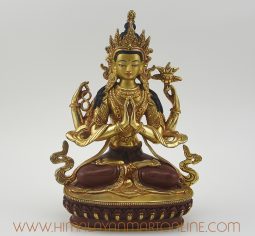
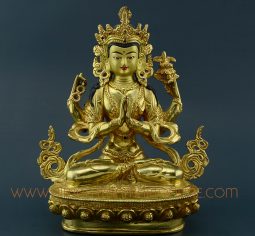
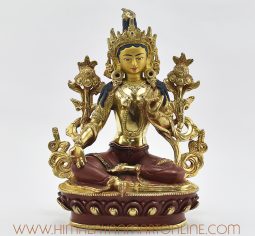
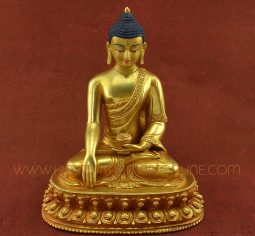
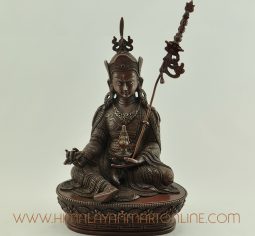
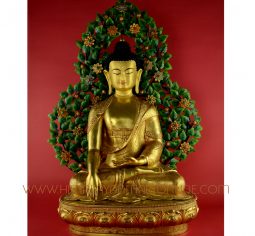
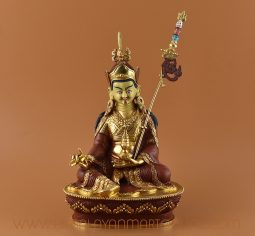
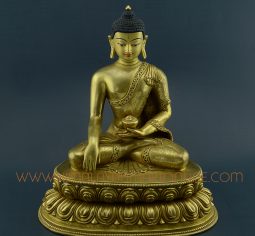
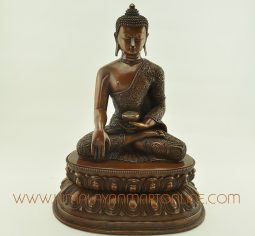
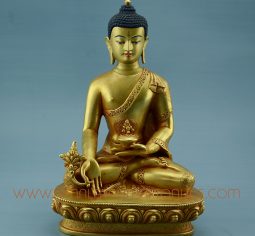
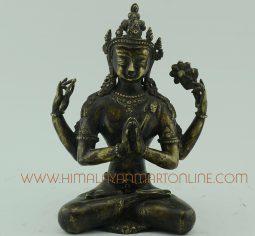
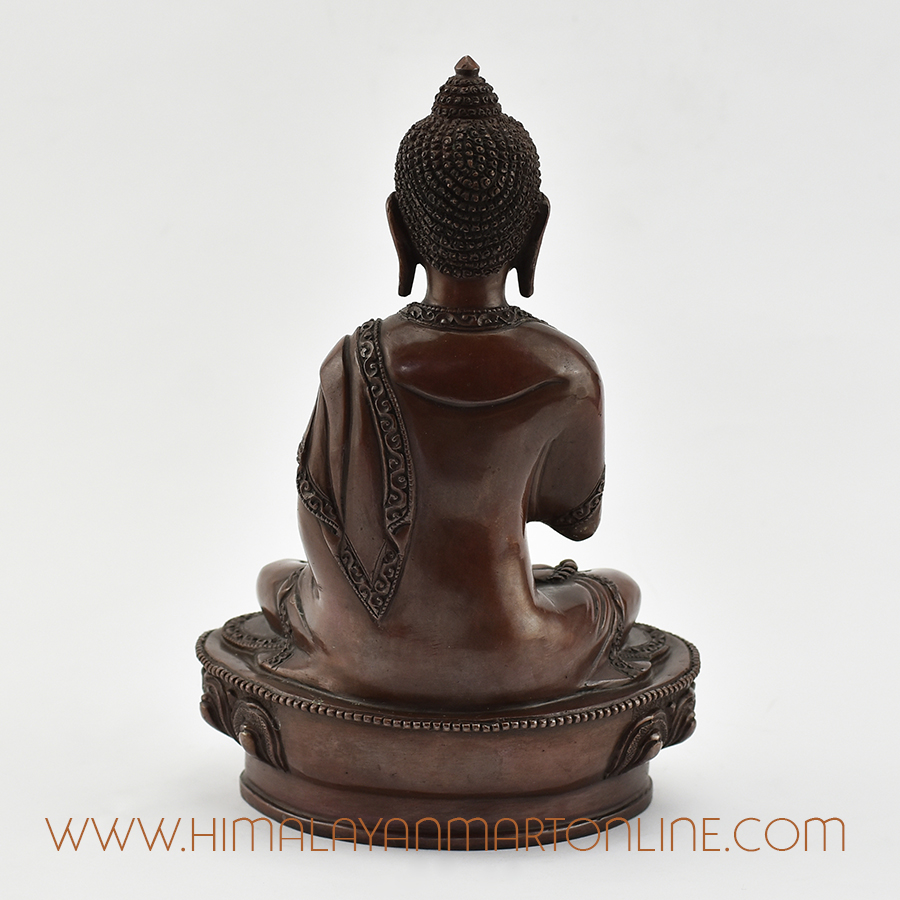
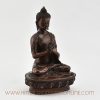
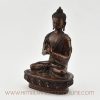
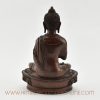
This sculpture is a beautiful depiction of the Vairochana Buddha; one of the great 5 Dhyani Buddhas. Expertly cast from copper alloy using the lost wax method and submitted to oxidation finish, the figure sits regally upon a lotus, expressing a graceful and dignified presence. The Buddha’s features are beautifully carved, imbuing the statue with warmth and character. This Vairochana Buddha Statue was individually handcrafted in Patan, Nepal by master artisans of the Shakya clan who are considered among the best in the world. These craftsmen are the modern heirs to a centuries-old tradition of creating sacred art for use in temples and monasteries. The fine metalworking techniques have been passed down from generation to generation since ancient times.