
Damaru – Tibetan Ritual Drum
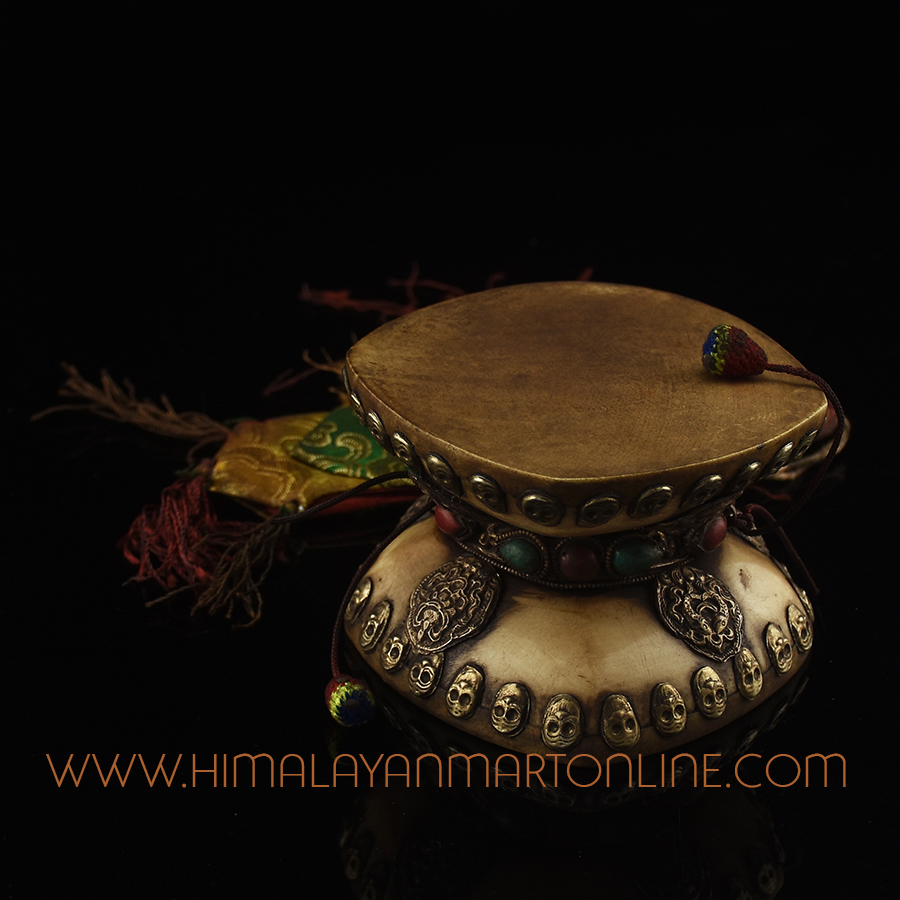
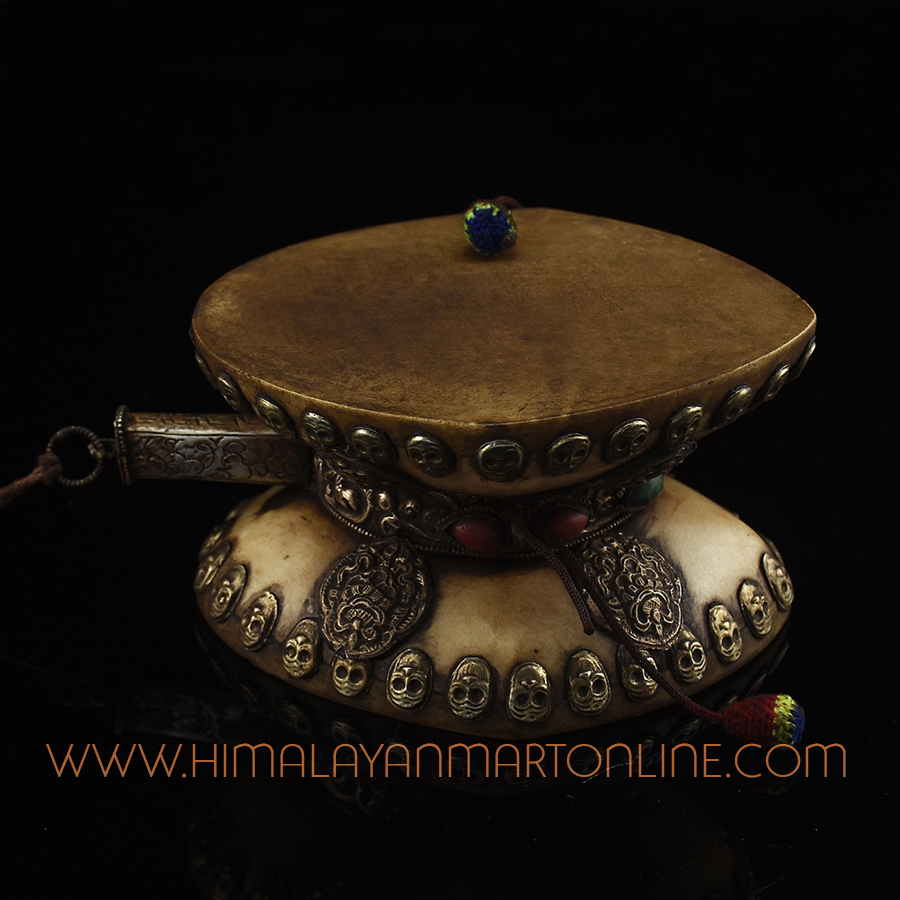
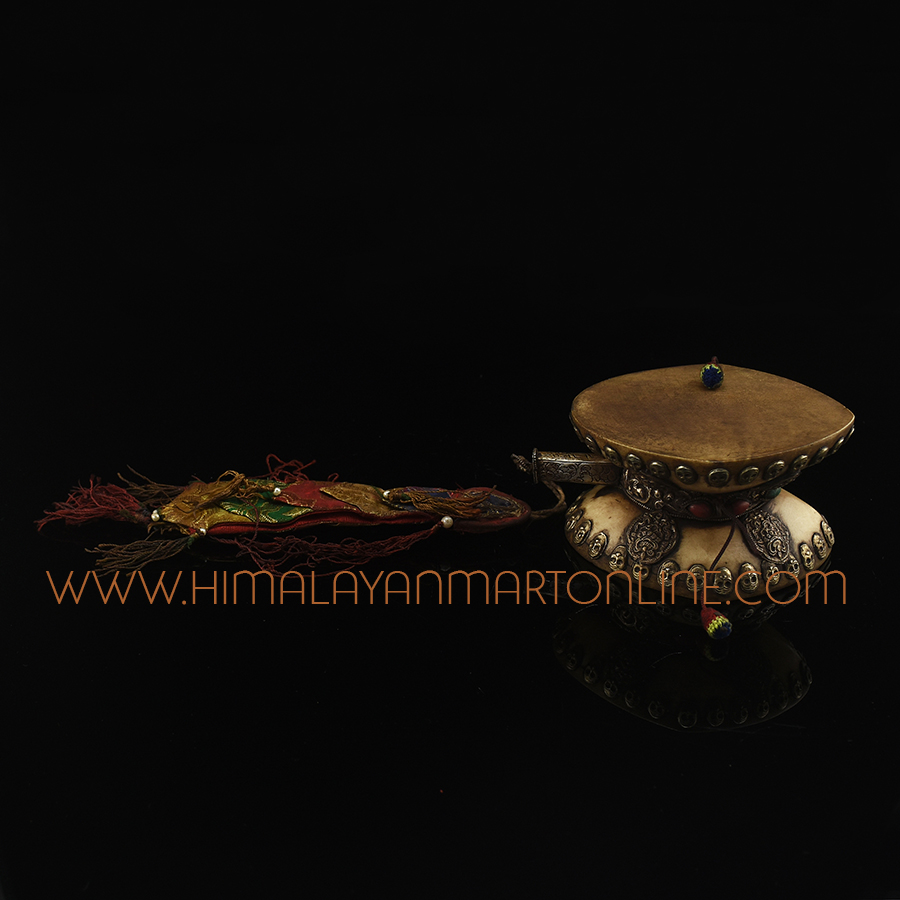
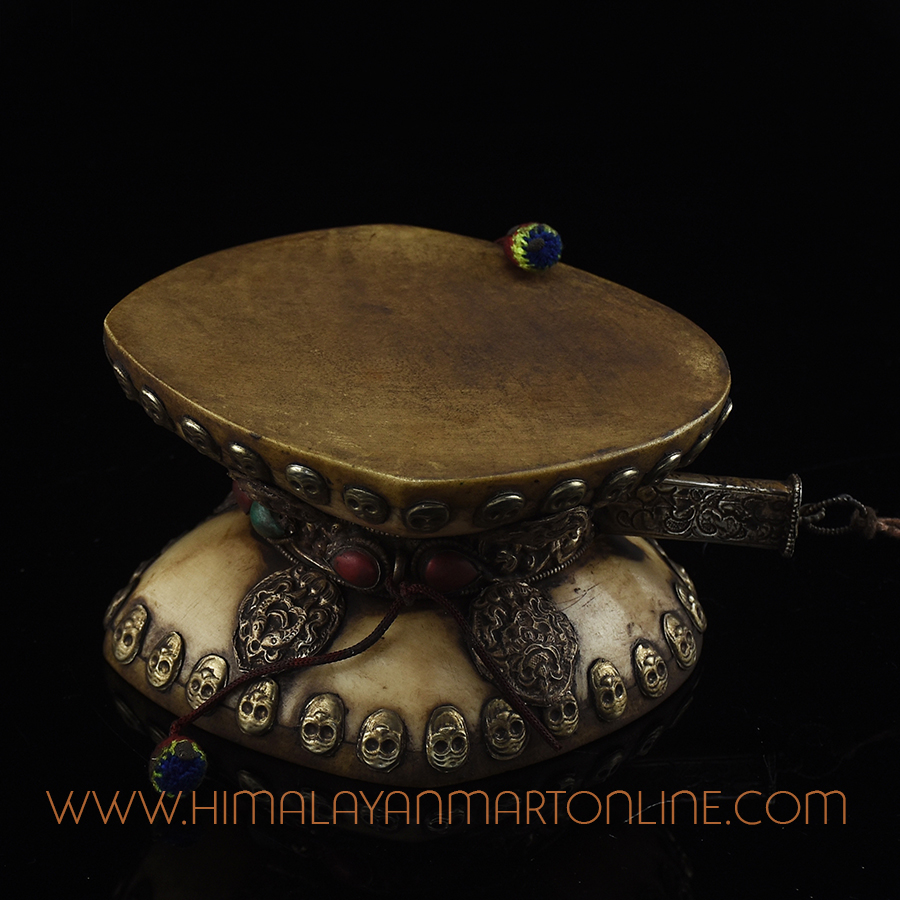
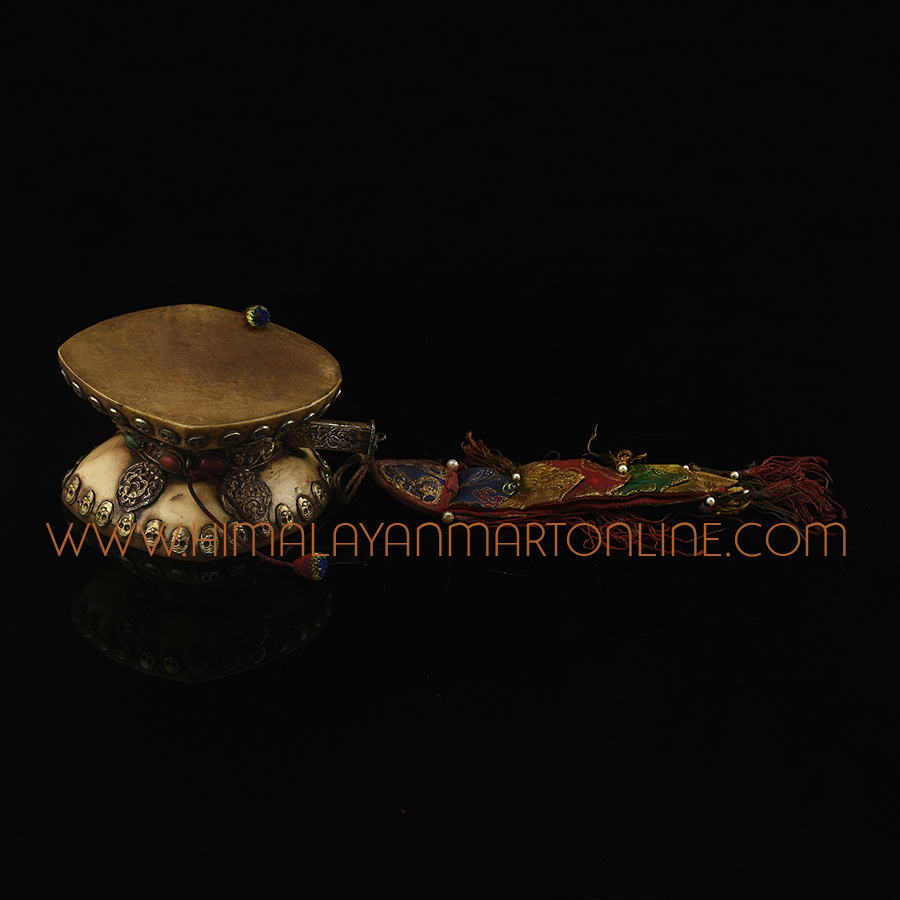
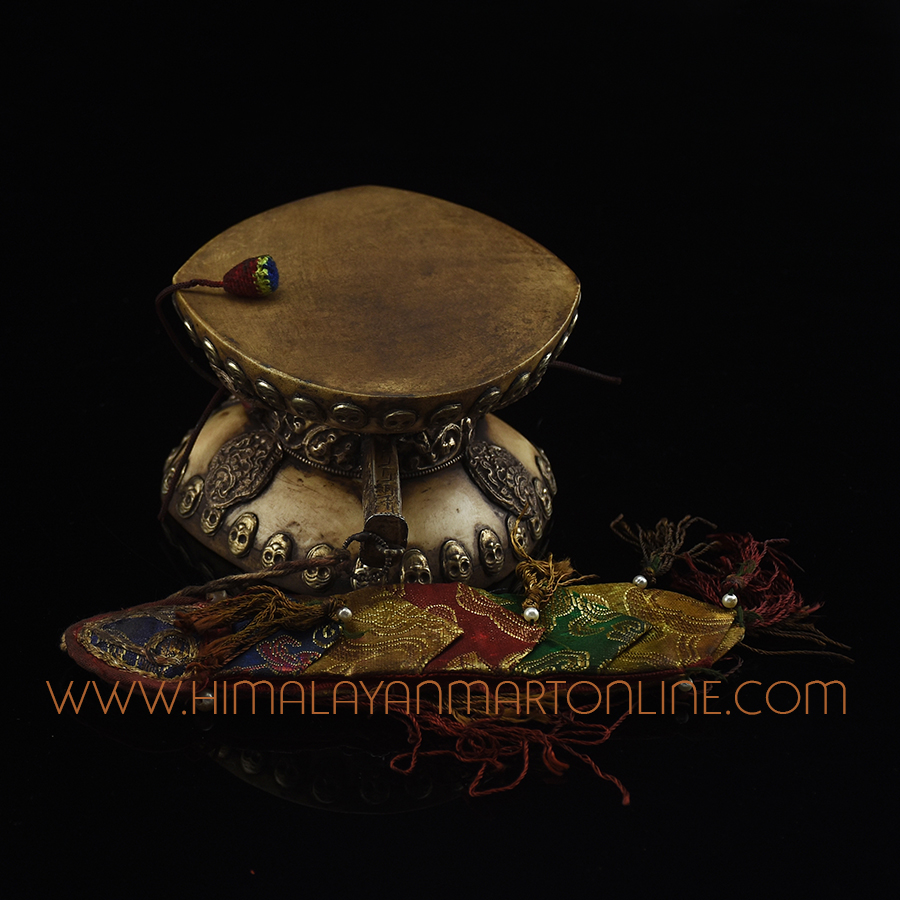
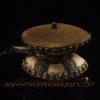
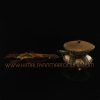
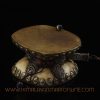
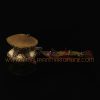
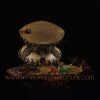
The Tibetan ritual drum, known as the Damaru, is a significant instrument in Tibetan Buddhism and Hinduism. This small, double-headed drum is traditionally made from wood, bone, and sometimes metal, with drumheads crafted from animal skin. Its hourglass shape and intricate craftsmanship make it a distinctive and revered instrument.
The Damaru is used in various religious ceremonies and rituals, symbolizing the unity of the masculine and feminine principles in the cosmos. Its rhythmic beats are believed to summon deities, dispel negative energies, and aid in meditation practices. The drum is often decorated with sacred symbols, vibrant colors, and ornaments like silver and colorful stones, enhancing its spiritual significance.
In Tibetan Buddhism, the Damaru holds a special place in the hands of lamas and monks during tantric practices and rituals. Its sound is considered a divine communication, connecting practitioners with the spiritual realm. The Damaru’s unique, resonant tones are produced by shaking it, causing the attached strikers or beads to hit the drumheads alternately.
The Damaru holds deep symbolic meaning, with each part representing various aspects of Buddhist philosophy. It is an essential tool for solo practitioners and is used by presiding Rinpoches and chant masters in larger ritual assemblies.
The craftsmanship of a Damaru is an art form in itself, especially those created by the master artisans of Patan, Nepal. These artisans meticulously carve and assemble each drum, ensuring that every piece is not only a musical instrument but also a work of art imbued with cultural and spiritual significance.
About this Damaru – Tibetan Ritual Drum
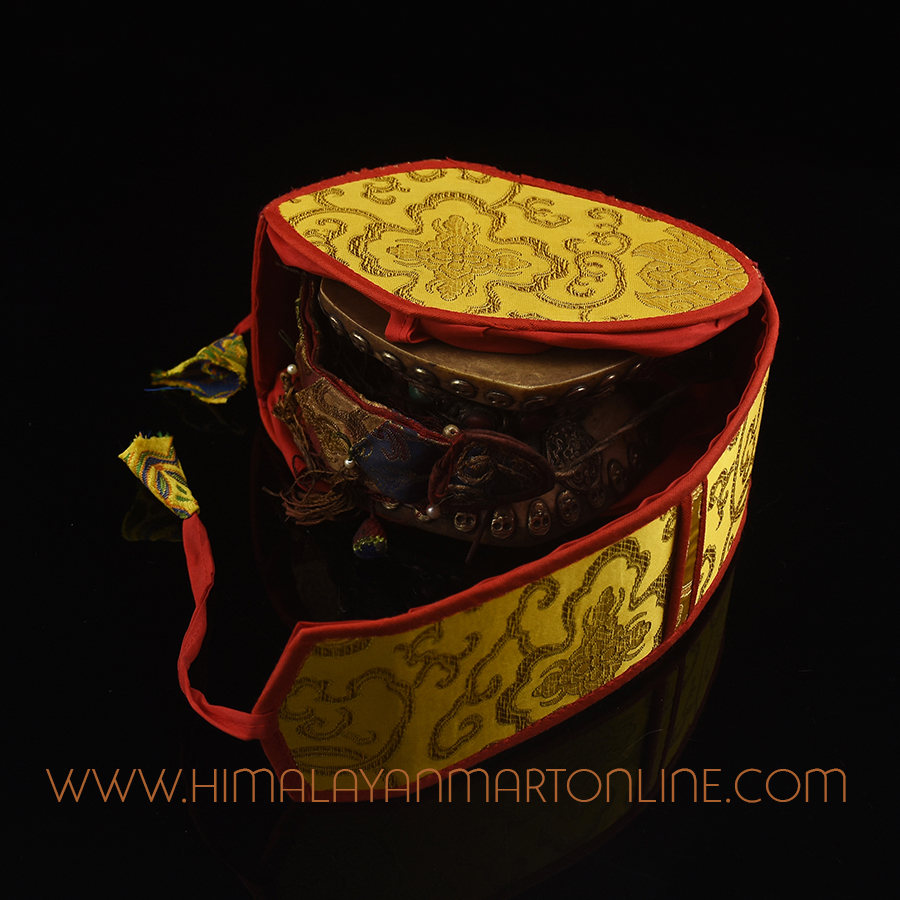
The Damaru described is a finely crafted drum known for its intricate design and cultural significance in Hinduism and Tibetan Buddhism. This particular Damaru is notable for its antiquated finish and is made from a mixture of plastic and bone, adorned with silver and colorful stones, showcasing the skilled artistry of master artisans from Patan, Nepal.
These instruments are traditionally used in rituals and are characterized by their two-headed structure, which produces a distinctive sound when played. The craftsmanship involved in creating these Damarus reflects the rich cultural heritage of the region, making them not only musical instruments but also decorative art pieces.