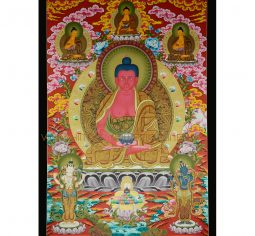
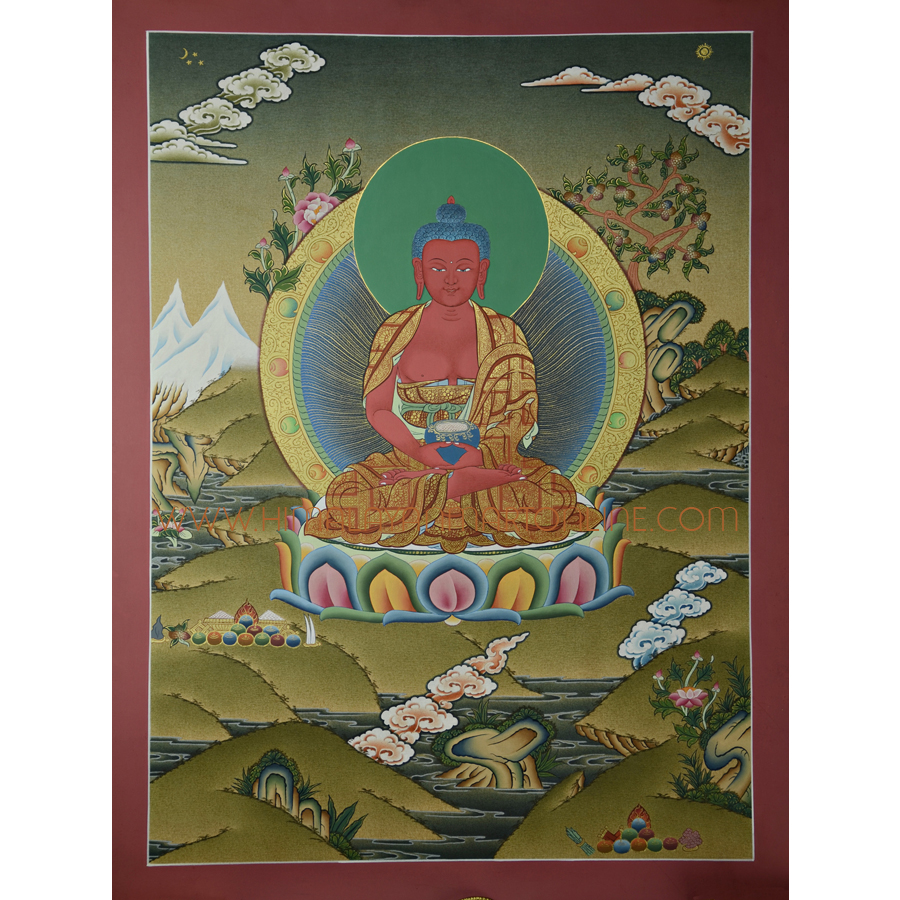
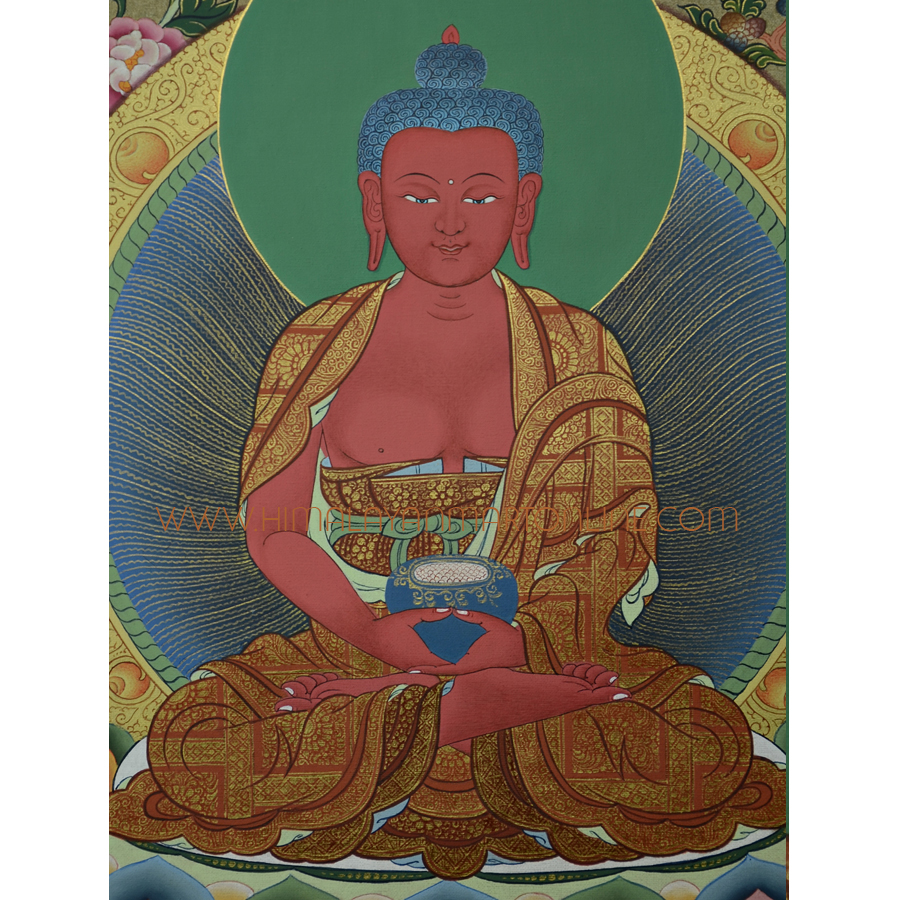
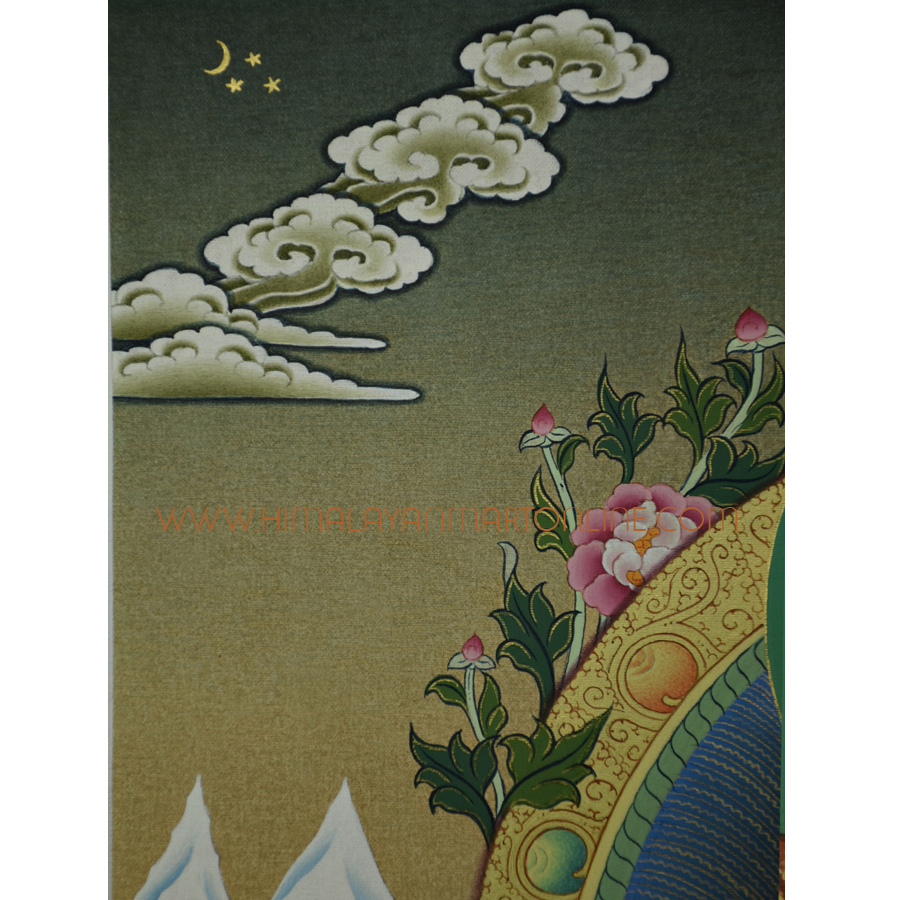

Amitabha Buddha
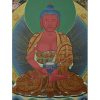
Amitabha means “Infinite Light.” Amitabha’s Discriminating Wisdom conquers the poison of the passions – all cravings, covetousness, greed, and lust. With this wisdom, the disciple discerns all beings separately yet knows every being as an individual expression of the One. In the mandala of the Dhyani Buddhas, Amitabha is positioned to the west. His color is rose (red), the color of the setting sun. Amitabha Buddha rules over the element of fire and personifies the Skandha of perception. Thus, the eye and the faculty of seeing are associated with Amitabha. The peacock, with “eyes” on its plumes, is his throne-bearer. The peacock symbolizes grace. Amitabha’s symbol is the padma, or lotus, placed between him and Vairochana in this Mandala. In Buddhism, the lotus can symbolize many things, including spiritual enfoldment, purity, the true nature of beings realized through enlightenment, and compassion, the purified form of passion. Amitabha denotes “Boundless Light” or Incomprehensible.
Gestures and Attributes
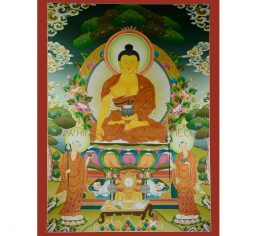
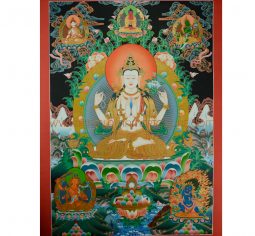
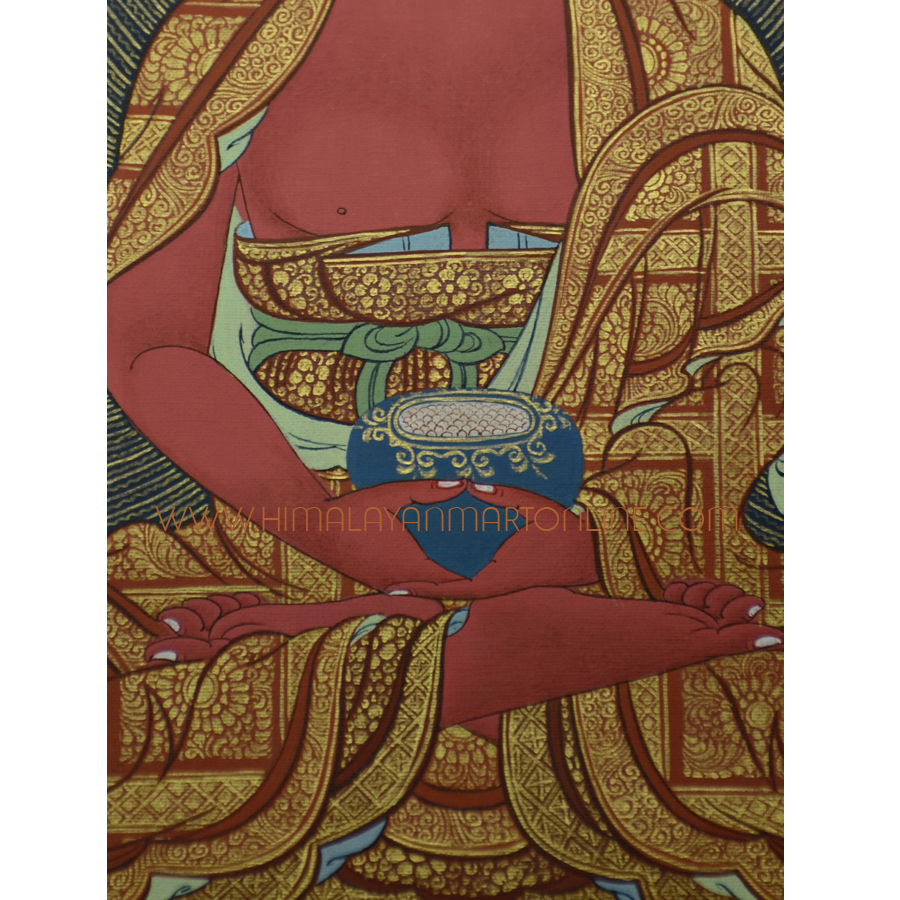
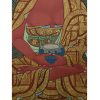
Amitabha is depicted in Dhyana Mudra, the gesture of meditation, with both palms, face up and lying in his lap. His right hand, resting on top, symbolizes the state of enlightenment, while his left hand, resting below, represents the world of appearance. Thus, Amitabha’s posture expresses his mastery over the world of appearance through enlightenment and signifies the enlightened state of mind for which samsara and nirvana are one. In some representations, he holds the traditional begging bowl of an ordained Buddhist monk. The bowl is filled with amrita , the elixir of awakening and immortality, and symbolizes Amitabha’s infinite openness and receptivity toward all sentient beings.