
The blessing of a Thangka Scroll Painting in Tibetan Buddhism is a revered ritual that infuses the artwork with spiritual energy and connects it to the blessings of enlightened beings. This ceremony holds deep significance, as Thangkas are not merely artistic representations but also windows to the divine, serving as aids for meditation and avenues for spiritual growth. Here is a step-by-step overview of how a Thangka is blessed in the Tibetan Buddhist tradition:
1. Preparation and Purification: The blessing ceremony takes place in a clean and consecrated space. The Thangka is placed on an altar adorned with offerings such as candles, incense, water, flowers, and symbolic objects. The ceremony often begins with the purification of the surroundings through the lighting of incense and the recitation of mantras to cleanse the environment of negative energies.
2. Invoking Deities and Lineage Masters: The ritual typically commences with the recitation of specific mantras and prayers that invoke the presence of the deities depicted in the Thangka. This is followed by the calling upon the blessings of lineage masters, gurus, and enlightened beings who are part of the tradition. These invocations create a sacred atmosphere and establish a connection between the physical and spiritual realms.
3. Empowerment and Blessing: A lama (spiritual teacher) or a qualified monk leads the blessing ceremony. The lama may engage in deep meditation and visualization, channeling the energy of compassion and wisdom. Through their presence and practice, they empower the Thangka with positive vibrations and spiritual potency. The lama may also perform mudras (symbolic hand gestures) and recite mantras associated with the deities depicted in the painting.
4. Chanting and Recitation: During the blessing, the lama and the attending practitioners often chant sacred mantras, sutras, and prayers. These vocalizations serve to amplify the blessings, creating a collective resonance that harmonizes with the spiritual intentions of the ceremony.
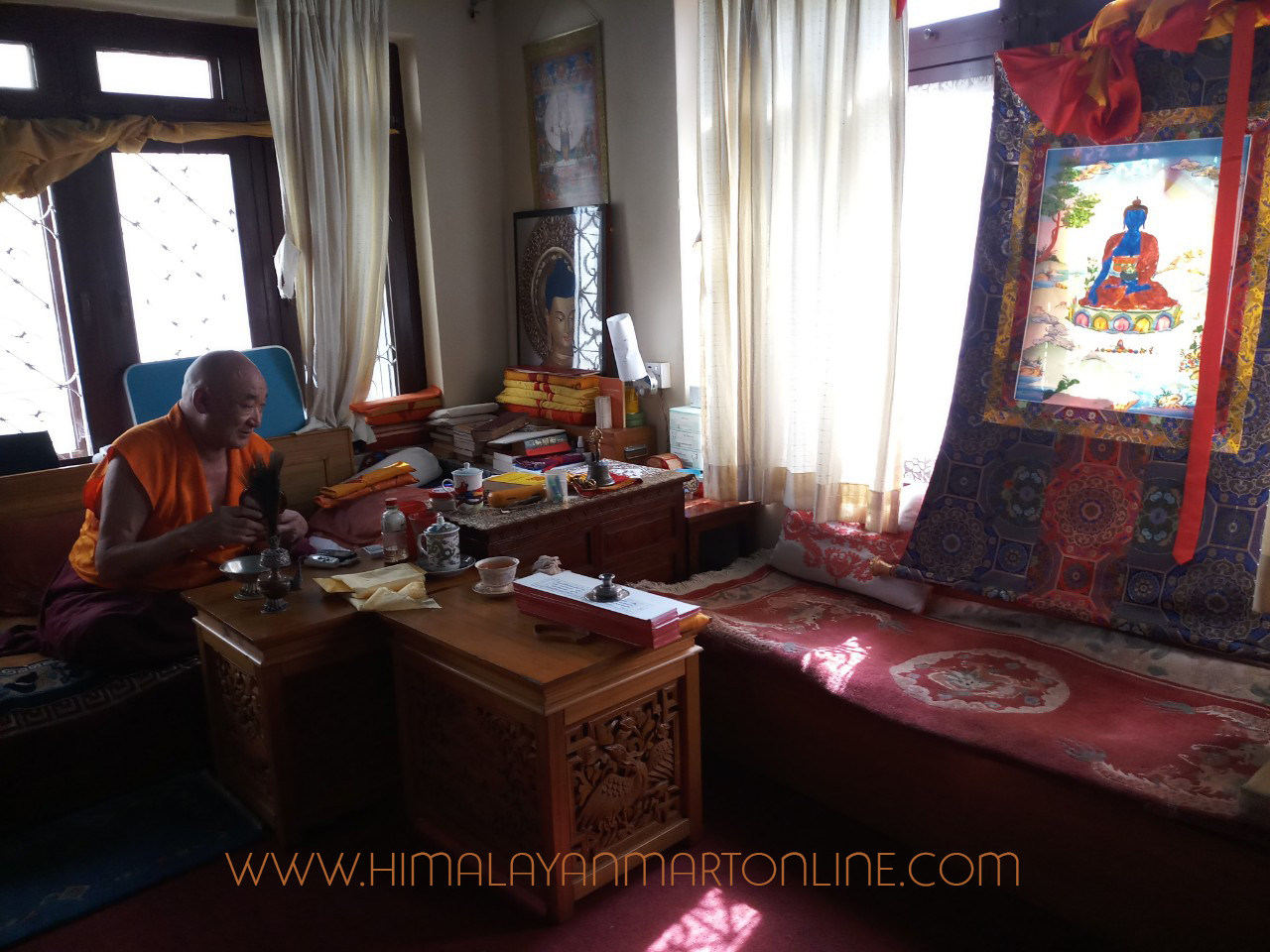
5. Offerings and Dedication: Devotees present offerings to the divine, symbolizing their devotion and commitment to the spiritual path. These offerings are made with a sincere heart, representing the offering of one’s senses and attachments. The blessings are then dedicated to the well-being and enlightenment of all sentient beings, spreading the positive energy beyond the immediate space.
6. Receiving Blessings: Participants have the opportunity to receive blessings from the lama, often through the touching of a blessed object or by receiving a sprinkle of water infused with blessings. This gesture is believed to transfer the spiritual energy and blessings of the ceremony to the participants.
7. Conclusion and Aspiration: The ceremony concludes with expressions of gratitude, aspiration prayers for spiritual growth, and the dedication of merits. Participants may make personal aspirations for their practice and the well-being of others.
The blessed Thangka becomes a sacred object, charged with the blessings of enlightened beings, and is often displayed in homes, monasteries, or meditation spaces. Its presence serves as a source of inspiration, protection, and a reminder of the spiritual path.
In essence, the blessing of a Thangka Scroll Painting in the Tibetan Buddhist tradition is a profound ritual that bridges the material and spiritual realms, uniting devotees with the wisdom and compassion of the divine.
