
Vajravarahi Jogini / Dorje Phagmo – The Female Buddha
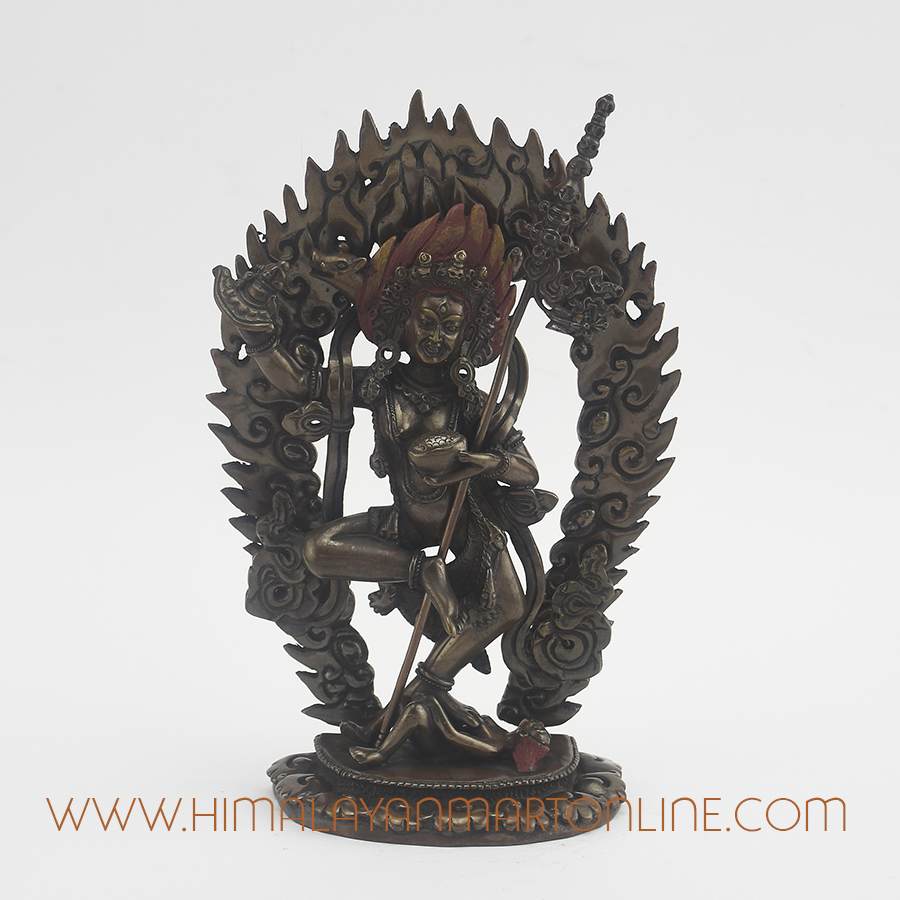
Vajravarahi Jogini Statue: Vajravarahi is also known as Dorje Phagmo, Vajravarahi is a representation of complete Buddhahood in female form, whose practices are associated with the Chakrasamvara Cycle of Anuttarayoga Tantra. Although her practice exists in all schools of Tibetan Buddhism, she is particularly associated with the Kagyu tradition and has appeared to and bestowed initiations on some Mahasiddhas over the years. Making offerings to her image makes a connection with this extremely potent Buddha and seeing her plants seeds of enlightenment in our mind stream. Her image pacifies our immediate environment, clears negative energy and protects from negative interferences.
Gestures and Attributes
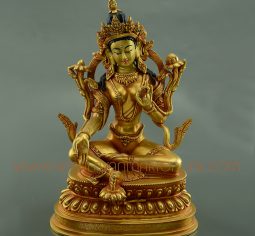
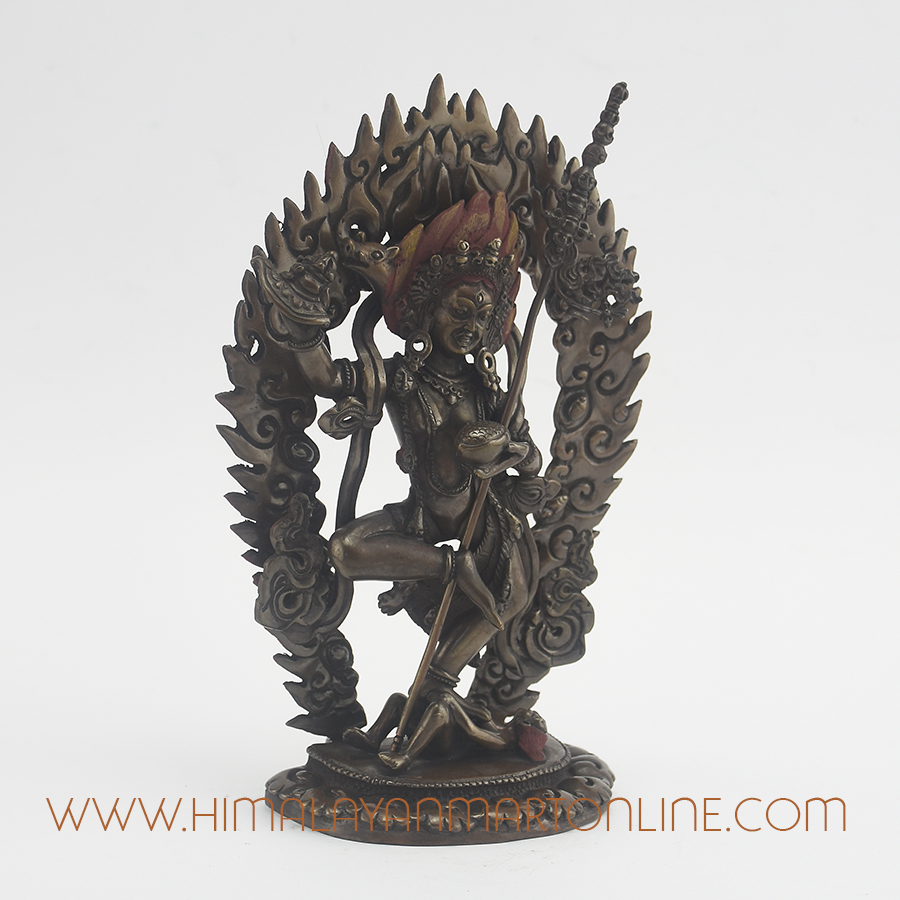
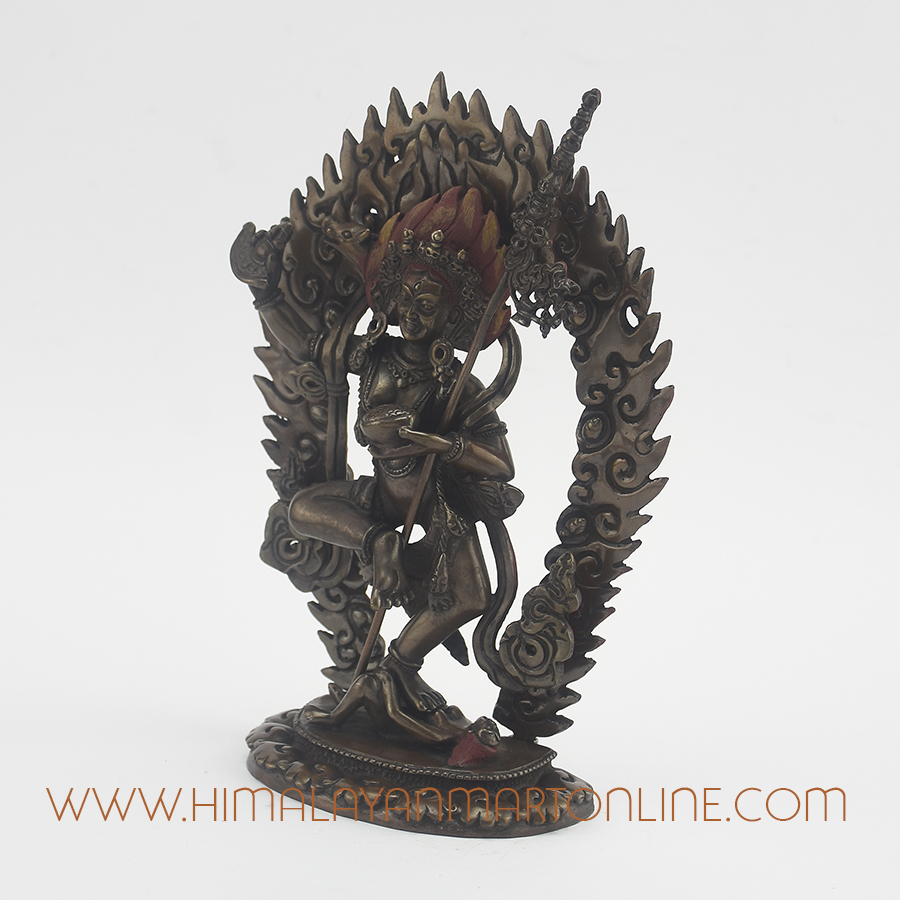
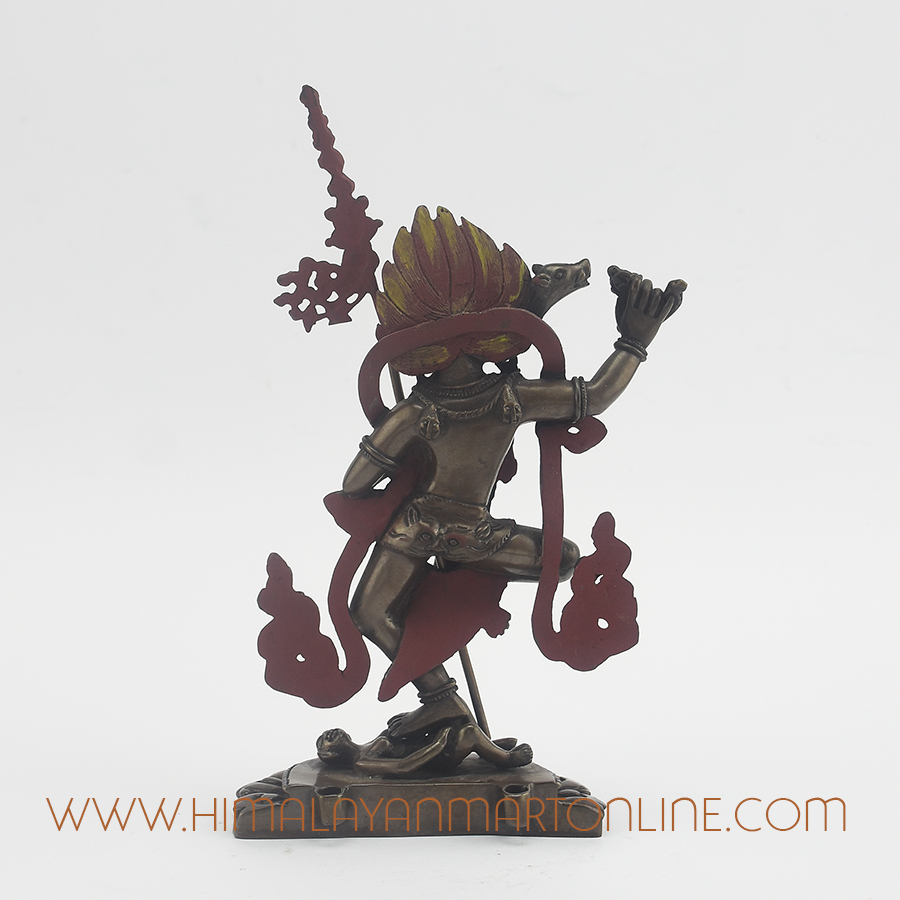
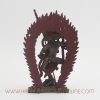
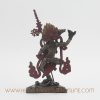
Vajravarahi is holds a cemetery knife in her right hand, and a skull cup in her left like shown in this Vajravarahi Jogini Statue. In the crook of her left elbow is a Khatvanga staff and her two legs are in a celestial dancing posture on a human corpse. She is often depicted with a sow’s head on the side of her own, symbolic of triumph of dharma over ignorance.
Iconography
Vajravarahi is depicted in red colour with a wrathful expression, Vajravarahi has one face, two arms and three eyes with a small pig’s head in her hair. She holds a cemetery knife in her right hand, and a skull cup in her left (like shown in this Vajravarahi Jogini Statue). In the crook of her left elbow is a Khatvanga staff and her two legs are in a celestial dancing posture on a human corpse. She is often depicted with a sow’s head on the side of her own, symbolic of triumph of dharma over ignorance.
About this Vajravarahi Jogini Statue
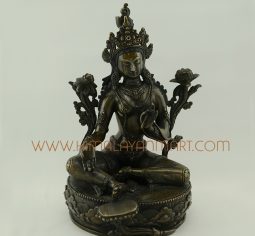
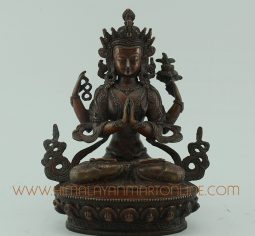
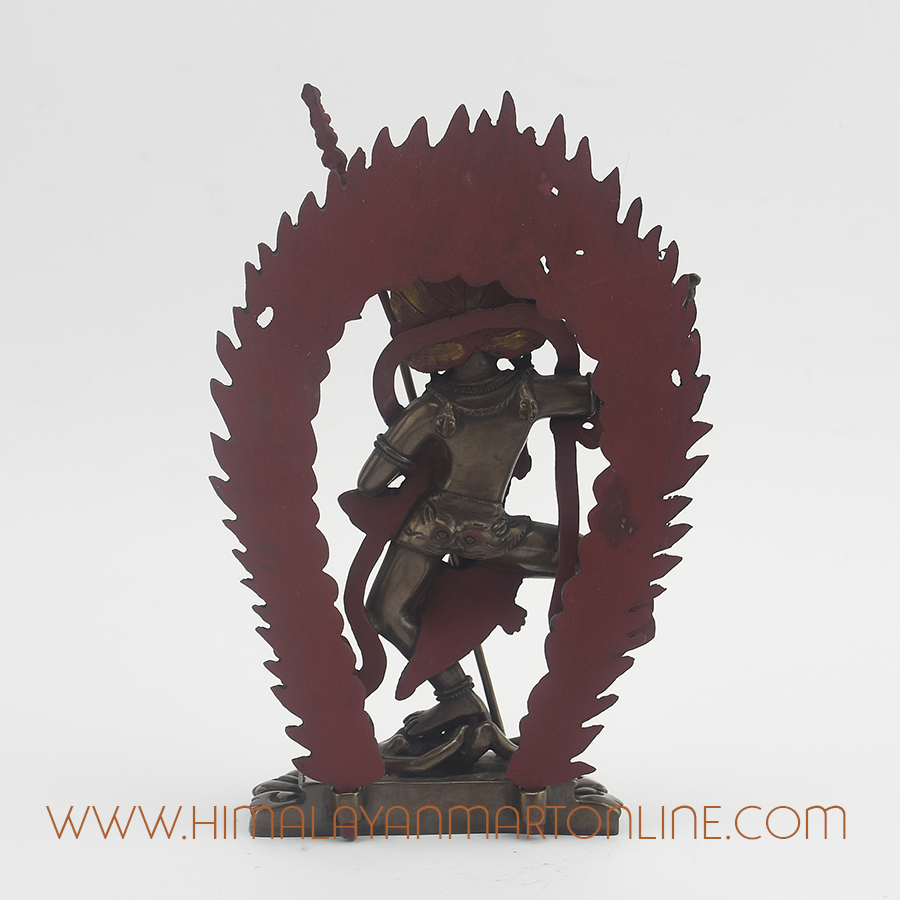
Expertly cast from copper alloy using lost wax method, the statue has been submitted to an oxidation process to yield a rich and sensuous finish, this sculpture is a beautiful wrathful representation of Vajravarahi / Dorje Phagmo. Vajravarahi Jogini’s features have been lovingly carved, imbuing the piece with a magical sense of warmth and compassion. This sculpture was individually handcrafted in Patan, Nepal by master artisans of the Shakya clan who are considered among the best in the world. These craftsmen are the modern heirs to a centuries-old tradition of creating sacred art for use in temples and monasteries. The fine metalworking techniques have been passed down from generation to generation since ancient times.