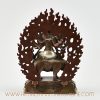


Marici – The Goddess of the Dawn
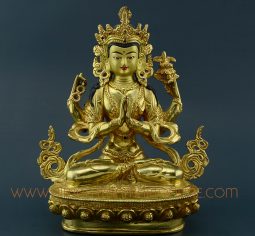
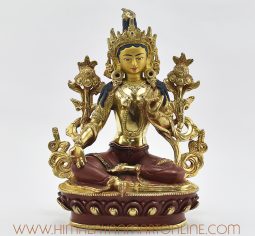
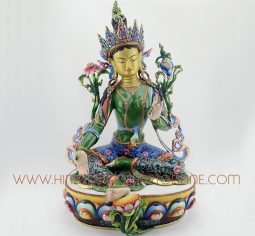
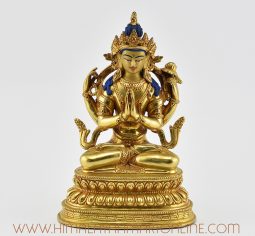
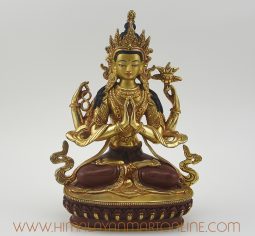
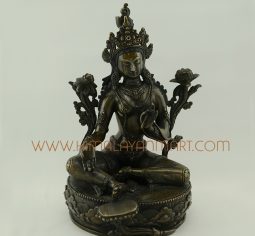
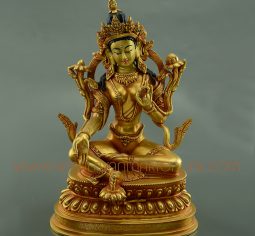
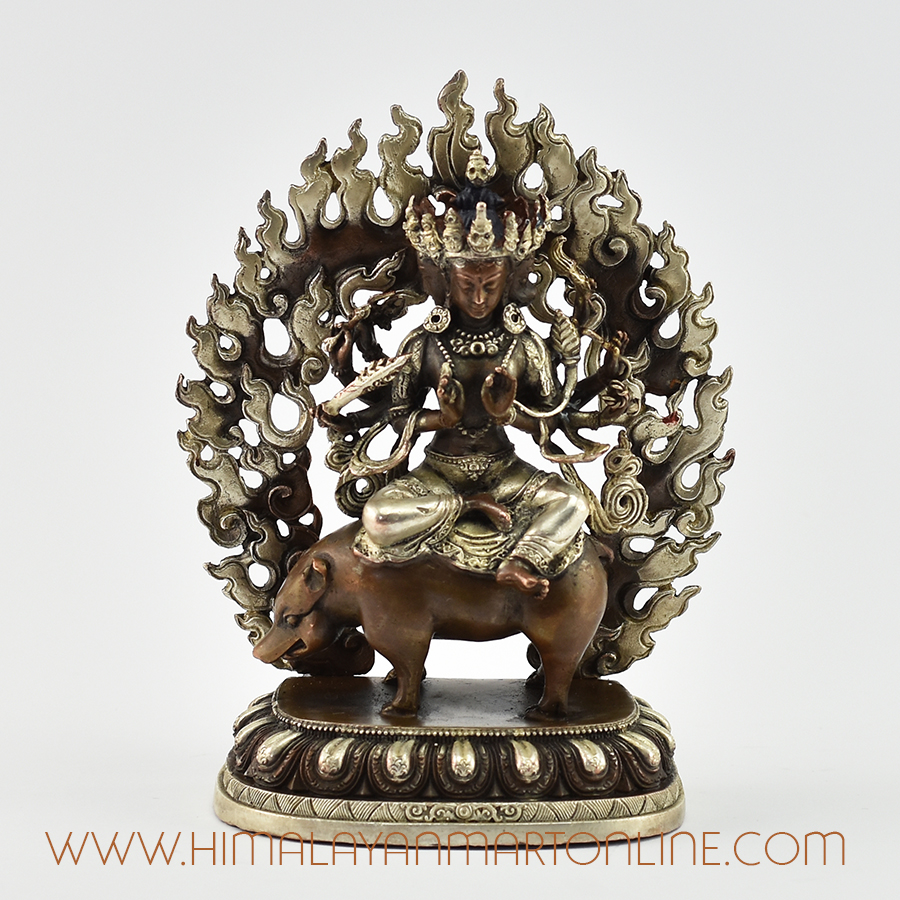
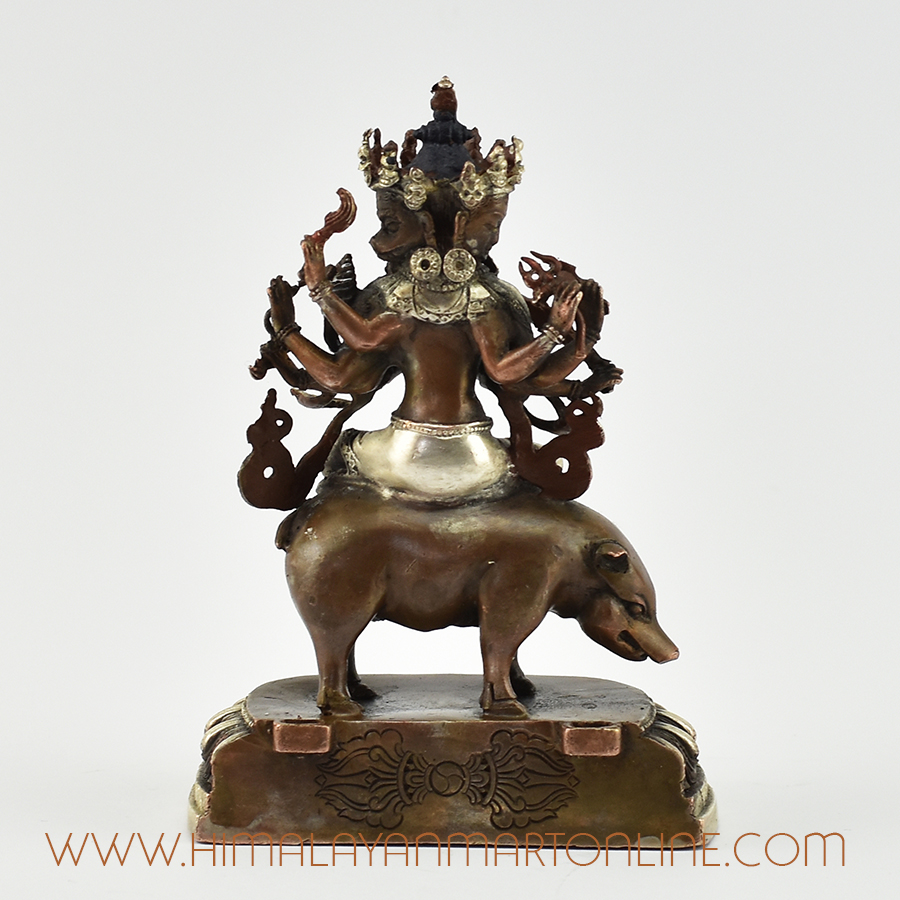
Goddess Marici Statue: Marici, the Goddess of the Dawn is often revered in Hindu and Buddhist traditions, and is a deity of significant spiritual significance. Depicted as a radiant figure, Marici is frequently portrayed riding a chariot drawn by seven pigs, symbolizing her role as a solar goddess associated with dawn and the first light of day.
In Hinduism, Marici is considered one of the daughters of the creator god Brahma, making her one of the Saptarishi, or seven great sages. She is often mentioned in various Hindu scriptures, including the Rigveda and the Puranas, where she is praised for her purity and wisdom. Marici is also associated with protection and is sometimes invoked in rituals for dispelling darkness and obstacles.
Within Buddhist traditions, Marici holds a prominent place as well. She is revered as one of the 21 Taras, manifestations of the enlightened feminine energy embodying compassion and wisdom. As a Tara, Marici is particularly associated with overcoming obstacles, dispelling negative energies, and bringing success and prosperity.
In both Hinduism and Buddhism, Marici is often invoked through prayers, mantras, and rituals by those seeking protection, guidance, and blessings in their endeavors. Her symbolism as the first light of dawn underscores her role in dispelling darkness and ignorance, leading beings towards spiritual awakening and enlightenment.
Marici’s significance extends beyond religious contexts, as her imagery and symbolism are also celebrated in various forms of art, sculpture, and literature across South Asia and beyond. As a symbol of light, purity, and divine feminine energy, Marici continues to inspire devotion and reverence among practitioners seeking her blessings and guidance on their spiritual journey.
Gestures and Attributes
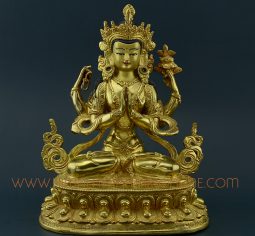
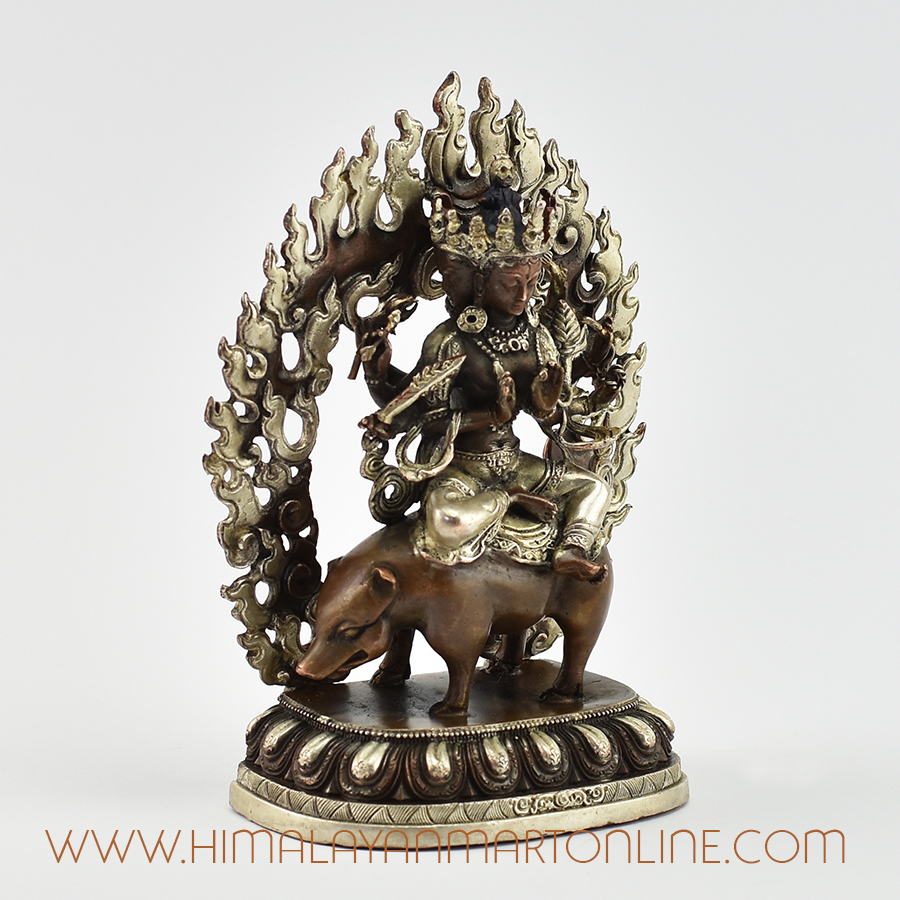
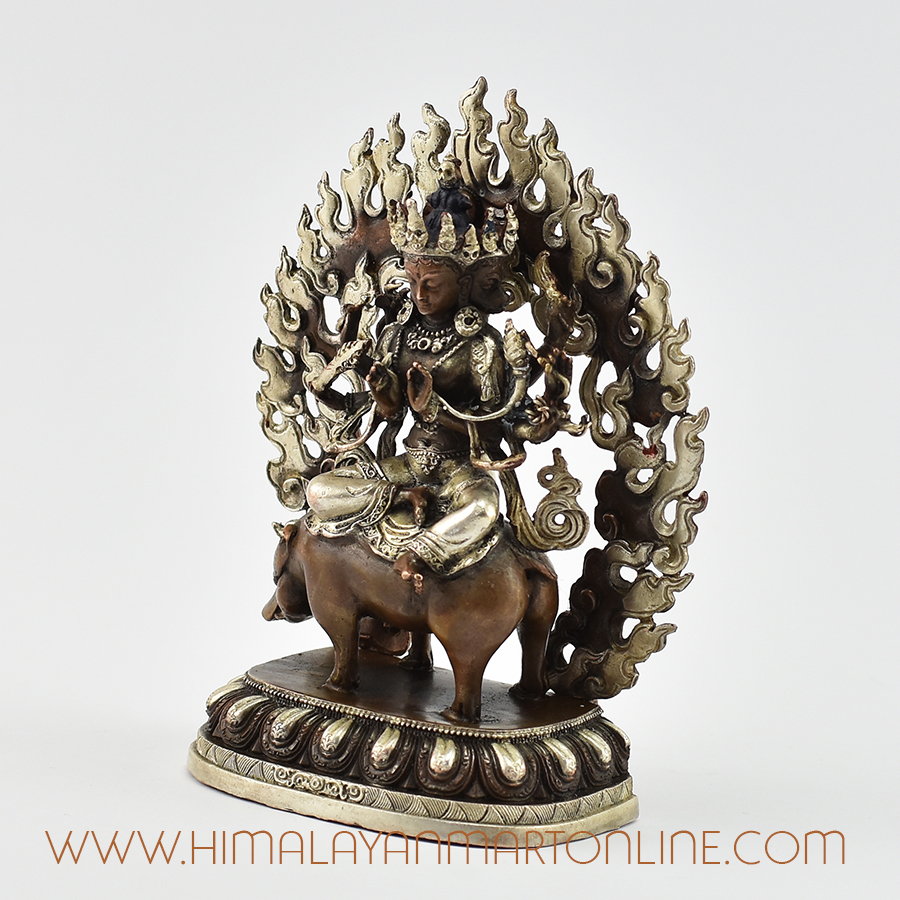
Marici, the Goddess of the Dawn, is depicted in radiant hues of gold, yellow, white, or red, with one or three faces and three eyes. She sits gracefully in Padmasana or Lalitasana, exuding regal ease. Her hands may vary in number, holding an array of attributes including the Ashoka tree branch, bow, arrow, Vajra, hook, lasso, sword, trident, Kapala, vase, and the severed head of Brahma. Notably, she wields a needle and thread, symbolizing the suturing of harm-causing eyes and ears, neutralizing negativity.
Typically depicted atop a lotus, a boar, or a chariot drawn by seven wild boars or horses, Marici embodies a militant and defensive force, symbolized by the boars. The seven boars correspond to the seven planets governing the days of the week, aligning Marici with planetary management and supporting the celestial bodies of the Sun and Moon.
Marici is primarily depicted as an independent deity, though Buddhist texts occasionally cite her as the spiritual consort of Buddha Vairochana or as an emanation thereof. Rarely, she appears alongside Hayagriva, a wrathful aspect of Avalokiteshvara, and in tantric tradition, images depict her in union with Hayagriva.
With her multifaceted symbolism and divine attributes, Marici stands as a powerful embodiment of enlightenment, protection, and cosmic harmony in both Hindu and Buddhist traditions.
About This Goddess Marici Statue
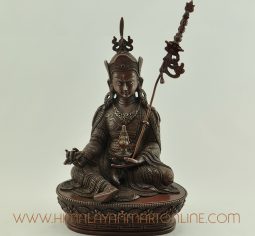
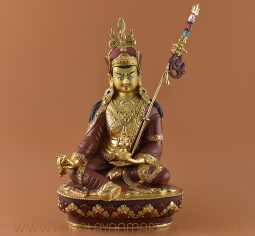
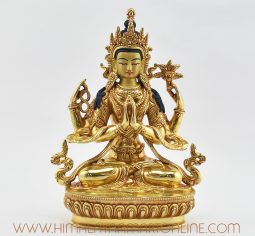
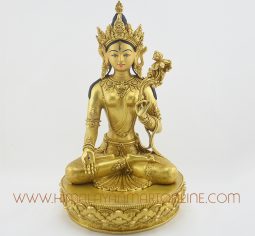
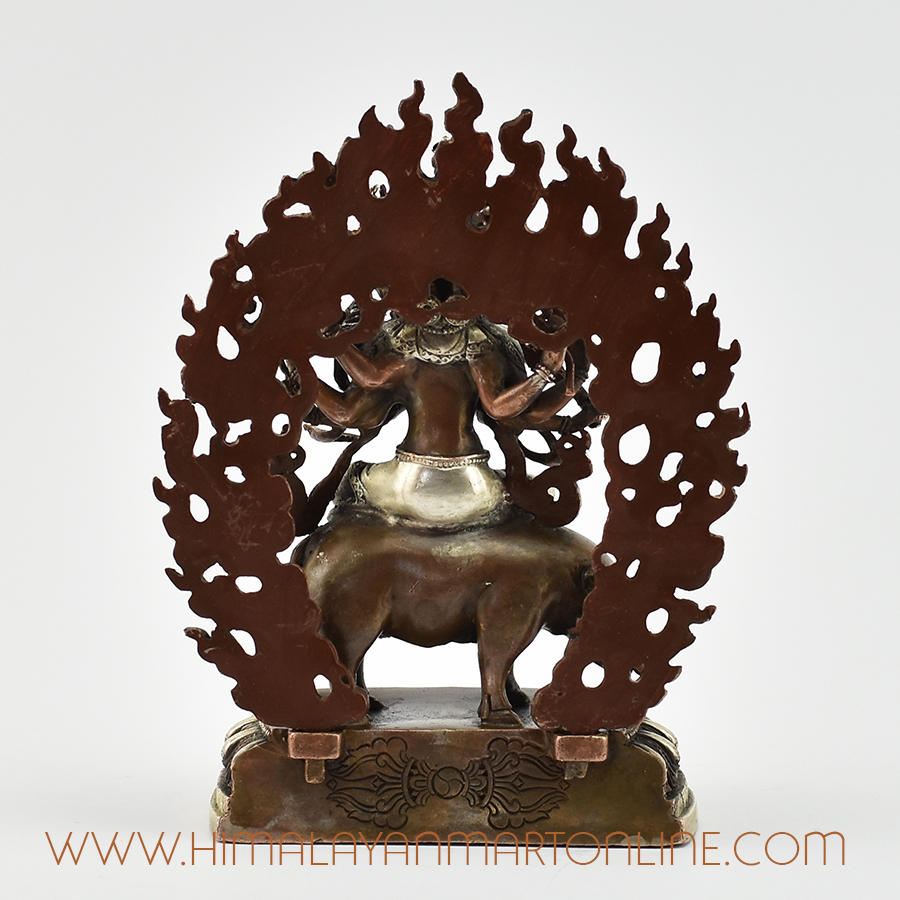
Behold the captivating visage of Goddess Marici, lovingly immortalized in a breathtaking statue wrought from the timeless medium of copper alloy. Crafted with meticulous care through the revered lost wax method, each intricate detail reflects the reverence and artistry of its creator. Enhanced with a glistening coat of silver, its luminous allure is further enriched by an enchanting oxidation finish, lending an aura of antiquity and depth to its divine form. As the embodiment of grace and serenity, this masterpiece stands as a testament to the enduring beauty and spiritual resonance of Marici’s divine presence.