
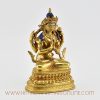


Chenrezig – The Bodhisattva of Compassion
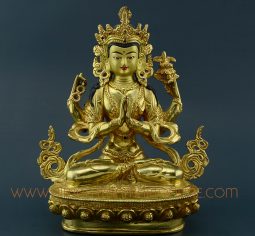
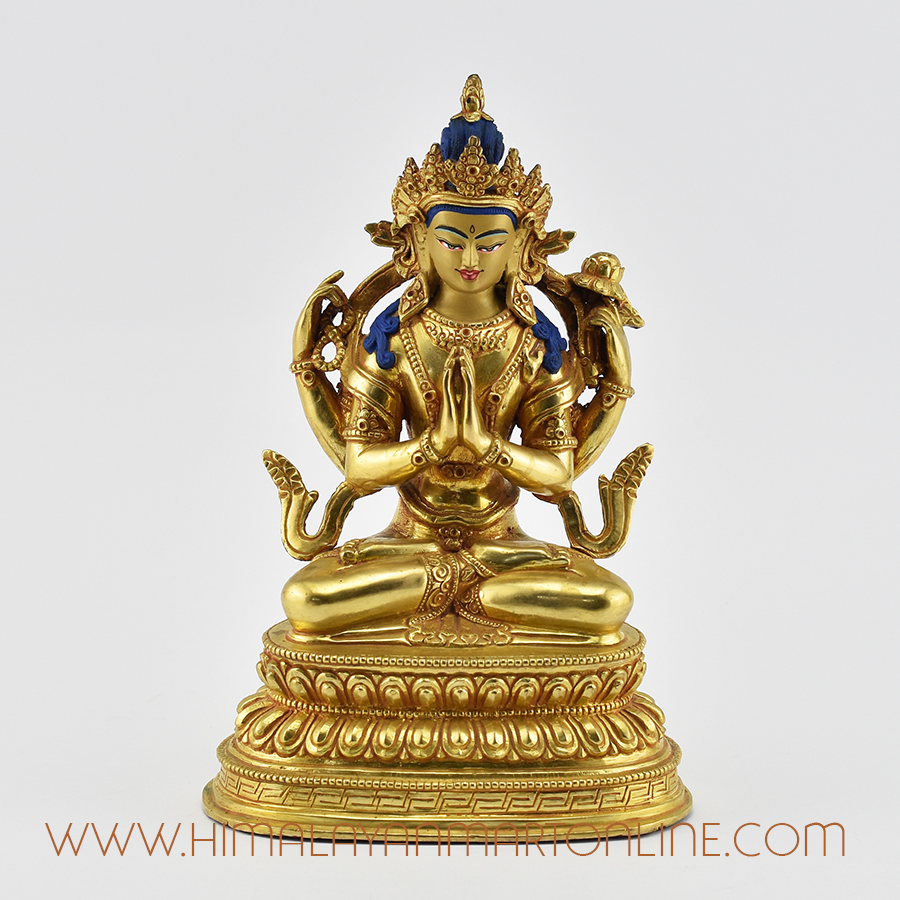
Chenrezig Statue Patan Nepal: Chenrezig, also called Avalokiteshvara, is the embodiment of the enlightened compassion of all the Buddhas. He is the earthly incarnation of the celestial Buddha Amitabha, and he guards our world during the interval between the historical Buddha, Shakyamuni, and the future Buddha, Maitreya. Chenrezig is universally cherished in all branches of Buddhism and is considered the patron Bodhisattva of Tibet. Even in non-Buddhist countries, most people are familiar with his mantra Om Mani Padme Hum. Chenrezig courageously vowed that so long as even one being remains caught in samsara, he will continue to work for the benefit of living creatures. His wisdom, compassion and endurance know no bounds, and he is especially revered for granting realizations and spiritual attainments to those who meditate upon him.
Gestures and Attributes
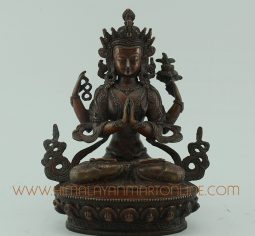
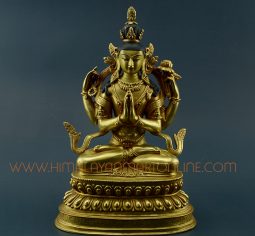
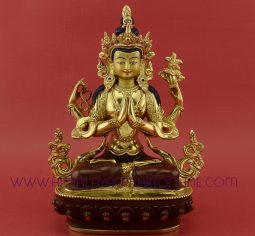
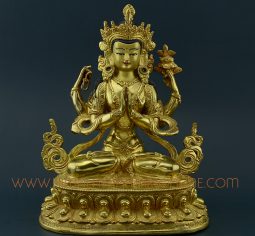
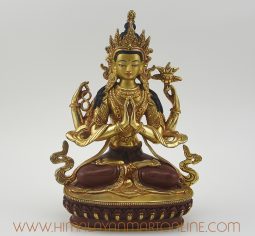
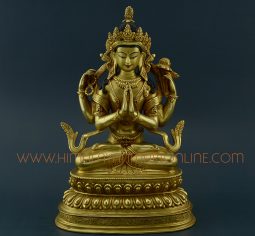
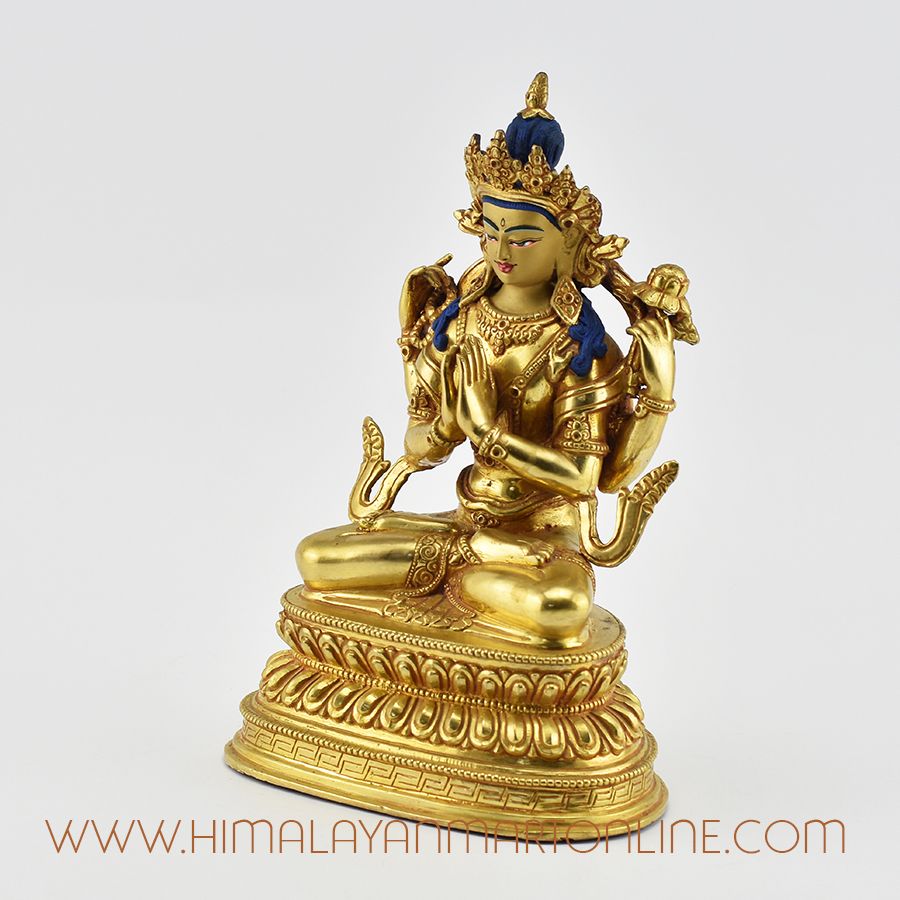
Chenrezig is depicted here in his four-armed form (like shown in this Chenrezig Statue Patan Nepal), which symbolizes his whirlwind of constant activity in the world. Two of his hands are pressed together at his heart where they hold the wish-fulfilling jewel of enlightenment, the Cintamani. This jewel manifests whatever a faithful seeker may pray for and is also a metaphor for the profound teachings and virtues of the Buddha. Chenrezig’s clasped hand position further expresses his gratitude and respect for Buddha Amitabha. In his upper right hand, he holds a crystal mala, or Buddhist rosary, that he unceasingly counts and which represents his continuous compassionate activity in the world. And in his upper left hand, he holds a beautiful lotus flower in full bloom. Just as the lotus arises, dazzling and pure, from dark muddy waters, Chenrezig constantly manifests amidst the misery and suffering of our world, but is never stained or tainted by samsaric conditions. His blossoming lotus is meant to inspire us to do the same, by unfolding the pure compassion of our true natures even amidst the challenges of worldly existence.
Symbolism
On Chenrezig’s left side, at the level of his heart, is the gentle face of a wild deer; the deer’s skin is draped over his shoulder (like shown in this Chenrezig Statue Patan Nepal). The deerskin is an ancient symbol of renunciation, as wandering mendicants often took the skin of a deer as a meditation seat, and sometimes as a garment and blanket. This symbolic meaning applies, as Chenrezig, a Bodhisattva, has renounced the snares of worldly existence, but here it further symbolizes his boundless compassion for sentient beings. According to legend, Chenrezig once took rebirth as a wild deer, but he had such heartfelt compassion for the hunter who chased him that he willingly laid down his life.
About this Chenrezig Statue Patan Nepal
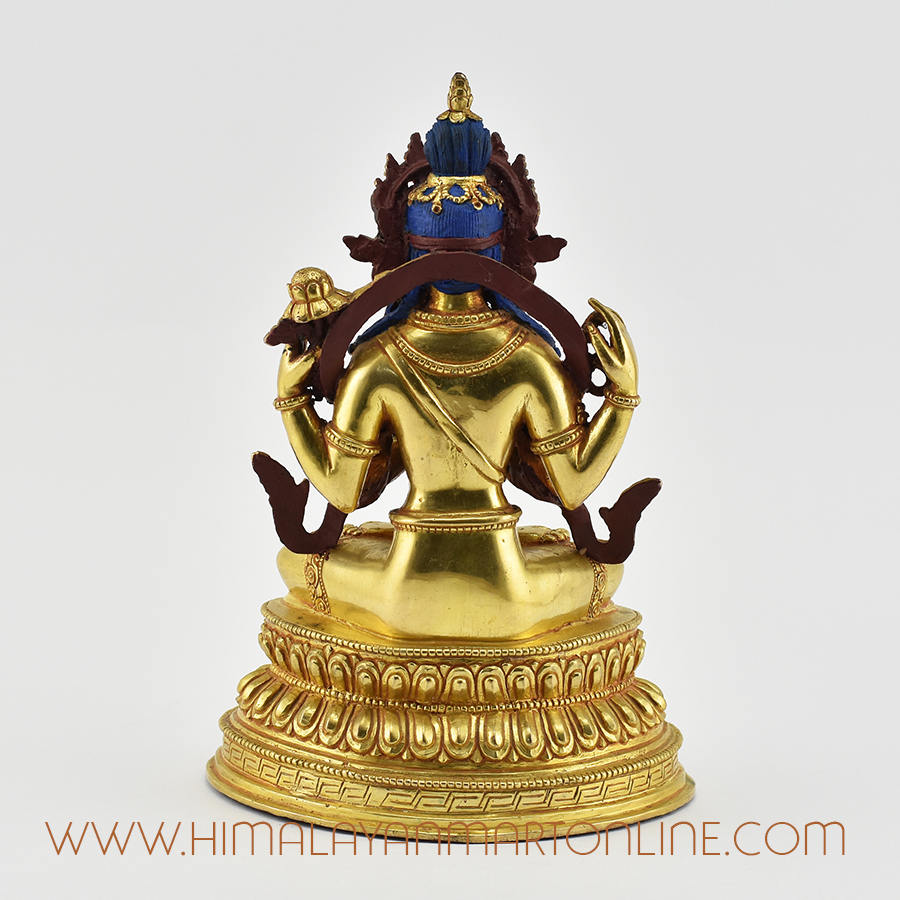
Crafted in Patan, Nepal, this exquisite statue of Chenrezig showcases the mastery of the Shakya clan’s skilled artisans. Fashioned from copper alloy using the lost wax technique, the sculpture is adorned with a lavish layer of 24-karat gold. Chenrezig, depicted in a graceful state of deep meditation, wears intricately carved ornaments and a crown befitting a compassionate Bodhisattva. The meticulous detailing of necklaces and arm jewelry reflects remarkable creativity.
The elegant hand gestures and attractive features of Chenrezig emit a spiritual aura, enhanced by the soft warmth of the beautiful gold gilding. The statue stands as a testament to the selfless dedication of Chenrezig to aiding sentient beings. Native to Patan, this sculpture represents a centuries-old tradition upheld by the Shakya clan, recognized as some of the world’s greatest artisans in sacred art. Renowned for their superior metalworking techniques, these contemporary torchbearers diligently pass down their skills, preserving a rich history of producing timeless and sacred works of art for temples and monasteries.